Understanding how to play your role on a team in NBA 2K26 means focusing on your player’s strengths, communicating effectively with teammates, and executing assigned tasks, whether it’s scoring, defending, rebounding, or playmaking.
So, you’ve picked up NBA 2K26 and are ready to hit the virtual court? Great! But winning isn’t just about individual skill; it’s about teamwork. This NBA 2K26 beginners guide to understanding how to play your role on a team will help you contribute effectively.
Think about your player’s build and badges. Are you a sharpshooter? Focus on getting open. A dominant rebounder? Control the boards.
Communicate with your teammates using in-game voice chat or quick plays. Know your assignments on defense, and always be ready to make the extra pass. By understanding and embracing your role, you’ll become a valuable asset to any team.

NBA 2K26 Beginners Guide to Understanding How to Play Your Role on a Team
NBA 2K26 offers a fantastic basketball simulation. It allows you to create your own player and compete online. Understanding your role on a team is vital for success.
This guide will help you grasp the fundamentals. It will help you contribute meaningfully to your team’s performance.
Understanding the Importance of Roles in NBA 2K26
Playing your role isn’t just about scoring points. It’s about contributing to the overall team dynamic. Teamwork and synergy are key to victory in online play.
Knowing your strengths and weaknesses is crucial. This will allow you to effectively fill your assigned role.
Identifying Common Roles in NBA 2K26
Several common roles exist in NBA 2K26 teams. Understanding these roles will help you find your niche. This will help you contribute more effectively.
These roles are not strictly defined. Often, you will need to adapt based on your build and team composition.
Point Guard (PG) – The Floor General
Point Guards are usually the primary ball handlers. They are responsible for initiating the offense. They need high passing and dribbling attributes.
Their vision and decision-making skills are essential. They must be able to read the defense and make the right play.
Key Responsibilities: Running the offense, facilitating plays, and scoring when necessary.
Essential Attributes: Passing, dribbling, playmaking, and perimeter defense.
Shooting Guard (SG) – The Sharpshooter
Shooting Guards are typically the primary scoring threats. They excel at shooting from beyond the arc. They need high shooting attributes.
Spacing the floor is vital for a shooting guard. They must be able to create open looks for themselves.
Key Responsibilities: Scoring points, spacing the floor, and playing perimeter defense.
Essential Attributes: Shooting (especially 3-point shooting), dribbling, and perimeter defense.
Small Forward (SF) – The All-Around Player
Small Forwards are often versatile players. They can contribute in many ways. They need a balanced attribute spread.
They often act as secondary ball-handlers and scorers. They must be able to defend multiple positions.
Key Responsibilities: Scoring, rebounding, defending, and facilitating as needed.
Essential Attributes: A balance of shooting, dribbling, rebounding, and defense.
Power Forward (PF) – The Interior Scorer/Rebounder
Power Forwards primarily operate in the paint. They focus on rebounding and interior scoring. They require high strength and rebounding attributes.
Setting screens and playing tough defense is crucial. They protect the rim.
Key Responsibilities: Rebounding, scoring in the paint, setting screens, and playing interior defense.
Essential Attributes: Rebounding, strength, interior scoring, and interior defense.
Center (C) – The Defensive Anchor
Centers are the primary defenders in the paint. They excel at blocking shots and grabbing rebounds. They need high rebounding, blocking, and interior defense attributes.
Setting screens and finishing around the rim is important. They are often the focal point of the defense.
Key Responsibilities: Rebounding, blocking shots, playing interior defense, and setting screens.
Essential Attributes: Rebounding, blocking, interior defense, and interior scoring.
Building Your MyPLAYER to Fit a Role
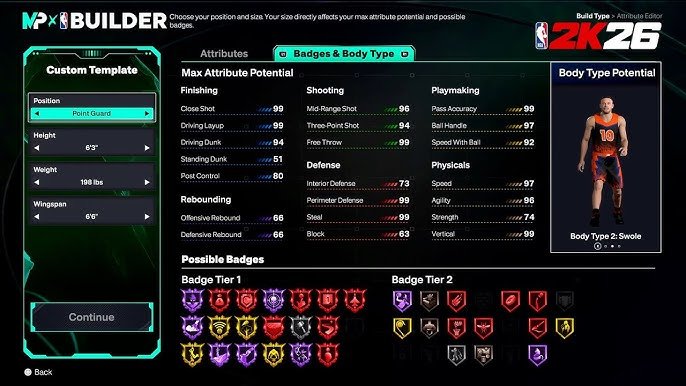
Your MyPLAYER build significantly impacts your role. Consider your preferred playstyle when creating your player. Focus on attributes relevant to your chosen role.
For example, a Point Guard needs high passing and dribbling. A Center requires high rebounding and block.
Attribute Allocation
Carefully allocate your attribute points. Maximize your strengths. Address your weaknesses as much as possible.
Consider badge potential when allocating attributes. Some badges require specific attribute thresholds.
Badge Selection
Badges enhance your player’s abilities. Choose badges that complement your role. Experiment with different badge combinations.
A Sharpshooter needs shooting badges like “Deadeye” and “Volume Shooter”. A Rebounding Center needs badges like “Boxout Beast” and “Rebound Chaser”.
Communicating and Coordinating with Your Team
Communication is vital in online team play. Use voice chat to coordinate with your teammates. Clear and concise communication leads to better teamwork.
Call out screens, cuts, and defensive assignments. Let your teammates know your intentions.
Using In-Game Communication Tools
Utilize the in-game communication tools. These include quick chat and pre-set messages. These can be helpful for basic communication.
Learn to use these effectively. It saves time during intense moments.
Practicing Teamwork in the Gatorade Training Facility
The Gatorade Training Facility allows you to practice with your team. Work on offensive and defensive strategies. Improve your team chemistry.
Practice specific plays and scenarios. Refine your communication and coordination.
Offensive Strategies for Different Roles
Each role has different offensive responsibilities. Understanding these responsibilities will improve your effectiveness. This will make you a better teammate.
Adapt your playstyle to fit the team’s overall strategy. Be willing to adjust to the situation.
Point Guard Offensive Strategies
Point Guards should focus on facilitating the offense. They need to make smart passes. They need to create scoring opportunities for teammates.
Run the pick-and-roll effectively. Exploit defensive mismatches. Control the pace of the game.
Shooting Guard Offensive Strategies
Shooting Guards should prioritize spacing the floor. They need to get open looks from three-point range. Move without the ball to create opportunities.
Use screens effectively. Be ready to shoot when the ball comes your way.
Small Forward Offensive Strategies
Small Forwards should be versatile. They need to contribute in multiple ways. Drive to the basket, shoot from the perimeter, and cut to the basket.
Capitalize on mismatches. Take advantage of scoring opportunities.
Power Forward Offensive Strategies
Power Forwards should focus on scoring in the paint. They need to set screens for teammates. Crash the offensive boards for rebounds.
Establish position in the post. Utilize post moves to score.
Center Offensive Strategies
Centers should focus on scoring around the rim. They need to set strong screens. They need to grab offensive rebounds.
Be a reliable finisher. Protect the paint defensively.
Defensive Strategies for Different Roles
Defense is just as important as offense. Understanding your defensive responsibilities will improve your team’s performance. This will make you a valuable asset.
Communicate defensive assignments. Help your teammates when necessary.
Point Guard Defensive Strategies
Point Guards should focus on guarding the opposing point guard. They need to apply pressure on the ball. They need to disrupt the opponent’s offense.
Anticipate passes. Play passing lanes to generate steals.
Shooting Guard Defensive Strategies
Shooting Guards should focus on guarding the opposing shooting guard. They need to prevent them from getting open looks. Contest every shot.
Stay close to your opponent. Don’t allow easy penetration.
Small Forward Defensive Strategies
Small Forwards should be versatile defenders. They need to guard multiple positions. Anticipate dribble drives and cut off angles to the basket.
Help teammates. Be prepared to switch on screens.
Power Forward Defensive Strategies
Power Forwards should focus on playing interior defense. They need to protect the paint. They need to rebound effectively.
Contest shots near the basket. Prevent easy scores in the paint.
Center Defensive Strategies
Centers should be the anchors of the defense. They need to block shots. They need to control the paint.
Rebound effectively. Deter opponents from driving to the basket.
Adapting to Different Team Compositions
Team compositions vary in NBA 2K26. You must adapt your playstyle to fit the team. This will enhance your effectiveness on the court.
Be flexible and willing to play different roles. This will increase your value to the team.
Playing with a Scoring-Focused Team
If you’re on a scoring-focused team, focus on creating opportunities. Set screens, make smart passes, and space the floor. Support the team’s primary scorers.
Contribute defensively. Help secure stops when needed.
Playing with a Defense-Focused Team
If you’re on a defense-focused team, prioritize playing tough defense. Rebound effectively and limit scoring opportunities. Contribute offensively when possible.
Be disciplined and follow the team’s defensive scheme. Avoid unnecessary fouls.
Analyzing Your Performance and Making Adjustments
Review your game statistics. Identify areas for improvement. Adjust your playstyle accordingly.
Use the in-game feedback system to analyze your performance. Pay attention to your teammate grade and individual statistics.
Improving Your Weaknesses
Focus on improving your weaknesses. Practice in the Gatorade Training Facility. Seek advice from experienced players.
Be patient. Improvement takes time and effort.
Refining Your Strengths
Continue to refine your strengths. Practice your signature moves and plays. Maximize your effectiveness in your role.
Don’t become complacent. Always strive to improve.
Mastering the Fundamentals
Mastering the fundamentals of basketball is key. Dribbling, passing, shooting, and defense are all essential. Practice these skills regularly.
The better you understand the basics, the more effective you will be in your role. This will make you a better overall player.
Dribbling Drills
Practice dribbling drills. Focus on ball handling and control. Develop your ability to dribble under pressure.
Learn different dribbling moves. This will help you create space.
Shooting Practice
Practice shooting from different spots on the floor. Work on your shooting form and consistency. Become a reliable scorer.
Shoot under pressure. Simulate game situations.
Passing Accuracy
Work on your passing accuracy. Practice making different types of passes. Master the art of passing to open teammates.
Develop your court vision. Anticipate your teammates’ movements.
The Importance of Court Awareness
Court awareness is vital for success. Pay attention to your surroundings. Read the defense and make smart decisions.
Anticipate passes. Position yourself for rebounds. Help your teammates when they need it.
Reading the Defense
Learn to read the defense. Identify their weaknesses and exploit them. Recognize when to drive, pass, or shoot.
Adjust your playstyle accordingly. Adapt to the defensive schemes.
Understanding Spacing
Understand the importance of spacing. Create open lanes for driving. Provide opportunities for teammates to cut to the basket.
Maintain proper spacing. This will make it easier to score.
Maintaining a Positive Attitude
Maintain a positive attitude, even when things get tough. Encourage your teammates and stay focused. Avoid negativity and blame.
A positive attitude can make a big difference. It can improve team chemistry. It can lead to more wins.
Dealing with Losses
Learn to deal with losses gracefully. Analyze your mistakes and learn from them. Don’t get discouraged by setbacks.
Focus on improvement. Come back stronger next time.
NBA 2K26 TOP 10 TIPS & TRICKS FOR BEGINNERS! (BEFORE YOU PLAY 2K26)
Final Thoughts
In short, grasp your assigned role. Understand your player’s strengths and weaknesses within the team’s strategy.
Focus on maximizing your impact. This will contribute to overall team success.
Remember, playing your role effectively is a must for winning. This NBA 2K26 beginners guide to understanding how to play your role on a team emphasizes teamwork and strategic execution. Improve your understanding and skills to excel.