Understanding player builds and archetypes in NBA 2K26 boils down to recognizing that each build has strengths and weaknesses defined by its chosen archetype, impacting attributes like shooting, defense, and playmaking.
New to NBA 2K26 and feeling overwhelmed by the player creation options? Don’t worry, you’re not alone! This NBA 2K26 beginners guide to understanding player builds and archetypes will simplify everything.
We’ll break down the core concepts, helping you create a player that fits your playstyle without getting lost in the details.
Think of archetypes as blueprints – they give your player a foundation. We’ll cover the popular ones, and how they affect your attributes and performance. Let’s get started so you can dominate the court!

NBA 2K26 Beginners Guide to Understanding Player Builds and Archetypes
Understanding player builds and archetypes is crucial in NBA 2K26. A well-crafted build can dominate online modes and elevate your MyCAREER experience.
This guide will walk you through the fundamentals. You’ll learn how to create a player that fits your playstyle and maximizes your potential.
The Building Blocks of Your MyPLAYER
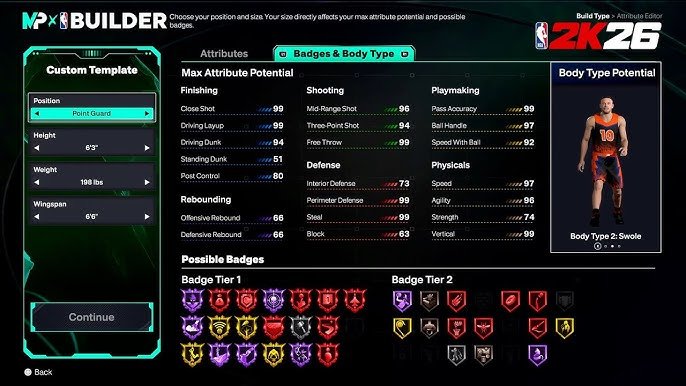
Creating your MyPLAYER starts with several key decisions. These choices significantly impact your player’s attributes and abilities.
These decisions lay the groundwork for your archetype. Select them carefully.
- Position: Choose wisely as it affects your available badges and attribute caps.
- Height: Taller players generally have rebounding and interior scoring advantages. Shorter players often excel at ball handling and shooting.
- Weight: Weight influences strength and speed. Consider the trade-offs.
- Wingspan: Longer wingspans help with rebounding, blocking, and finishing inside. Shorter wingspans improve shooting accuracy.
Understanding Archetypes: A Foundation for Success
Archetypes are pre-defined skill sets that shape your player’s strengths. They provide a framework for your build.
Each archetype emphasizes certain attributes and badges. Understanding the nuances of each is essential.
Primary and Secondary Archetypes
Most builds combine two archetypes: a primary and a secondary. This allows for specialization and balance.
The primary archetype dictates your player’s core strengths. The secondary archetype provides complementary skills.
Choosing the right combination is key to creating a versatile and effective player. Think about how the archetypes work together.
Common Archetypes and Their Strengths
NBA 2K26 offers a variety of archetypes. Here are some common examples and their typical strengths:
- Playmaker: Excels at ball handling, passing, and creating opportunities for teammates.
- Sharpshooter: Specializes in shooting from beyond the arc.
- Slasher: Dominates at driving to the basket and finishing with athleticism.
- Lockdown Defender: Focuses on perimeter and interior defense.
- Rebounder: Controls the boards and secures possessions.
- Post Scorer: Operates effectively in the low post, scoring and creating opportunities.
Attribute Customization: Fine-Tuning Your Build
After selecting your archetypes, you’ll allocate attribute points. This is where you truly customize your player.
Allocate points strategically to maximize your player’s effectiveness. Don’t spread your points too thin.
Key Attributes to Consider
Prioritize attributes based on your chosen archetypes and playstyle. Here are some crucial attributes to consider:
- Shooting: Three-point shot, mid-range shot, free throw.
- Finishing: Driving layup, driving dunk, standing dunk, post hook, close shot.
- Playmaking: Ball handle, passing accuracy, passing vision, post control.
- Defense/Rebounding: Interior defense, perimeter defense, block, steal, offensive rebound, defensive rebound.
- Athleticism: Speed, acceleration, vertical, strength, stamina.
Attribute Caps and Limitations
Be aware of attribute caps. Each archetype has limitations on how high certain attributes can be raised.
These caps prevent players from becoming too well-rounded. This forces you to specialize.
Pay attention to these caps when planning your build. It’s best to know the limitations beforehand.
Badge System: Amplifying Your Strengths
Badges are special abilities that enhance your player’s performance. They provide significant advantages on the court.
Earning and upgrading badges is a crucial part of player progression. Focus on badges that complement your build.
Types of Badges
Badges are categorized into several groups, reflecting different aspects of the game. These categories include Finishing, Shooting, Playmaking, and Defense/Rebounding.
Each category contains a variety of badges with unique effects. Understanding these effects is essential.
Badge Tiers and Progression
Badges come in four tiers: Bronze, Silver, Gold, and Hall of Fame. Higher tiers provide greater benefits.
You earn badge points by performing actions on the court. Consistent performance leads to faster progression.
Focus on earning badges that align with your player’s strengths. This will maximize their impact on the game.
Recommended Badges for Different Archetypes
Here are some recommended badges for different archetypes:
- Playmaker:
- Dimer: Improves the shooting percentage of teammates after receiving a pass.
- Quick First Step: Allows for quicker and more explosive drives to the basket.
- Handles for Days: Reduces stamina loss when performing dribble moves.
- Sharpshooter:
- Green Machine: Increases the bonus given for consecutive excellent releases.
- Dead Eye: Reduces the impact of defensive pressure on jump shots.
- Sniper: Boosts the shot percentage for slightly early/late shots.
- Slasher:
- Giant Slayer: Improves the ability to finish layups over taller defenders.
- Posterizer: Increases the chances of dunking on opponents.
- Slithery Finisher: Helps navigate through traffic and avoid contact when driving.
- Lockdown Defender:
- Intimidator: Reduces the offensive attributes of opponents when contesting shots.
- Clamps: Allows defenders to stay in front of ball handlers more effectively.
- Interceptor: Increases the chances of intercepting passes.
- Rebounder:
- Box: Improves the ability to box out opponents for rebounds.
- Rebound Chaser: Increases the range and speed when pursuing rebounds.
- Worm: Allows rebounders to swim around boxouts more effectively.
- Post Scorer:
- Backdown Punisher: Increases the effectiveness of backdowns in the post.
- Dream Shake: Increases the chances of faking out defenders with post moves.
- Dropstepper: Improves the effectiveness of drop steps in the post.
Testing and Refining Your Build
Once you’ve created your build, test it thoroughly. Experiment with different playstyles and strategies.
Use the practice modes to refine your skills. Identify any weaknesses and adjust your attributes and badges accordingly.
MyCAREER and The Rec
MyCAREER provides a structured environment for testing your build. Play through the story mode and participate in NBA games.
The Rec offers a more competitive environment. Test your skills against other online players.
Pay attention to your player’s performance in different situations. Make adjustments as needed.
Analyzing Your Stats and Performance
Track your stats and analyze your performance. Identify areas for improvement.
Pay attention to your shooting percentages, rebounding numbers, and assist totals. These stats provide valuable insights.
Use this data to optimize your build and improve your gameplay. Continuous improvement is key.
Build Examples and Inspiration
Need some inspiration? Here are a few build examples to get you started:
The Scoring Point Guard
This build focuses on scoring from all three levels. It’s a versatile option for leading the offense.
Primary Archetype: Playmaker
Secondary Archetype: Sharpshooter
Key Attributes: Three-point shot, ball handle, passing accuracy, speed.
The Defensive Anchor
This build specializes in interior defense and rebounding. It’s a valuable asset for any team.
Primary Archetype: Lockdown Defender
Secondary Archetype: Rebounder
Key Attributes: Interior defense, block, offensive rebound, defensive rebound, strength.
The Athletic Finisher
This build excels at driving to the basket and finishing with athleticism. It’s a dynamic scoring threat.
Primary Archetype: Slasher
Secondary Archetype: Playmaker
Key Attributes: Driving layup, driving dunk, speed, acceleration, vertical, ball handle.
Advanced Build Strategies
As you become more experienced, you can explore more advanced build strategies. These strategies often involve maximizing specific attributes or badges.
Min-Maxing Attributes
Min-maxing involves optimizing your attributes to exploit certain game mechanics. This can create highly specialized builds.
For example, you might sacrifice some attributes to maximize your shooting percentages. This can make you a deadly scorer.
Badge Combinations and Synergies
Experiment with different badge combinations to create powerful synergies. Some badges work particularly well together.
For example, combining “Quick First Step” with “Handles for Days” can make you an unstoppable ball handler. Understanding these synergies is crucial.
Adapting to the Meta
The “meta” refers to the dominant strategies and builds in the game. It can change over time as players discover new techniques.
Pay attention to the meta and adapt your build accordingly. This will help you stay competitive.
The Importance of Playstyle
Ultimately, the best build is the one that suits your playstyle. Consider how you like to play the game.
Do you prefer to score, pass, defend, or rebound? Choose a build that complements your strengths.
Don’t be afraid to experiment and find what works best for you. This will lead to the most enjoyable experience.
Community Resources and Feedback
Utilize community resources and seek feedback from other players. Online forums and communities are valuable sources of information.
Share your builds and ask for advice. Learn from the experiences of others.
This collaborative approach can help you create even more effective builds. Sharing knowledge is key to improving.
Looking Ahead: Future Updates and Changes
NBA 2K is constantly evolving. Future updates and changes may impact player builds and archetypes.
Stay informed about these changes and adapt your strategies accordingly. This will ensure that you remain competitive.
Keep an eye on official announcements and community discussions. This will help you stay ahead of the curve.
NBA 2K26 MYPLAYER BUILDER COMPLETE BREAKDOWN (MUST WATCH)
Final Thoughts
To sum up, understanding player builds is a must for NBA 2K26 success. Archetypes dictate your player’s strengths.
Experiment with different combinations to find what suits your play style best. With informed choices, you’ll make a more effective player.
Hopefully, this NBA 2K26 beginners guide to understanding player builds and archetypes has provided a solid foundation. Now you can dominate the court!