
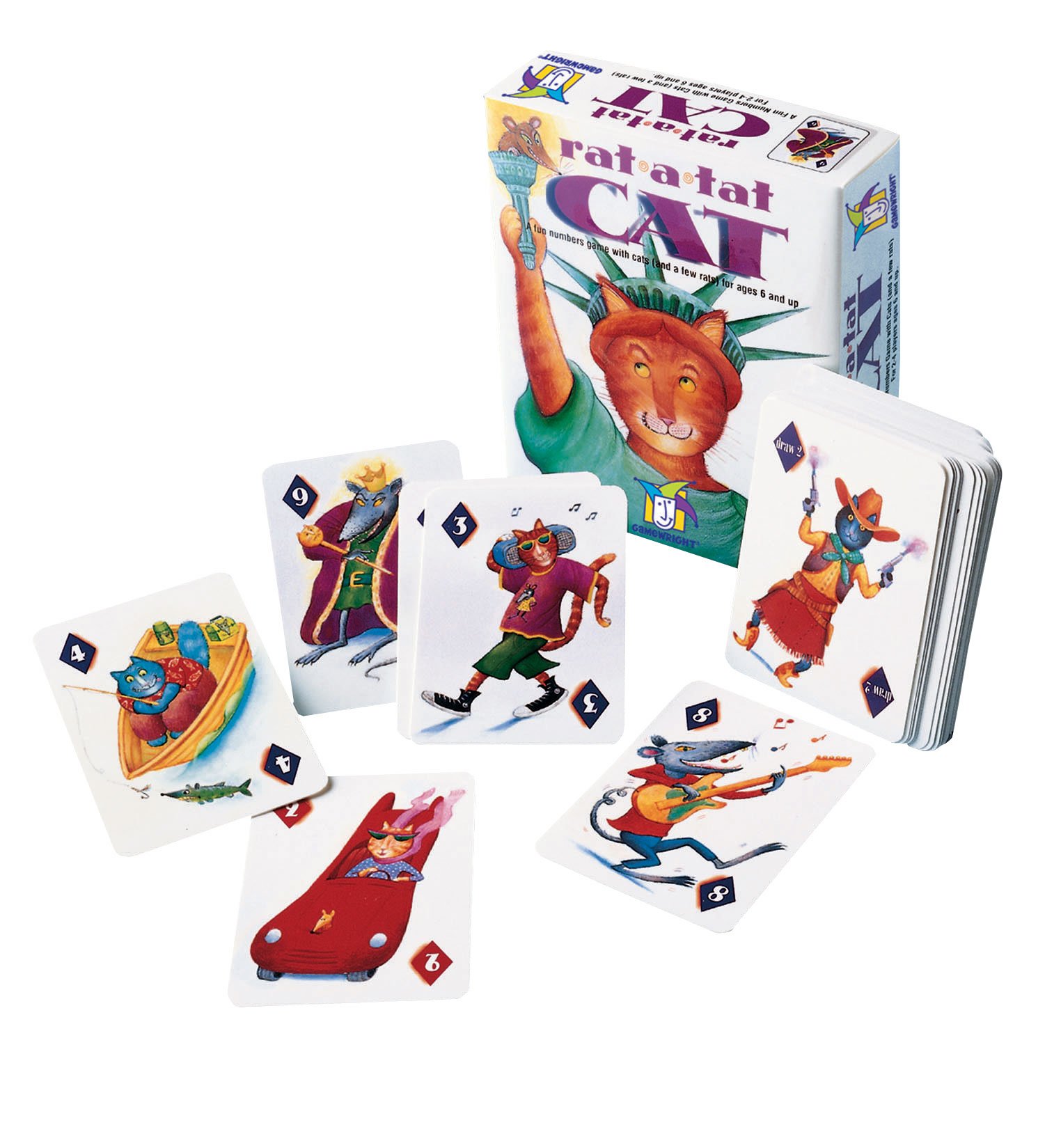
The main goal in Rat-a-Tat Cat is to lower your point total by swapping cards and remembering values, aiming for the lowest score after a set number of rounds. Understanding all the Rat a tat cat game rules is key to strategizing and winning.
Here’s the output:
Ever felt like outsmarting your friends with a simple yet engaging card game? Rat-a-Tat Cat might be your next obsession. This game blends luck and memory, and it provides fun for players of all ages.
Want to learn more about Rat a tat cat game rules? Then, read on to get all the details you need to play. Understanding the rules is the first step to becoming a Rat-a-Tat Cat champion!

Rat-a-Tat Cat Game Rules
Rat-a-Tat Cat is a popular card game known for its blend of memory, strategy, and a dash of luck. The game’s objective is simple: get the lowest score. This is achieved by minimizing the values of the cards in front of you.
Game Components
A standard Rat-a-Tat Cat deck consists of numbered cards and special action cards. These elements combine to create a dynamic and engaging gameplay experience.
Numbered Cards: These range from 0 to 9, representing point values.
Action Cards: Swap, Peek, and Draw Two cards add twists to the game.
Setting Up the Game
Proper setup is crucial for fair play and an enjoyable experience. Ensure all players understand the starting arrangement before the game begins.
Dealing the Cards: Each player receives four cards placed face down in a row.
Looking at Cards: Players can secretly look at only their first two cards.
Discard Pile: The remaining deck forms the draw pile, and the top card is flipped to start the discard pile.
Gameplay Mechanics
The core gameplay involves drawing cards, swapping cards, and strategically managing your hand. Players aim to reduce the sum of their four face-down cards.
Taking a Turn: On your turn, you can either draw a card from the draw pile or take the top card from the discard pile.
Using Action Cards: Action cards have unique effects that disrupt opponents or provide advantages.
Detailed Card Actions
Understanding each card’s specific function is key to playing Rat-a-Tat Cat well. The action cards add layers of strategic depth.
Numbered Cards
These cards directly contribute to your score. Lower numbers are obviously better.
Zero Value: The most desirable, as they contribute nothing to your score.
High Value: Higher numbers increase your overall score and should be replaced.
Action Card: Peek
This card allows you to secretly view one of your own cards. It helps in making informed decisions.
Looking at Your Card: Choose any face-down card in front of you to peek at.
Strategic Use: Use the information to decide whether to swap or keep the card.
Action Card: Swap
This card lets you exchange one of your face-down cards with another player’s card, blindly. Strategic use can sabotage opponents.
Blind Swap: You don’t see the card you’re receiving.
Risky Move: Could backfire if you get a higher value card.
Action Card: Draw Two
This forces the next player to draw two cards, disrupting their strategy and potentially increasing their score.
Forcing Draws: The next player must draw two cards before making their normal turn.
Strategic Disruption: Can be used to slow down opponents who are close to calling “Rat-a-Tat Cat.”
Playing a Turn Step-by-Step
Each turn involves a sequence of actions. Understanding this sequence is essential for smooth gameplay.
Draw a Card: Choose to draw from either the draw pile or the discard pile.
Use or Discard: If you draw from the draw pile, you can either use the card immediately or discard it.
Activating Action Cards: If you use an action card, follow its specific instructions.
Discarding a Card: If you choose not to use a drawn card, place it face-up on the discard pile.
Calling “Rat-a-Tat Cat”
At any point in their turn, a player can call “Rat-a-Tat Cat.” This signals the end of the round.
The Call: A player can announce “Rat-a-Tat Cat” before drawing a card.
Ending the Round: After the call, all players reveal their cards.
Scoring: Players add up the values of their four cards to determine their score for the round.
Scoring and Winning
The goal is to have the lowest cumulative score across multiple rounds. Understanding the scoring system is crucial for victory.
Calculating Scores: Add the values of your four face-down cards.
Penalties: If a player calls “Rat-a-Tat Cat” and doesn’t have the lowest score, they receive a penalty (typically adding 10 points to their score).
Winning the Game: The game continues for a set number of rounds or until a player reaches a predetermined score. The player with the lowest total score wins.
Strategic Tips and Tricks
Mastering Rat-a-Tat Cat involves more than just knowing the rules; it requires strategic thinking and adaptability. Here are some tips to improve your game.
Memory is Key: Remember the cards you’ve seen discarded.
Bluffing: Sometimes, it’s beneficial to act like you have a good hand even if you don’t.
Opponent Observation: Pay attention to what your opponents are doing to anticipate their moves.
Game Variations and House Rules
Many players enjoy adding their own twists to the game. House rules can increase the complexity and replayability of Rat-a-Tat Cat.
Modified Scoring: Change the penalty for incorrectly calling “Rat-a-Tat Cat.”
Extra Action Cards: Introduce new action cards with unique effects.
Team Play: Form teams and combine scores.
Rat-a-Tat Cat Editions
Several editions of Rat-a-Tat Cat exist, each with its own unique artwork or slight rule variations. These different versions can enhance the playing experience.
Original Edition
The classic version, known for its simple design and straightforward gameplay. It’s the ideal starting point for new players.
Simple Design: Features classic card illustrations.
Basic Gameplay: Follows the standard Rat-a-Tat Cat rules.
Rat-a-Tat Cat Junior
Designed for younger players, this version features simplified rules and engaging visuals. It’s a great way to introduce children to strategic card games.
Simplified Rules: Easier to understand for younger audiences.
Engaging Visuals: Uses bright colors and fun characters.
Travel Edition
A compact version perfect for playing on the go. This edition maintains all the core gameplay elements in a smaller, more portable format.
Compact Size: Easy to carry and play anywhere.
Durable Cards: Often made with more durable materials for travel.
Advanced Strategies for Experienced Players
Once you’ve mastered the basics, you can explore advanced strategies to gain a competitive edge. This involves deeper analysis and anticipation.
Card Counting: Keep track of high-value cards that have been discarded to estimate the remaining card pool.
Analyzing Opponent Behavior: Observe betting patterns and reactions to infer the contents of their hand.
Risk Management: Weigh the potential rewards against the risks involved in aggressive moves like swapping.
The Psychology of Rat-a-Tat Cat
Understanding the psychological aspects of the game can significantly improve your performance. This involves reading your opponents and leveraging their tendencies.
Reading Tells: Watch for subtle cues that indicate the strength of an opponent’s hand.
Creating Misdirection: Use deceptive moves to mislead opponents about your intentions.
Managing Emotions: Stay calm and avoid impulsive decisions based on frustration or excitement.
Common Mistakes to Avoid
Even experienced players can fall into common traps. Avoiding these errors will help you maintain a consistent performance.
Ignoring Discarded Cards: Failing to pay attention to the discard pile is a significant oversight.
Calling “Rat-a-Tat Cat” Too Early: Prematurely ending the round can be costly if you don’t have the lowest score.
Overvaluing Action Cards: Action cards are useful, but they shouldn’t be used indiscriminately.
Why Rat-a-Tat Cat is So Popular
Rat-a-Tat Cat’s enduring popularity stems from its blend of simplicity, strategy, and social interaction. It offers something for players of all ages and skill levels.
Easy to Learn: The basic rules are simple to grasp, making it accessible to beginners.
Strategic Depth: The game offers plenty of opportunities for strategic thinking and planning.
Social Interaction: It encourages interaction and competition among players.
Fast-Paced: Games are relatively short, keeping players engaged.
Adapting the Rules for Different Player Counts
The standard rules of Rat-a-Tat Cat are designed for a specific number of players. However, you can adapt the rules to accommodate different group sizes.
Fewer Players: With fewer players, reduce the number of cards dealt to each player.
More Players: With more players, consider using multiple decks or increasing the penalty for incorrectly calling “Rat-a-Tat Cat”.
Ensuring Fair Play
Maintaining fair play is essential for a positive gaming experience. Follow these guidelines to prevent cheating and ensure everyone has a fair chance.
Clear Communication: Make sure everyone understands the rules and any agreed-upon variations.
Honesty: Players should be honest about their actions and avoid cheating or bending the rules.
Neutral Observer: If possible, designate a neutral observer to mediate disputes and ensure fair play.
The Importance of Probability
Understanding basic probability can give you an edge in Rat-a-Tat Cat. This involves estimating the likelihood of drawing specific cards.
Card Distribution: Be aware of the distribution of high and low-value cards in the deck.
Calculating Odds: Estimate the odds of drawing a desired card based on the cards that have already been discarded.
Making Informed Decisions: Use probability to guide your decisions about drawing, swapping, and calling “Rat-a-Tat Cat”.
Rat-a-Tat Cat for Different Age Groups
Rat-a-Tat Cat is suitable for a wide range of ages, but some adaptations may be necessary to make it enjoyable for younger players.
Young Children: Simplify the rules, focus on basic counting skills, and emphasize fun over competition.
Older Children: Introduce more strategic elements and encourage critical thinking.
Adults: Play with the standard rules and explore advanced strategies.
Training Your Memory Skills with Rat-a-Tat Cat
Rat-a-Tat Cat is an excellent game for training your memory skills. The need to remember discarded cards and the positions of your own cards can sharpen your cognitive abilities.
Active Recall: Regularly try to recall the cards that have been discarded.
Visualization: Visualize the positions of your own cards to improve your memory.
Focus and Concentration: Practice focusing and concentrating during gameplay to enhance your memory skills.
Rat-a-Tat Cat as a Teaching Tool
Rat-a-Tat Cat can be used as a valuable teaching tool in educational settings. It can help students develop important skills such as counting, strategic thinking, and memory.
Math Skills: It provides a fun and engaging way to practice counting and addition.
Strategic Thinking: It encourages students to think critically and plan their moves.
Memory Skills: It helps students improve their memory and recall abilities.
Online Resources for Rat-a-Tat Cat
Several online resources can enhance your Rat-a-Tat Cat experience. These include tutorials, forums, and online versions of the game.
Tutorials: Watch videos and read articles to learn the rules and strategies of the game.
Forums: Join online communities to discuss the game and share tips with other players.
Online Versions: Play Rat-a-Tat Cat online against other players or AI opponents.
The Future of Rat-a-Tat Cat
Rat-a-Tat Cat has a bright future, with ongoing development and potential new editions. Its timeless appeal ensures that it will continue to be enjoyed by players of all ages for years to come.
New Editions: Expect to see new editions with updated artwork and possibly new gameplay variations.
Online Expansion: Look for more online versions and multiplayer options.
Community Growth: The Rat-a-Tat Cat community is likely to continue to grow, with more players discovering the game every year.
How To Play Rat A Tat Cat: Family Strategy Card Game
Final Thoughts
Rat a Tat Cat tests your memory and strategy. You aim to minimize your cat card totals by swapping them with lower cards from the deck. The game continues until someone declares “Rat a Tat Cat!”.
Remember peeking at your cards is allowed at the start, and using special action cards can change the game. You must try to lower your total score to win.
So, winning requires you to remember card values and use swaps wisely. ‘rat a tat cat game rules’ are simple: keep swapping and peeking to get the lowest score. This is must fun for families.

