
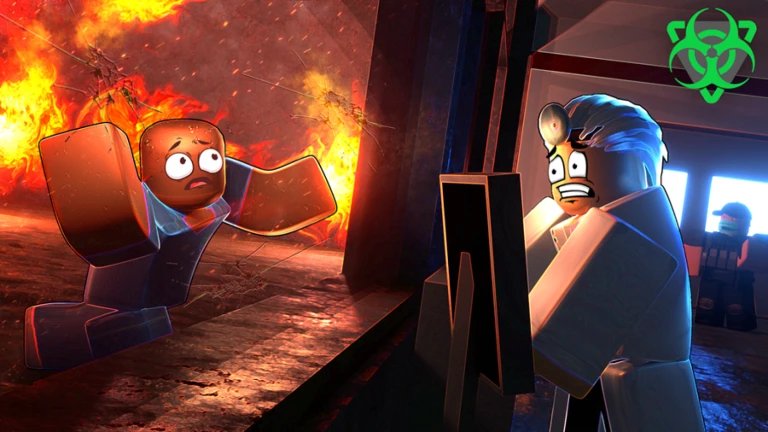
Effective Roblox infectious disease control strategies involve using in-game mechanics to quarantine players, limit player interaction, and educate users about disease spread.
Have you ever thought about what it would be like if a virtual pandemic broke out in your favorite Roblox game? It might sound far-fetched, but understanding the basics of Roblox infectious disease control is actually pretty important. Developers are now building games that simulate this, meaning players need to know how to react! This isn’t just about the game itself; it offers a strange mirror to our real-world experiences, doesn’t it?

Roblox Infectious Disease Control: Keeping Your Virtual Worlds Healthy
Okay, everyone, let’s talk about something really important, even in the fun world of Roblox: keeping our games healthy! Just like in real life, where we try to stop germs from spreading, we sometimes need to do the same thing in Roblox games. It might sound strange, but when a game has a ‘virus’ or a ‘sickness’ that spreads, it can make the game less fun for everyone. So, how do we stop virtual diseases from taking over? Let’s dive in!
Understanding Virtual “Infections” in Roblox
First, let’s clarify what we mean by ‘infectious disease’ in Roblox. We’re not talking about real viruses or bacteria. Instead, these are game mechanics programmed by the game creators. These mechanics simulate how diseases spread, affect players, and how they can be controlled. Imagine a game where touching another player gives you a purple color that slowly takes over your avatar and makes it harder to play. That’s a virtual infection!
Types of Virtual “Diseases” in Roblox
These virtual “diseases” can come in lots of different forms:
- Touch-Based Infections: These are simple. When one player touches another infected player, the sickness spreads. Think of it like tag, but with a virtual germ.
- Proximity-Based Infections: Here, simply being near someone who is ‘sick’ can infect you, even if you don’t touch. This makes staying away from the infected very important.
- Time-Based Infections: These spread over time. For example, being in a specific zone for too long might make your avatar get sick.
- Item-Based Infections: Some games might have items that can be infected. If you pick up an infected item, you get the virtual sickness.
- Multiple Stage Infections: These are more complex, having different levels. You might start with a little cough (reduced speed), then advance to a worse condition(unable to see well), and finally to something very serious (unable to move).
Why Do Roblox Games Have “Diseases”?
Good question! These disease mechanics add challenge and excitement to games. They also can simulate realistic scenarios. Game creators want to make their games interesting, so they try out different things. They can use diseases to:
- Make games more realistic: some games like to mimic real-world events.
- Add excitement: a little challenge keeps us on our toes.
- Create cooperative gameplay: players have to work together to stop a virtual sickness.
- Tell a story: maybe the sickness is part of the game’s plot.
Controlling Virtual Disease Spread
Now that we know what virtual infections are, let’s talk about how to control them in Roblox. Just like real-world health practices, there are things we can do to stay safe and help others do the same in the game.
Basic Prevention Techniques
Here are some key strategies players use to avoid virtual sickness:
- Maintain Distance: This is very important. Just like we stay away from someone who’s sneezing in real life, we need to keep our distance from sick avatars.
- Avoid Infected Areas: Many games have zones that might be infected. If you see a zone looking different (maybe red or with a warning), steer clear!
- Use Protective Items: Some games might have masks or potions to help you resist infection, or even to cure you once you’re infected. Find them, and use them!
- Isolate If Infected: If you catch the game’s disease, separate yourself from other players to prevent further spread. It’s the virtual version of staying home when you’re sick.
Working Together to Combat Infections
Stopping a virtual infection often requires cooperation. Just like a team effort in sports, players need to work together to be successful. Here are some examples of working together:
- Quarantine Zones: Some games might have areas where infected players are isolated. Helping guide infected players to these zones is a team effort.
- Sharing Resources: Some players might find a medicine, and they can share it with others.
- Warning Others: If you see someone is sick, give a warning. This might be done through in-game chat or emotes.
- Developing Strategies: Figure out the best approach to avoid the sickness. Maybe there’s a pattern to how it spreads, or a way to trick the system.
Specific Game Examples and Strategies
Let’s look at how some specific games handle these mechanics. Keep in mind that each game is unique and you’ll have to learn the specific rules for the game you are playing.
Example 1: “The Infected City”
In this fictional Roblox game, players are in a city where a mysterious virus is spreading quickly. The disease is touch-based, and infected avatars turn green. The game implements:
- Symptoms: Infected players move slower and have a green glow, making them easily identifiable.
- Cures: The city is filled with hidden medical supplies (like syringes and face masks).
- Quarantine zones: There are safe zones in the city (like hospitals), but they are hard to reach due to the spread of the infection.
- Collaboration: Players need to work together to find the medical supplies and help each other reach the safe zones. Teamwork is crucial for survival.
Example 2: “The Toxic Zone”
In this game, players venture through a zone with toxic clouds. Staying in the clouds too long causes a progressive illness:
- Stages: The illness has stages. At first, your avatar coughs and moves slowly. Then, your vision blurs, and finally, you can’t move.
- Time Sensitivity: You need to move through the zone quickly, avoiding the clouds as much as possible.
- Antidotes: Special antidotes appear randomly in the zone. The players need to work together to find the antidote.
- Resource management: These antidotes are very limited, so players must be careful with how they use them.
Example 3: “The Haunted Mansion”
This game presents a disease that is both touch-based and item-based. A ghost curses some items. If players touch a cursed item or an infected person, they are cursed.
- Cursed Items: Some of the items in the haunted mansion have a curse, they might glow slightly purple.
- Hidden Cures: The cure can only be found by solving clues in the game.
- Puzzle Solving: The game focuses on problem-solving and teamwork to overcome the curse.
- Teamwork: players need to be very careful and keep an eye out for infected people.
Advanced Strategies and Community Responses
As players get more used to handling these virtual sickness situations, they come up with smart methods.
Community Developed Strategies
Here are some common methods that are usually player-made:
- Designated Teams: Some communities set up teams. One group can focus on finding cures, while others try to keep infected players away from the safe zones.
- Information Sharing: Players exchange tips, and tricks, or warnings on game forums.
- Community Guidelines: Some communities develop their rules about how to handle outbreaks. They include making clear paths to avoid infections.
- Roleplaying: Players sometimes roleplay as doctors, or researchers, to make it more immersive. They will often share tips and provide care to each other.
Common Mistakes to Avoid
Just as in real life, there are some common mistakes players make. Learning these mistakes will help to avoid issues:
- Ignoring the Rules: Not paying attention to the game’s rules is a common mistake. Make sure to understand how the disease spreads, and what can be done about it.
- Panic: Panicking can cause you to make mistakes. When players panic, they might start running around and bumping into each other, which is not helpful.
- Hoarding Resources: If players collect all the cures without sharing, the infection will spread. Players should share when possible.
- Blaming Others: Instead of blaming each other, players should cooperate. Blaming does not help the situation.
The Educational Value of Roblox Disease Control
Surprisingly, dealing with virtual “diseases” in Roblox can teach us a lot! It’s a fun way to learn about things like:
- Basic Epidemiology: Players learn about how diseases spread and the importance of control measures.
- Problem-Solving: Players need to think and plan to deal with the challenges.
- Teamwork: They learn how to work together and collaborate to achieve a goal.
- Resource Management: Players learn to share and utilize resources wisely.
- Real-World Health Concepts: Concepts like quarantine and hygiene are made more understandable through games.
So, next time you play a Roblox game with an infectious mechanic, remember these strategies. It’s more than just a game; it’s a chance to learn, cooperate, and keep your virtual worlds healthy. And maybe, just maybe, it will help you in the real world too!
Roblox doctors try to CURE me
Final Thoughts
Effective practices within Roblox require vigilance against virtual outbreaks. Players should implement hygiene protocols, isolate affected areas, and communicate swiftly regarding infections. This strategy minimizes spread.
Careful monitoring of player interactions helps identify patterns and potential sources of outbreaks. Prompt response is key for containment. Therefore, these are crucial aspects of roblox infectious disease control.

