
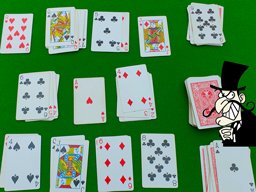
The core of Spite and Malice game rules revolves around strategically discarding cards from your stockpile onto foundation piles built in ascending order from Ace to King, aiming to empty your stockpile before your opponents do.
Ever felt that competitive itch and needed a quick card game fix? Spite and Malice might be just what you’re after!
This fast-paced game pits players against each other in a race to deplete their individual stockpiles. Knowing the spite and malice game rules is key to victory.
We’ll break down the rules in a clear and simple manner. Now you can jump right into the fun!

Spite and Malice Game Rules
Spite and Malice is a captivating card game involving strategy and a bit of luck. The game revolves around depleting your stockpile of cards before your opponents do. It’s sometimes referred to as “Skip-Bo” because it shares similar gameplay elements.
The ultimate goal? Empty your pay pile first.
The Deck and Card Values
A standard Spite and Malice deck consists of multiple decks of standard playing cards. Typically, two decks are used for two players. More players require more decks.
The number of decks depends on the number of players participating. For example, three players might need three decks.
Aces always hold a value of one. Numbered cards correspond to their face value. Kings and Jokers, in some variations, act as wild cards.
Dealing the Cards
The deal is an essential part of starting the game. Each player receives a designated number of cards for their personal stockpile (or “pay pile”). The remaining cards form the communal draw pile.
The number of cards in the pay pile varies. It often depends on the number of players.
Players also receive a hand of cards. This hand consists of a small number of cards drawn from the draw pile. Typically, this is five cards.
Setting Up the Game
Each player positions their pay pile face down in front of them. Only the top card of the pay pile is visible.
Around the pay piles, each player maintains their hand of five cards. Space is also allocated for discard piles and building piles.
Building piles are communal areas in the center of the playing area. These are where sequential card sequences will be built.
Gameplay: Taking Your Turn
During your turn, you strive to play cards onto the central building piles. You can also strategically discard cards.
The objective is to exhaust your hand and, most importantly, empty your pay pile. Players will draw cards at the end of their turn to replenish their hand.
You must always have five cards in your hand unless the draw pile is empty. Replenishing your hand is a crucial part of each turn.
Playing Cards to the Building Piles
Central to the game is building sequences from Ace (1) to Queen (12) on communal building piles. Building piles start with an Ace. Subsequent cards played on that pile must follow numerical order.
Multiple building piles can exist simultaneously. This offers multiple avenues for players to strategically place their cards.
Once a building pile reaches a Queen, it is complete. The completed pile is then removed from the game, creating space for new building piles.
Using the Discard Piles
Each player has up to four personal discard piles. These piles are used to strategically get rid of cards that can’t be played elsewhere.
You can only discard to your discard piles at the end of your turn. Discard piles can also act as temporary storage.
The top card of each discard pile is visible and playable. These discard piles become potential sources for future plays.
Wild Cards (Optional)
Some variations of Spite and Malice include wild cards. These wild cards usually take the form of Jokers or Kings.
Wild cards can represent any number between 1 and 12. They add a layer of unpredictability and strategy.
Using a wild card wisely can be crucial to getting out of a sticky situation. They can also help accelerate the depletion of your pay pile.
Winning the Game
The first player to successfully play all the cards from their pay pile wins the game. This requires a combination of skillful card management and strategic plays.
You must successfully play the last card from your pay pile onto a building pile. Discarding it is not a victory.
If the draw pile runs out before anyone empties their pay pile, the game continues. Players rely solely on their hand and discard piles.
Detailed Rules Breakdown
Let’s delve deeper into the nuances of Spite and Malice, exploring the specifics that can elevate your gameplay. Understanding these rules is crucial for mastering the game.
Starting a Building Pile
Building piles must always begin with an Ace. Aces are the foundation of every sequence.
You can only start a building pile during your turn. You must have an Ace in your hand or available from your discard piles.
There is no limit to the number of building piles that can be started as long as space is available. Having multiple piles benefits everyone.
Continuing a Building Pile
Once a building pile begins with an Ace, subsequent cards must be played in ascending numerical order. This continues until a Queen is played.
You can play cards from your hand, your discard piles, or the top card of your pay pile. This offers flexibility in strategic gameplay.
If you cannot play a card on a building pile, you must consider discarding. Weigh all options.
Discarding Cards Strategically
Choosing which cards to discard is a strategic decision. Don’t just discard randomly.
Consider the cards in your hand and the visible cards in your pay pile. Think about what cards your opponents might need.
Blocking your opponents can be a beneficial strategy. Carefully consider the consequences.
Using Your Discard Piles Effectively
Your discard piles can be a valuable asset. Keep track of the cards you discard.
The top card of each discard pile is always playable. Arrange your discard piles to maximize your options.
Be mindful of the cards your opponents can see. Don’t make it too easy for them.
Managing Your Hand Size
At the end of your turn, you must draw cards to replenish your hand to five. This ensures you have options for your next turn.
If the draw pile is exhausted, you won’t be able to replenish your hand. This changes the game significantly.
Adjust your strategy accordingly when the draw pile runs low. Every card counts.
The Importance of Observation
Pay attention to your opponents’ hands, pay piles, and discard piles. This can give you valuable insights.
Observe their playing patterns to anticipate their strategies. Knowing what cards they need can influence your own decisions.
Information is power in Spite and Malice. Use it to your advantage.
Variations in Rules
Spite and Malice has many variations in its rules. These variations can add complexity and replayability to the game.
Always clarify the specific rules before starting a game. Misunderstandings can lead to frustration.
Adapt your strategy based on the specific rules being used. Flexibility is key.
Common Variations Explained
The core gameplay of Spite and Malice remains consistent across variations. Minor tweaks to rules or card values can significantly impact strategy.
Understanding these common variations is essential for playing with different groups. Here’s a closer look at some prominent examples.
Variation: Number of Pay Pile Cards
The number of cards dealt to each player’s pay pile can vary. This directly affects game length and difficulty.
Fewer cards in the pay pile result in a shorter, faster-paced game. This is ideal for quick games.
More cards in the pay pile create a longer, more challenging game. The game requires more strategy and planning.
Variation: Wild Card Rules
The usage of wild cards (typically Kings or Jokers) varies. These variations change their strategic role.
Some rules dictate that wild cards can only be used on building piles. Other rules allow them to be used on discard piles.
Some variations may limit the number of wild cards in the deck. This limits how often they can be played.
Variation: Building Pile Completion
The conditions for completing a building pile can differ. This impacts how quickly the central piles are cleared.
Standard rules say building piles are completed with a Queen. However, some variations use a King.
Another variation might require two Queens to complete a pile. This makes it more challenging to free up space.
Variation: Number of Discard Piles
The number of allowed discard piles per player can change. This influences card management.
Limiting discard piles forces players to be more selective. Strategic thinking becomes more vital.
More discard piles give players more flexibility. This allows for more complex card arrangement.
Variation: Drawing Rules
How players draw cards can be altered. This affects hand management and draw pile depletion.
Standard rules dictate drawing until a hand of five. Some variations might allow drawing more or fewer cards.
Another variation might restrict drawing only after playing a certain number of cards. This is a more strategic option.
Variation: Cooperative Play
Spite and Malice can also be played cooperatively. Players work together to empty all the pay piles.
The rules are modified to allow shared discard piles or shared knowledge of hands. This adds a different type of complexity.
Cooperative play focuses on teamwork and communication. It’s different from the competitive version.
Strategies for Mastering Spite and Malice
Mastering Spite and Malice requires developing strategic thinking beyond the basic rules. Here are some advanced strategies.
These strategies will improve your chances of winning. Each tactic depends on careful observation and planning.
Prioritize Playing from Your Pay Pile
Always prioritize playing cards from your pay pile whenever possible. That’s the primary goal.
This directly contributes to depleting your stockpile and winning the game. Every successful play is progress.
Even if it means making a less than ideal move on a building pile, it’s often worthwhile. Speed is essential.
Control the Building Piles
Actively influence the building piles to your advantage. Pay attention to the sequence.
If you need a certain card, consider blocking your opponents. Prevent them from playing the cards they need.
Creating building piles that favor your cards is beneficial. This is a long-term strategy.
Managing Your Discard Piles
Organize your discard piles strategically. Keep track of the cards you discard.
Position playable cards on top for easy access. This streamlines your gameplay.
Be mindful of the order in which you discard. This can influence future plays.
Anticipating Your Opponents’ Moves
Try to anticipate your opponents’ moves. Predict what cards they might need or want to play.
Observe their playing patterns and discard choices. This reveals their likely strategy.
Use this information to make informed decisions. This will help you block or outmaneuver them.
Knowing When to Discard vs. Play
Choosing when to discard versus play a card is crucial. This is a strategic decision.
Sometimes it’s better to discard a card, even if you could play it. This could block an opponent.
Consider the long-term consequences of each decision. Think several moves ahead.
Adapting to the Flow of the Game
Be prepared to adapt your strategy as the game evolves. The situation changes constantly.
Pay attention to the cards being played and discarded. Adjust your approach accordingly.
Flexibility is key to success in Spite and Malice. Don’t be afraid to change your plans.
How To Play Spite and Malice
Final Thoughts
Spite and Malice hinges on depleting your stockpile first, cleverly using discard piles and building sequences on center stacks. Blocking opponents is key, and managing your hand effectively is important for success.
Knowing when to use a “1” card is crucial to starting new foundations. Strategic card placement can help or hinder your opponents.
Spite and malice game rules dictates skillful card management and opponent interference. Ultimately, the player who strategically navigates these rules and empties their stockpile wins.

