
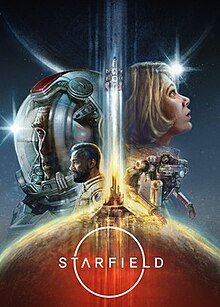
The development of Starfield began after Fallout 4’s release, with Bethesda Game Studios focusing on creating a new, original sci-fi universe. They employed the Creation Engine 2 for this project, a significant upgrade over previous iterations.
Bethesda’s ambitious space RPG, Starfield, has been a subject of much anticipation and interest. Fans have been eager to learn more about its origins. Today we delve into the making of this game.
This article will have Starfield development history explained, giving you a clear idea of the process. From early concepts to the final product. We’ll cover key milestones and creative decisions.

Starfield Development History Explained
The journey of Starfield, Bethesda Game Studios’ ambitious space-faring role-playing game, is a long and fascinating one. It didn’t just appear overnight! Let’s travel back in time and take a close look at how this epic adventure came to be.
The Genesis: Ideas and Early Concepts
Starfield’s story begins long before any official announcement. In fact, the seed of the idea was planted way back after Bethesda completed The Elder Scrolls IV: Oblivion in 2006. The team at Bethesda, known for their rich and immersive worlds, started thinking about tackling a different kind of setting: space. This wasn’t just a simple switch of scenery; it was a complete overhaul of the kind of game they created.
Initially, the idea was just that: an idea. It wasn’t a fully formed game concept yet. Imagine a bunch of game developers throwing around cool ideas— “What if we had a game with spaceships?”, “What if we could explore different planets?”, and “What if we told a unique story in the vastness of space?” These early brainstorming sessions were crucial. They helped shape the fundamental principles that would later guide the development of Starfield. It was less about making a sci-fi game just to do it, and more about crafting a unique experience, different from fantasy games such as their famed Elder Scrolls series.
During this stage, no actual game coding or artwork was done, it was all about the foundation. They considered various settings, story ideas, and game mechanics to make the space exploration both interesting and fun.
The Long Wait: From Idea to Pre-Production
After the initial brainstorming, the project took a back seat as Bethesda focused on other major titles, like Fallout 3, Skyrim, and Fallout 4. These games took a significant amount of time and resources, and Starfield was placed on the backburner. But the ideas kept brewing. The desire to craft an epic space adventure never truly faded. This period, though lacking immediate, active development, was also a time of quiet incubation. The core team would revisit their initial concepts, refining them based on their experiences with new game technologies and ideas.
Around 2013, after the success of Skyrim and as they began wrapping up Fallout 4, pre-production for Starfield truly started. Pre-production is when they take the rough ideas, and develop them into concrete plans. The game design was fleshed out, including the kinds of planets players would explore, the types of characters, the narrative and missions, and the core mechanics of gameplay, like combat, crafting, and exploration. This is not the building process, but rather planning out exactly what they want to build.
This period also saw the development of the game’s lore and background. The team had to figure out the history of the Starfield universe, the different factions that players would encounter, and the overall tone of the game. This is where they built the universe the player would ultimately interact with.
The Official Announcement: Reaching for the Stars
In 2018, Starfield was officially announced at E3, marking a major turning point in its development. This announcement wasn’t just a simple reveal; it was a declaration of Bethesda’s next big adventure. The teaser trailer, though short, showed a unique aesthetic and hints of a mysterious story, creating a huge buzz in the gaming community. People were very excited, because the announcement showed that Bethesda was ready to start something entirely new. This put the development of Starfield in the public eye, something that was very closely watched.
This announcement also showed the commitment to developing the game. Fans were thrilled to have an idea about the project and the new kind of game that they were planning to make. It marked a new chapter in the game’s story.
The Development Hurdles: Challenges and Solutions
Developing Starfield was not without its challenges. Creating a game with such a large and complex universe, a new engine, and new mechanics required overcoming many obstacles. Here are some of the significant challenges Bethesda faced:
Creating a New Engine: Creation Engine 2
One of the biggest undertakings was developing a new game engine. Bethesda’s previous games used the Creation Engine, and although it had served them well, they recognized the need for an updated engine to handle the scale and complexity of Starfield. This new engine, Creation Engine 2, was designed from the ground up to power the vastness of space, with features tailored for:
- Larger Environments: The new engine allowed for seamless exploration of large, detailed planets and space stations.
- Improved Graphics: The game takes advantage of advanced rendering techniques to produce detailed environments and character models.
- Enhanced Performance: The engine was optimized to handle complex simulations of physics and AI in large open worlds.
This engine wasn’t just an update; it was a complete rebuild, and this process took significant time and resources.
The Scale of the Universe: Balancing Exploration and Story
Another major challenge was balancing exploration with the game’s story. Starfield has over 1,000 planets for the player to explore, which creates a huge sense of freedom. However, simply creating a large universe is not enough. Each planet had to offer something to engage the player, whether it be resources, unique encounters, quests, or points of interest. The team had to develop the means for the player to find interesting things, without feeling overwhelmed by a vast and empty universe. This balancing act was key to the final game’s quality.
Crafting a Compelling Narrative: Balancing Player Freedom and a Driven Story
The narrative was another area of focus. The challenge was to develop a story that was both compelling and flexible, allowing players to feel as if they had freedom to explore and make their own choices. They needed a central storyline, with plenty of side quests, and different stories to discover during exploration. The narrative needed to draw the player in, but also give them the freedom to create their own experiences within the game world.
Key Design Philosophies: What Guided the Development?
Several key design philosophies guided the creation of Starfield. These principles shaped the game’s core mechanics and overall feel.
Player Agency: You Choose Your Path
Player agency is very important in Bethesda games, and Starfield is no different. The game allows players to choose their background, their skills, and how they interact with the world. This focus on player choice also allowed the player to make crucial decisions that would shape the story’s outcome.
Emergent Gameplay: Creating Unique Moments
Emergent gameplay refers to the unplanned and unique moments that arise from the interactions within the game. This was one goal of the team, and was done by creating a dynamic world, with different factions, diverse resources, and the freedom to explore in multiple ways. This allows for unique and unpredictable experiences for each player.
Detailed Worldbuilding: Creating a Believable Universe
Bethesda is well-known for creating detailed and believable worlds, and they focused on this when making Starfield. They spent time crafting the game’s lore, the backstories of different factions, and details about each planet, creating a world that felt deep, engaging, and alive. This includes the cultures, technology, and history that make the game’s universe feel consistent and immersive.
The Art and Visual Style: Defining Starfield’s Look
The art and visual style of Starfield are also important aspects of its development. The game is a mixture of different science fiction influences, resulting in a style that is both familiar and unique. Here’s a look at some of the key elements:
“NASA-Punk” Aesthetic: Grounded in Reality
Starfield is often described as having a “NASA-punk” aesthetic. This means that the technology, spaceships, and environments are not overly futuristic and fantastical. Instead, they are grounded in a more realistic depiction of space travel, taking inspiration from real-world space programs like NASA. It is a unique blend of the familiar and the futuristic, giving the player a strong sense of immersion and believability.
Planet Diversity: From Barren Wastelands to Lush Ecosystems
The game features a wide variety of planets, each with its own unique visual style. Some planets are barren and rocky, while others are covered in lush vegetation or frozen landscapes. The team worked hard to make each planet feel distinct and inviting to explore. This diversity of planet types also enhances the feeling of scale in the universe.
Character Design: Realism and Expression
The character design also focuses on realism. The characters look detailed, with a wide range of facial expressions, and different styles. The team spent considerable time creating the characters and the art style.
The Music and Sound Design: Creating the Atmosphere
Music and sound design play an essential part in creating the overall feeling of Starfield. Bethesda made sure the music and sound work together to create an immersive and engaging experience. Here’s how they achieved that:
Original Soundtrack: Composing the Space Opera
The game’s music is all original, and is designed to enhance the feeling of wonder and exploration. The soundtrack blends orchestral sounds with electronic elements, creating a sound that is both epic and atmospheric.
Immersive Sound Design: Feeling the Vastness of Space
The sound design was also carefully crafted. From the whoosh of spaceships to the rustling of alien plants, every sound was made to add to the game’s immersive quality. This attention to detail creates the sense of actually being in the game’s space environment.
Post-Launch Support and Future of Starfield
The development of Starfield didn’t end with its release. Bethesda has been actively working on updates, fixes, and improvements to the game, with new content planned for the future. The community feedback is also important in shaping the future of Starfield. Bethesda listens to player suggestions and addresses issues as they arise. This allows for the game to grow and evolve even after its launch.
The future of Starfield is focused on continued improvement, with plans for expansions, updates, and community features. This will allow for players to keep enjoying the game for years to come.
In conclusion, the development of Starfield was a long and complex journey, involving years of planning, hard work, and creativity. It’s a testament to the commitment of the team at Bethesda, and they will keep working to make the game as best as they can. From the initial idea to the ongoing post-launch support, Starfield shows the hard work and dedication involved in making a game of this scale, that has given players a large and exciting universe to explore.
Is Starfield's Missing Link a 20-Year-Old Game? A Comparative Analysis with Freelancer
Final Thoughts
Starfield’s journey began long ago, with Bethesda crafting a new universe. They explored fresh ideas, making iterative changes. This lengthy development cycle involved numerous design revisions and technology shifts.
The team faced challenges in creating such an expansive game. They focused on delivering deep gameplay and exploration. Starfield development history explained, includes the dedication required for this kind of scope.
The studio’s meticulous process culminated in the game we see now. It is a testament to their ambition. The game’s evolution is something truly noteworthy.

