
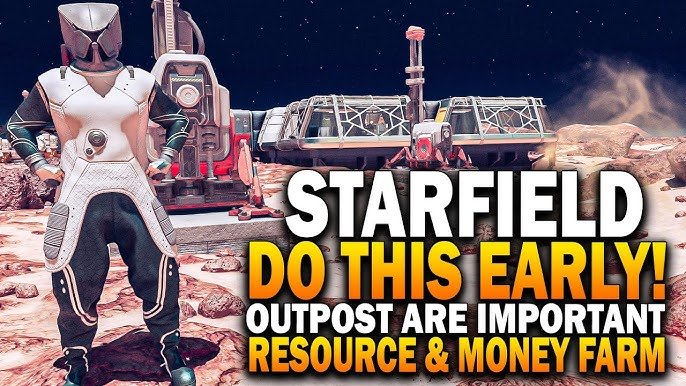
Efficient Starfield resource farming strategies involve identifying high-yield planets, utilizing outposts for automated collection, and regularly selling surplus materials.
Navigating the vast expanse of Starfield requires a steady supply of resources, crucial for everything from crafting to outpost building. You’ll quickly find yourself needing tons of materials, and knowing the best routes for acquisition will save you much needed time. Effective Starfield resource farming strategies greatly impact your ability to progress smoothly.
Understanding where to find specific resources is key, of course, but also utilizing the game’s mechanics such as outposts, will make the resource gathering efficient. Strategic outpost placement allows you to automate the collection process, providing a passive income of materials while you are off exploring. Regular selling of unwanted materials will help to build up your credits.

Starfield Resource Farming Strategies
Okay, space explorers! You’ve jumped into the vast universe of Starfield, and you’re probably realizing that crafting and building require lots and lots of resources. Don’t worry; everyone needs to gather materials! This isn’t just about wandering around; it’s about being smart about where you go and what you do. We’re going to talk about the best ways to get those precious resources so you can build awesome outposts, upgrade your gear, and make your ship the envy of the galaxy. Let’s get started!
Understanding Starfield Resources
Before we dive into the best spots, let’s chat about what resources actually are in Starfield. Think of them as the building blocks of everything you can make. They are not just pretty rocks; they’re essential for making things in the game. There are a lot of different materials, but they mostly fall into a few groups:
- Metals: Stuff like Iron, Aluminum, Copper, Nickel, Cobalt, Gold, Silver, and more. These are used for everything from ship parts to weapons.
- Gases: Helium-3, Argon, and other gases are vital for fuel and powering certain equipment.
- Organic Materials: These include things from plants and animals, like Fiber, Adhesive, and Toxin. They’re used in research and crafting.
- Rare Materials: These are the tough-to-find resources, like Isotopic Coolant or Veryl, that you will need for advanced crafting and upgrades.
Each planet and moon has different types of resources, which adds a lot of variety to the game. Knowing what’s available where is key to farming efficiently.
The Survey Scanner: Your Best Friend
First things first, get to know your survey scanner. This little gadget is super important for resource farming. When you land on a planet, pull out your scanner. It will show you the different resources available on that particular planet. Look for the glowing icons. Each icon represents a resource node or vein you can extract from. You will need to walk or travel near these icon so that you can scan and know the proper resource. This is the first step for resource extraction.
Scanning Tips
- Scan Everything: Take the time to scan plants, rocks, and animals. Some of them will give you valuable materials, and not every resource is visible as a node at the surface.
- Check the Planet Data: Before landing on a planet, check its description. It will give you a basic idea of the resources available there, which can save you time.
- Look for Clusters: Sometimes resources are found in large clusters. This means you can get lots of materials in one area instead of jumping around everywhere.
Outpost Building for Resource Gathering
Setting up outposts is another smart way to get resources. It will automate the mining and extraction of resource, so you don’t have to do everything by hand all the time. With an outpost, you’re basically setting up your own little resource factory.
Choosing the Right Location
When choosing a place to build your outpost, keep the following in mind:
- Multiple Resources: Try to find a location where multiple different resources are close together. This helps to maximize the outpost efficiency. You can place multiple extractors in the same place to mine different resources from same area.
- Flat Terrain: Flat areas are easier for building. It is difficult to build outpost on uneven terrain.
- Proximity to Landmarks: Being close to landmarks can help with navigation and make it easier to find your outposts.
Setting Up Your Extractors
Once you’ve found a good spot, it’s time to set up extractors. These are the machines that pull the resources from the ground.
- Place the Correct Extractor: Ensure that you are placing the correct type of extractor to the specific resources you are trying to mine. For example, if you are trying to mine iron, you should place the iron extractor.
- Power is Key: Don’t forget to provide the power to the extractor with a power source like solar panel or generators.
- Storage: The resources will be stored into the nearby storage unit. So, place the storage unit to collect the resources automatically.
- Linking Storage Units: Link multiple storage units to increase the storage capacity of the outpost.
Transporting Resources
Once your extractors have mined some resource, you will need to move the resources, you have two options.
- Manually: Simply pick up the resource and transport yourself to the places needed.
- Automated: Setting up cargo links, so that outpost resources can be transported to the main base or any other outpost to use.
Efficient Mining Techniques
Not all resources come from extractors. Sometimes, you will need to grab your cutter and get them by hand. Here are some tips for better manual mining:
Using Your Cutter Effectively
- Aim for the Center: Focus the center beam on the resource node for fast extraction.
- Be Patient: Don’t just go around wildly. Aim carefully.
- Upgrade Your Cutter: As you progress, upgrading your cutter will increase its efficiency for resource extraction.
Scanning and Mining
Always survey the area before starting to mine. This will give you information on what resources are around the area. Look for the most valuable resources.
Looting Containers and Enemies
- Containers: Always loot containers you found on your exploration. Sometimes you will find rare resources.
- Enemies: Defeated enemies can drop different types of resources, and sometimes even rare materials.
Specific Resource Farming Spots
Alright, let’s talk about some specific locations where you can find valuable resources.
Early Game Resource Hotspots
You need resources for the early game, and here are some of them:
- Kreet: This moon has several easy-to-access resources, like iron and aluminum. It’s a great place to start building your first outpost.
- Jemison (Alpha Centauri): You will visit this planet as a part of the main story. You will find iron, water and many other resources on the starting planet.
- Mars (Sol): This planet has some copper, iron and other valuable resources.
Mid-Game Resource Locations
As you go deeper into the game, you need a lot more resources, so, here are some locations:
- Andraphon (Narion System): Andraphon is a moon in the Narion system that contains lots of resources like Iron, Nickel and Cobalt. It’s also close to other resource-rich planets, making it a convenient spot for multiple outposts.
- Zamka (Alpha Centauri): Zamka is good for organic resources. Scan the plants and animals for unique materials.
- Porrima II (Porrima System): This planet offers a great variety of common resources like Iron, Nickel, Cobalt, and more.
Late-Game Resource Locations
For those super rare resources, you’ll need to go to more dangerous locations. Be prepared for fights!
- Hyla II (Hyla System): You can find many rare resources like Vanadium, Tungsten, and more on this planet.
- Bannoc IV (Bannoc System): This planet is a good source of Titanium and other rare materials.
- Any High-Level Planet: Look for planets in systems that are higher in level, as they are more likely to have rare resources available.
Trading Resources
Sometimes, farming is not the only way to gain resources. Another important tactic is buying and trading resources.
Where to Buy Resources
- Trade Authorities: Trade Authority locations, are found in major cities and spaceports. They always have a wide variety of resources for sale.
- General Stores: Look for stores in settlements. Sometimes, they have resources that are not commonly available anywhere else.
- Ship Technicians: Sometimes, ship technicians also sell some resources. It’s always good to check their inventory.
Bartering Tips
- Sell Unwanted Items: You can sell your old or useless gear for credits. Use these credits to buy resources you need.
- Check Prices: Prices vary from place to place. So, it’s good to travel to different stores to check the resource prices and get better deals.
- Negotiate: Use persuasion skills to get better prices while buying resources.
Utilizing the Research Lab
Before finishing up, let’s discuss the research lab. This is the area where you unlock the ability to make advanced tools, equipment and extractors.
Unlocking New Technologies
- Research Projects: Complete the research projects, so that you can build better equipment and outposts.
- Scan New Things: Scan all new resources, plants and animals. This will give you new information and unlock new research projects.
- Advanced Extractors: Research advanced extractors, so that you can increase the speed of resource extraction.
Advanced Resource Farming Tips
Now, let’s discuss some more advanced techniques to become the top resource farmer.
Crew Skills
Having a skilled crew can help with resource collection and production.
- Botany and Zoology: Crew members with these skills can help to gather organic resources more efficiently.
- Outpost Management: Skill will increase outpost production.
- Other Resource Related Skills: Skills like Geology help in scanning and locating the resource veins more easily.
Strategic Outpost Placement
The key is not just building outposts, but strategically building outposts that complement each other.
- Resource Distribution Networks: Use cargo links to create networks, that can transport resources to multiple outposts.
- Specialized Outposts: Focus outposts on specific resource extraction.
Using Your Ship’s Cargo
Don’t forget your ship! Use your ship’s cargo space to transport resources to your main base or selling location.
- Upgrade your Ship: Increase your ship’s cargo capacity for faster resource transportation.
- Dedicated Cargo Hauler: Create a separate ship for resource transportation and storage.
Resource farming in Starfield is not just about getting the resources. It’s about being smart, strategic and exploring. With these tips, you’ll be able to get resources and become a master builder in Starfield.
Starfield Outposts INCREDIBLY IMPORTANT! The BEST Planet For Resource Farm & Starfield Outpost Guide
Final Thoughts
Effective Starfield resource farming strategies involve planned outpost placement near varied resources and efficient cargo link management. Using botany and zoology skills aids in gathering organic materials more effectively. Regularly visiting planets with multiple resource types also provides a good yield. Remember to use your scanner to identify the most productive locations.
These methods, carefully planned and executed, will provide necessary materials for crafting and upgrades. Focusing on these methods allows for a reliable supply. So, improving your Starfield resource farming strategies will benefit your whole game experience.

