
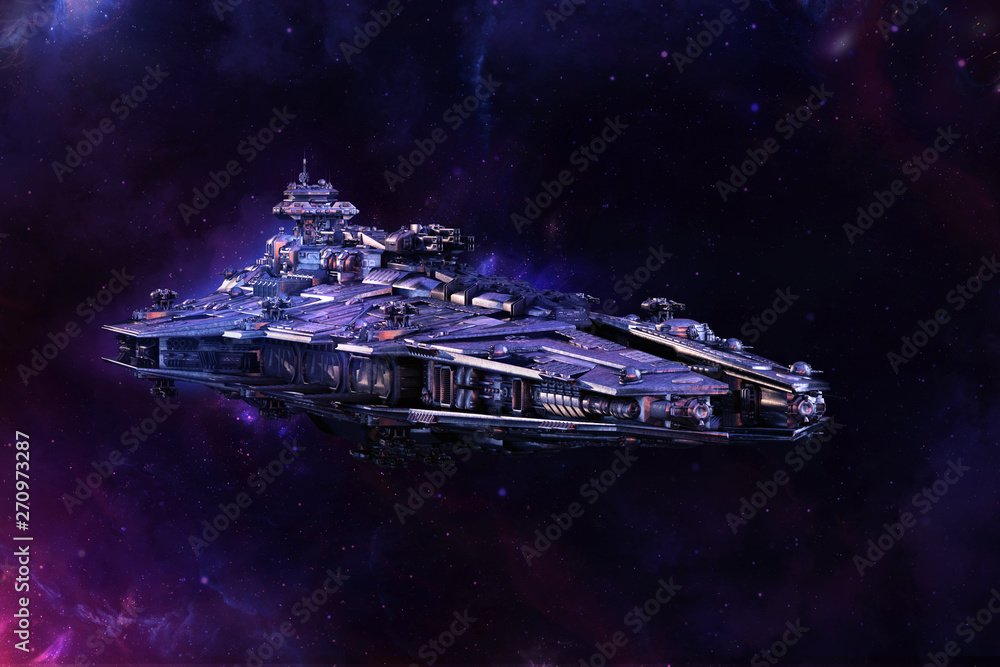
The game Starfield allows for exploration of scientific concepts like faster-than-light travel and resource management in simulated environments.
Ever wondered how much real science went into the fictional world of Starfield? The game presents a fascinating playground for considering actual physics and technological possibilities. Starfield scientific concepts exploration forms the very core of its gameplay experience, making players ponder on everything from spaceship propulsion to alien life.
Players delve into complex systems involving resource acquisition and the use of specialized scientific tools.
This interaction provides a unique and engaging way to indirectly learn about different scientific principles.

Starfield Scientific Concepts Exploration
Starfield isn’t just about exploring cool planets and blasting space pirates; it’s also packed with interesting science ideas. Many of these ideas come from real science, while others are more made-up for the game. Let’s dive into some of the fascinating scientific concepts that make the Starfield universe tick!
Gravitational Anomalies and the Unity
One of the biggest mysteries in Starfield revolves around Gravitational Anomalies and the Unity. Imagine places in space where gravity doesn’t behave as expected. These anomalies are where you find the strange artifacts that play a big role in the game’s story. It’s like someone turned the gravity dial up to eleven! While we don’t have real-life anomalies as extreme, scientists are constantly learning about gravity. Einstein’s theory of relativity describes gravity as a curvature in spacetime caused by mass, but there’s still much we don’t completely grasp about it, particularly at very high energy scales.
The Unity: A Leap Beyond Physics?
The Unity itself is something that goes past known physics. In Starfield, it’s presented as a way to experience multiple universes and perhaps gain immense power. The idea of multiple universes, or the multiverse, is discussed in some branches of physics, especially in string theory and quantum mechanics. However, the Unity in Starfield is a game concept, not something scientists have real evidence for. It’s a mind-bending idea about stepping beyond what we know about time, space, and reality.
Faster-Than-Light Travel: The Grav Drive
Space is huge, and traveling between stars using only traditional rockets would take thousands of years. Starfield sidesteps this problem using something called the Grav Drive, which allows ships to travel faster than the speed of light. This is a problem for real science, because Einstein’s theories showed that nothing with mass can travel as fast as or faster than light, which makes this particular aspect of Starfield more fiction than science.
How Does the Grav Drive Work in the Game?
In the game, the Grav Drive doesn’t simply boost speed, it warps space around the ship so it seems to move faster than light. It’s kind of like folding a piece of paper so that two points that are far apart are suddenly touching. While this sort of space-warping is theoretically considered in the study of theoretical physics, there’s currently no practical way to do it. The Grav Drive concept is a fun fictional interpretation of this idea, letting us hop between star systems in a reasonable timeframe.
Planetary Diversity and Biomes
Starfield features a vast collection of planets, each with unique environments, or biomes. You’ll find icy worlds, deserts, rocky moons, and planets covered in jungles. This idea of diverse worlds is based on real exoplanet research. Scientists have found thousands of planets outside our solar system, and they vary wildly. Some are fiery, others are frozen, and some might even have oceans of liquid methane. The game showcases the incredible possibilities of how environments can develop based on distance from their star and what they’re made of. In the real world, scientists are also studying these exoplanets through powerful telescopes to learn more about their composition and atmosphere.
Key factors Influencing Biomes
In Starfield, just like in real life, a number of elements affect a planet’s biome, this includes:
- Distance from the Star: Closer planets tend to be hotter, while planets further away are typically colder.
- Atmosphere: The makeup of a planet’s atmosphere has a massive effect on its temperature. A thicker atmosphere can trap heat, and certain gases such as carbon dioxide are responsible for a phenomenon called the greenhouse effect.
- Magnetic Field: A magnetic field can protect the planet from the harmful radiation of its parent star.
- Composition: What a planet is made of influences the presence of water, as well as the presence of life.
Artificial Gravity and Space Stations
In Starfield, artificial gravity is everywhere; on ships, space stations, and even some outposts. This is very convenient, allowing you to walk around without floating. But in reality, creating artificial gravity is still a scientific challenge. The most practical method, the one that Starfield uses, is spinning things to use centrifugal force to mimic gravity. This is the same force you feel when a car goes around a turn quickly.
Centrifugal Force and Artificial Gravity
In Starfield, it’s very likely that space stations and ships have spinning sections to create artificial gravity. The faster you spin, the stronger the artificial gravity. The bigger the radius, the less dizzy you’ll feel, but a very large station is more complex and expensive to build. In the future, creating large rotating structures in space may be possible, but there are several engineering problems to overcome before we reach the level of technology seen in Starfield.
Xenobiology: Studying Alien Life
Starfield lets you encounter various types of alien creatures. The study of alien life, called xenobiology, is not really a full field of science because no actual alien life has been discovered. However, scientists still think a great deal about what life beyond Earth might be like, based on what we know from biology. The variety of creatures in Starfield, some friendly, others hostile, shows that living things could evolve to adapt to different environments, which is something that also happens on Earth. The game gives us a cool idea of how unique these creatures may be, even if they do not share anything in common with life on Earth.
Adaptations in Starfield’s Xenofauna
The creatures in Starfield exhibit a variety of adaptations to their environments. These adaptations, both in the game and in real life, are fascinating to observe. Here are some examples:
- Body shape and size: Some animals are small and compact to retain heat in cold areas, while some are long and skinny to move more easily in the environment.
- Specialized features: Creatures have unique tools like sharp claws or powerful jaws, just like in Starfield, each suited for their specific role in their ecosystems.
- Color and camouflage: Some creatures have unique colors that help them blend into their surroundings, either to help them sneak up on their prey, or to hide from predators.
Resource Extraction and Planetary Mining
Starfield’s gameplay includes gathering resources through mining and resource extraction, crucial for crafting and building outposts. This concept is grounded in real-world needs for elements and minerals in our industries. In reality, mining on other planets or asteroids could become essential as we use up resources on Earth. Starfield showcases these processes of scanning planets, setting up mining equipment, and transporting materials, although it simplifies the technological and logistical issues.
Real-World Challenges of Space Mining
Although Starfield makes it look very easy to mine planets, in real life, there are a number of challenges that must be overcome:
- Finding profitable deposits: Identifying locations with enough of valuable resources is not easy.
- Developing specialized equipment: Space mining needs machines that can work in extremely low pressure, extreme temperature, and without human supervision.
- Cost and energy: Transporting resources back to Earth would be very expensive, and a large energy input.
The Role of Research and Technology
Throughout Starfield, you are constantly researching and upgrading technology. This aspect is a key part of progress in real science too. Scientists are always experimenting, testing new ideas, and improving what we already have. The game’s skill system pushes you to keep learning, just as the real world of science encourages continuous progress.
The Importance of the Scientific Method
In both Starfield and real life, a systematic way of learning is important. The scientific method is the way scientists find solutions to real world problems. The steps involved are usually the following:
- Observation: Carefully study the world around you, and make notes of the things that catch your attention.
- Hypothesis: Form an educated guess to explain the reason behind what you see.
- Experiment: Design and conduct experiments to test the hypothesis.
- Analysis: Evaluate the experimental data and see if the results of your experiment support your hypothesis.
- Conclusion: If your results support your hypothesis, you can conclude that you’ve found an explanation. If not, you need to go back to the drawing board.
The Ethical Implications of Advanced Technology
Starfield touches on ethical questions relating to advanced technologies, like controlling alien creatures, altering planets, and the implications of the Unity. These ethical dilemmas are also relevant to our own real-world science, where we must consider the consequences of new abilities. Should we change the environment of a planet to make it more habitable? What are the moral implications of advanced artificial intelligence? These are some of the questions that should be discussed as we continue to grow as a technologically-advanced species.
Ethical Questions in Real-World Science
We need to carefully think about the ethical questions when developing new scientific inventions. Here are some of the questions we should be asking:
- Environmental impact: What effects might our projects have on the environment, and what steps can be taken to make them better for the planet?
- Social impact: How will new inventions affect people’s lives, and are we ensuring that those inventions are beneficial for everyone?
- Moral implications: Do our projects involve a moral hazard, such as whether we should be making changes to life in ways that may be dangerous?
Starfield blends real science with creative science fiction, creating a very interesting game world. It uses concepts that scientists study, while adding its own fantastical twists, pushing the limit of what could be possible with future technologies. It is a fun game that can make people wonder what the future may bring.
1 PERFECT OUTPOST LOCATION! This is the only planet you need
Final Thoughts
Starfield presents a playground for players to engage with various scientific ideas. We witness concepts like gravity manipulation and faster-than-light travel. These elements, while fictional, are rooted in scientific theory, sparking curiosity.
The game encourages exploration of planetary systems and bio-diversity. Players examine diverse lifeforms in different environments, considering adaptation. This provides a fun context for thinking about real scientific disciplines.
In essence, Starfield scientific concepts exploration offers an engaging way to think about scientific possibility within a gameplay experience. The game’s setting allows us to actively consider the potential consequences of certain technologies.

