
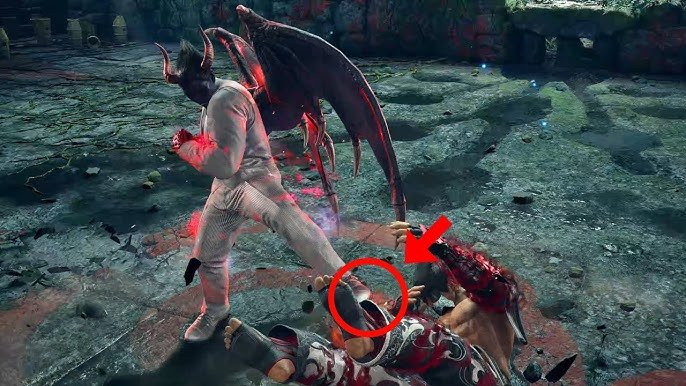
Advanced Tekken 8 gameplay techniques focus on mastering movement options, utilizing frame data effectively, and understanding character-specific combos and setups for high-level play.
Ready to take your Tekken 8 game to the next level? It’s time to move beyond basic button mashing and start thinking strategically about your approach. This guide will provide a glimpse into some crucial Tekken 8 advanced gameplay techniques.
These techniques form the bedrock of competitive play. You’ll learn how to control space, punish errors, and create opportunities. Expect to improve your win rate dramatically by practicing these methods.

Tekken 8 Advanced Gameplay Techniques
Alright, you’ve been throwing down in Tekken 8, maybe you’ve even climbed a few ranks. You know the basic moves, you can kinda sorta pull off some combos, but you’re itching for something more. You’re ready to go from button-masher to a force of nature in the Iron Fist Tournament, right? Well, you’ve come to the right place. This isn’t about simple jabs and kicks. We’re diving deep into the advanced stuff – the kind of techniques that will make your opponents think you’ve got some kind of psychic link to the game.
Understanding Frame Data
Before we get into the flashy stuff, we have to talk about something that might sound a little boring but is super important: frame data. Think of frame data like the secret code of Tekken. Every move in the game takes a certain amount of time to start up, connect, and recover. This time is measured in frames, and each frame is just a fraction of a second (1/60th of a second, to be precise!).
What are Frame Advantages and Disadvantages?
Understanding which moves are faster than others is key. If your move has a lot of startup frames, your opponent has more time to react, block, or even counterattack. If your move recovers slowly, you’re left vulnerable. A move that lets you move before your opponent can do anything is said to give you a frame advantage. This is like having a head start in a race. On the flip side, a frame disadvantage means your opponent recovers faster, which opens you up for punishment. Knowing this, you can create and disrupt offensive pressure. You don’t want to throw out slow moves when your opponent will be able to punish you.
For Example:
- Fast Jab: Might have a startup of 10 frames and recovery of 10 frames.
- Big Haymaker: Might have a startup of 20 frames and recovery of 15 frames.
The jab is faster, making it a great choice for interrupting your opponent’s slow moves or for setting up combos. The haymaker does more damage, but it’s easier to see coming. There are some websites and resources that provide frame data for Tekken 8 which you should definitely consult.
Practical Application: If you block a move that is “-10 on block,” that means you are now +10, and if you have a fast 10-frame move, you can punish that move. This is the core basis of punishing.
Movement Mastery
Movement is just as important as the moves you throw. Tekken isn’t a game where you just stand there and trade punches. It is very important to understand how to move, how to close gaps, and how to make space between you and your opponent. Good movement can help you bait out your opponent’s attacks and help you avoid taking damage. It also opens up unique offensive opportunities.
Backdashing and Sidestepping
- Backdashing: This lets you create distance between you and your opponent. You need to practice quick, fluid backdashes. It’s not just about walking away. Good backdashing involves canceling the backdash animation with another backdash to move backward further faster, and also to not be vulnerable to moves that track.
- Sidestepping: Moving to the side can help you avoid attacks that are linear. Some attacks in the game only track straight forward, and these attacks can often be avoided by sidestepping. Practice switching between sidesteps and guard to avoid punishment. Also know that the speed and effectiveness of a sidestep can change from character to character.
Korean Backdash
The Korean Backdash, or KBD, is a core technique in Tekken. It’s basically a very quick backdash canceled by crouching or blocking to maximize distance gained while retaining control. KBD also lets you rapidly reset the neutral to approach your opponent more safely. To perform a KBD, you quickly tap back, then back and crouch. Practice this in training mode until you can perform it consistently. This isn’t an easy skill, so be patient with yourself!
Spacing and Zoning
Spacing is all about knowing where you are in relation to your opponent and using that to your advantage. You don’t want to be too close that they can easily throw you or too far away that you can’t attack. A big part of the game is baiting your opponent into coming closer to you so that they can fall into your range. Zoning involves using moves that keep your opponent at a distance that’s comfortable for you. Certain characters have attacks that are better suited to zoning than others.
Punishing
Punishing is about capitalizing on your opponent’s mistakes. If they whiff a move (swing and miss), or if they use a move that has a lot of recovery time, you should be ready to punish them with a move or combo. Punishing effectively is all about understanding frame data.
Whiff Punishing
When your opponent throws out an attack and it doesn’t hit you, it’s called a whiff. It could be because you sidestepped, backdashed, or they just miscalculated. Good players look for these whiffs and take advantage. A fast, long-range move is usually a good choice for a whiff punish.
Block Punishing
Some moves are punishable even if blocked. Moves that leave you at a big disadvantage after blocking (see frame data) are perfect for punishment. After blocking such a move, you should punish with a move of your own that is a good enough frame advantage. Remember that different moves have different block stun and frame disadvantages.
Combos and Juggle Techniques
Combos are strings of attacks that connect with each other. Juggle combos keep your opponent in the air so they can’t block. Knowing a good combo can do tons of damage! You need to experiment with your character to learn how to use combos properly and optimize for damage. Here’s a breakdown.
Starter Moves
Combos often start with a launcher move. This could be an uppercut or a special move that sends the opponent flying into the air. These are crucial, so you need to practice these moves and be ready to take advantage of these opportunities.
Combo Strings
After the launch, you need to use a series of moves that connect while the opponent is in the air. You need to time these moves correctly or they won’t connect. Every character has different combo paths and move strings, so you should check some guides to get the best possible results.
Wall Carry
Wall carry refers to combos that lead to the opponent bouncing off the wall. Wall combos can be devastating, so knowing how to use them is important. Some combos let you carry the opponent across the screen and set up wall bounces for maximum damage.
Heat System Techniques
Tekken 8 introduces the Heat system, which adds another layer to advanced gameplay. When a player activates Heat, they gain several benefits.
Heat Activation and Management
Activating Heat is not always the best thing to do. It’s good to be patient and try to activate Heat at the right time. You don’t want to activate heat when you don’t have any offensive opportunities, and it’s good to activate it when you can capitalize on its benefits.
Heat Engagers and Rush
Heat Engagers are specific moves that immediately activate Heat and also grant momentum. They often come with additional properties, such as wall carry or even armor. Some moves have a secondary attack after they connect, so knowing your heat engagers well and their follow ups can be great for a successful offensive attack. Heat Rush allows you to cancel some moves into special dashes to create new mix ups.
Heat Smash
While in Heat, each character has access to Heat Smashes which do more damage. Heat Smashes are often slow but unblockable. Heat Smash often leaves you open if whiffed, so its important to use them at the right moment.
Mixups
Mixups are when you force your opponent to guess what you’re going to do next. This could be a low attack, a high attack, or a throw. The goal of a mixup is to create a scenario where your opponent can’t defend against everything. If they guess correctly, you may need to switch strategies. If they guess wrong, they will take big damage. A lot of mix ups are frame traps, so you should also understand frame data to make sure you can punish your opponent or that you can’t get punished by your opponent.
Low Attacks
Low attacks hit your opponent’s legs, and they often have to be blocked by crouching. Most players block high by default, so low attacks are an effective way to catch your opponent off guard.
High Attacks
High attacks need to be blocked while standing, and most characters have high attacks that are good at starting offense and combos. However, they can also be easily punished if you are predictable with them.
Throws
Throws can’t be blocked, and they are an important way to break the defense of an opponent that is turtle-ing. You need to know which of your throws are breakable and which aren’t. Breaking a throw requires timing and knowing what the specific button prompts are.
Character Specific Tech
Every character in Tekken 8 has unique moves, combos, and playstyles. What works for one character might not work for another. Knowing your character in depth is a large part of becoming better at Tekken.
Unique Moves
Some characters have special moves that can create unique opportunities. Some characters may also have stances that grant them unique attacks. You need to practice each of your character’s unique moves to understand them and use them properly.
Stances
Stances can change the properties of your character and give them access to different attacks. These stances can create mind games and confuse your opponents, but it’s important to understand the weaknesses of each stance as well.
Practice, Practice, Practice
All these techniques sound complex, and they can be. The best way to learn all of them is to go into practice mode and try them out for yourself. Once you feel comfortable with them, you can try incorporating them into your matches. There’s no shortcut to getting better at Tekken – it takes time, patience, and effort. Don’t get discouraged if you can’t do everything perfectly at first. Focus on improving step by step, and you’ll eventually see the results.
This game is all about growth and getting better step-by-step. Keep learning, practicing, and fighting to keep growing. Once you start understanding all these techniques, you can start creating your own unique plays and take your gameplay to the next level.
STOP guessing! Flash Duck/Fuzzy Duck (4 minute Tekken 8 Guide)
Final Thoughts
In conclusion, Tekken 8 advanced gameplay techniques greatly enhance your fighting prowess. These include frame traps and spacing control. Practice these techniques consistently, improving your execution and timing. Applying this knowledge elevates your gameplay.
Learning advanced movement is crucial for high level play. Utilizing sidesteps and back dashes effectively improves defense. Incorporate these actions for unpredictable offense. It is important to master these complex actions.

