
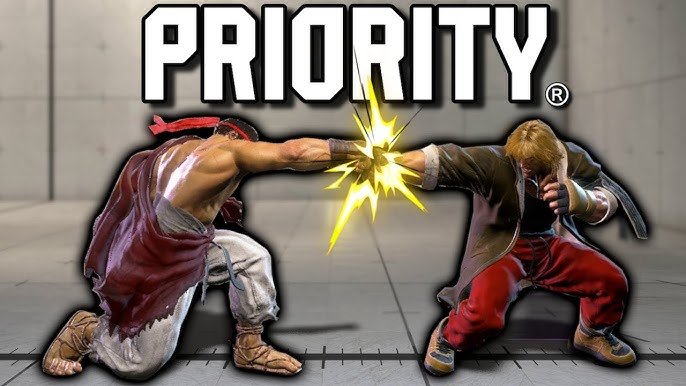
Tekken 8 attack priority during a fight
is determined by frame data, move properties, and character state; faster moves typically interrupt slower ones, but some moves have special properties like armor.
Ever wonder why some of your attacks get stuffed in Tekken 8 despite seemingly hitting first? The game’s complex system of attack priority dictates what connects in a fight. Understanding how these interactions play out is key to winning.
Tekken 8 attack priority during a fight isn’t always straightforward. It’s a mix of speeds, active frames, and special properties of each move. So understanding the rules and applying them takes practice.

Tekken 8 Attack Priority During a Fight
Okay, so you’re diving into the fast-paced world of Tekken 8, and things are getting intense! It’s not just about button mashing; it’s about understanding a hidden system called “attack priority.” Think of it like a rock-paper-scissors game, but with fists, feet, and a whole lot of awesome moves. Knowing attack priority helps you land those killer combos and avoid getting smacked down. This concept will help you level up your game, so let’s explore it!
Understanding the Basics: What is Attack Priority?
In Tekken 8, not all attacks are created equal. Some moves have higher priority than others. This means that if two players attack at the same time, the move with higher priority will usually win, either by hitting the opponent first or by completely negating the opponent’s attack. Imagine two trains heading towards each other on the same track – the stronger train wins, right? It’s kinda like that in Tekken 8.
Here’s a simple way to think about attack priority:
- High Priority: These attacks tend to be faster, safer, and harder to interrupt. They can often overpower other moves.
- Mid Priority: These moves are more balanced; they can be effective but can also be interrupted by high-priority attacks.
- Low Priority: These attacks are typically slower, and they’re more susceptible to being interrupted by faster moves. They often require a good read on your opponent to be effective.
It’s important to note that priority is dynamic. It’s not just about the move itself; other factors play a big part, including timing, spacing, and your character’s moveset. Let’s go into the details!
Factors Affecting Attack Priority
Several things can change how much priority an attack has during a fight. Understanding these factors is key to knowing when and how to attack effectively. Here are some of the main things that affect attack priority:
Frame Data: The Secret Code of Tekken
Frame data is like the secret code that determines how moves behave. It’s all about how many tiny fractions of a second (“frames”) each move takes to start, to hit, and to recover. Here’s what you need to know:
- Startup Frames: These are the frames it takes for an attack to become active. Moves with faster startup frames have higher priority because they can hit first, often interrupting slower moves.
- Active Frames: These are the frames when the attack can actually connect with your opponent. Having more active frames can help with timing and can even lead to multiple hits with single attack.
- Recovery Frames: These are the frames it takes for you to recover after throwing an attack. Moves with shorter recovery frames are safer because you can block or move again quickly. Moves with longer recovery frames leave you open for a counterattack.
Moves with faster startup frames generally have higher priority, especially when both players attack at the same time. However, fast moves often do less damage, while slower moves, may do more damage so always keep in mind the risk and reward ratio before initiating any move.
Move Type: Jabs, Punches, Kicks, and More
The type of attack you use also plays a big role. Each type has its own general level of priority.
- Jabs: These are the fastest attacks, usually with very short reach and typically do not do much damage. Jabs are designed to be fast, giving them high priority in many situations.
- Straight Punches and Kicks: These moves are generally faster than most other non jab moves, with slightly better reach and good power than jabs and they also often have good priority.
- Big Power Punches and Kicks: These are your big, heavy-hitting moves. They’re generally slower, and thus lower in priority. They do have the ability to become power moves or crushes, which can allow them to bypass normal attack priority.
- Special Moves: Special moves are often very dynamic, Some special moves might have invincibility frames or crushing properties, making them have very high priority in the situations where they are effective. But, some special moves have very high startup frames and are very punishable.
Generally, faster moves have a higher chance of interrupting slower attacks, but the specific frame data will determine the outcome.
Range and Spacing: The Art of Distance
How far apart you and your opponent are also has a big impact on attack priority. Attacks that can reach further will almost always beat out attacks that cannot reach, even if the farther reaching attack is slower, this can often lead to easy wins with smart spacing. Here’s the deal:
- Close Range: Fast jabs and close-range attacks shine here. If both players attack within the range of each other’s moves, the move with faster startup frames will likely have higher priority.
- Mid-Range: Straight punches, kicks, and mid-range sweeps are strong in this area. These attacks can sometimes interrupt close range jabs by their longer range.
- Long Range: Longer, powerful moves, or long range specials can be very effective, but they are usually slower and if the spacing isn’t perfect they will be very punishable.
Keeping a proper spacing can allow you to bait your opponent into attacks and make them punishable for your longer attacks, but not enough spacing may allow the same to happen to you. This is known as spacing control, and it’s one of the most important things to learn in Tekken 8.
The Crush System: Bypassing Normal Priority
Tekken 8 uses a crush system. Certain moves are designed to “crush” others, ignoring the normal rules of priority. There are three main types of crush:
- High Crush: These moves avoid high attacks. Your character will usually duck down or go under high attacks, allowing your attack to hit first.
- Low Crush: These moves avoid low attacks. Your character will jump or move up in such a way that will allow them to avoid low attacks.
- Armor Moves: These moves can take a hit and still continue their attack, although, certain armored moves can be broken by specific attacks like throws.
Knowing which moves crush is key to breaking through your opponent’s offense and creating some effective offense of your own. Crushing is an important part of how to out-prioritize other attacks.
How to Use Attack Priority to Your Advantage
Understanding the theory is one thing, but using it to win is another. Here’s how to incorporate attack priority into your game:
Punish and Interrupt
Look for gaps in your opponent’s attacks. If you see them doing a slow move, use a fast jab or mid-range attack to interrupt them. Punish them for trying to attack at the wrong time! This will make them respect your frame data and play more defensively.
Bait and Counter
Sometimes, you can make your opponent attack, knowing your attacks are faster or crush their moves. For example, if you have a move that crushes lows, you can bait your opponent into throwing a low attack then counter with your crushing attack.
Pressure with High Priority Moves
Use high-priority moves to keep your opponent on the defensive. If you know their options are limited by your pressure, you can force them into making mistakes and punish them for those mistakes.
Mix Up Your Attacks
If you just use the same high priority moves over and over, your opponent will soon figure that out and will start to punish you. Keep them guessing by varying your attacks, mixing in low, mid, and high attacks, and use spacing to your advantage.
Character-Specific Knowledge
Every character in Tekken 8 has unique strengths and weaknesses in attack priority. For example, some characters have very powerful and fast jabs, while other characters may focus more on big heavy hitting attacks. It’s a good idea to explore what your chosen character has to offer to make your gameplay even better. Take time to familiarize yourself with your character’s moveset. Understand which moves are safe, which are fast, and which have high priority. The more you know about your character, the better you can use attack priority.
The Mind Game: Strategy Over Raw Speed
Tekken 8 isn’t just about who has the fastest fingers or the fastest moves. It’s also a mental game. Knowing how to use attack priority isn’t just about the frame data or the types of moves. It’s about reading your opponent, understanding their tendencies, and anticipating their actions. Sometimes, a slower move can be more effective than a fast one if your opponent is expecting the fast move. Here is why strategy is better than just using raw speed.
Observation
Watch how your opponent likes to attack. Do they rely on fast jabs? Do they always go for big power moves? Once you understand their playstyle, you can exploit it. For example, if they rely heavily on jabs, you can bait them into a jab and use your mid-range attacks or crush moves.
Adaptation
Don’t be predictable. If your opponent figures out your strategy, switch things up! Use a mix of attacks, spacing techniques, and pressure to keep them on their toes. For example, if your opponent expects you to jab, try using a slightly slower mid range move.
Patience
Don’t rush in, this will lead you to panic. Sometimes the best move is to wait and observe. This allows you to find more openings and see how your opponent reacts.
Practice and Experimentation
The only way to get good at using attack priority is to practice. Go into training mode and experiment with different moves and situations. Try out each of your moves and see their frame data and see how each move stacks up. The more you practice, the better you will get at knowing how different moves will interact. It is also important to experiment with different characters and playstyles, which will in turn make you a better player.
- Training Mode: Spend time in training mode and experiment with different moves. Learn the startup frames, active frames, and recovery frames.
- Online Matches: Put your knowledge to the test in online matches. Don’t be afraid to lose! Each loss is a chance to learn. Try new things in each match and focus on learning, not just on winning.
- Watch Replays: Watch replays of your matches and see where you went wrong and what you can improve on. You can even watch replays of better players to learn new strategies.
By putting in the effort to experiment and practice, you will soon see your results getting better and better. Keep working hard and your skills will improve over time!
Understanding attack priority in Tekken 8 is a game-changer. It’s about more than just knowing what buttons to press, it’s about knowing when and how to press those buttons. By paying attention to frame data, move types, spacing, and crush systems, you can take your game to the next level. So, jump back into the fight, try out these tips, and see the difference they make. You’ve got this!
HOW TO DEMOLISH ANY HWOARANG IN 5 MIN
Final Thoughts
Understanding Tekken 8 attack priority during a fight is crucial for success. Moves with faster startup frames usually beat slower ones. However, some specific moves have inherent properties that grant them priority.
Players must learn which moves interrupt other attacks. Understanding character-specific frame data helps with this learning. This knowledge lets players control the flow of combat.
Effectively using Tekken 8 attack priority during a fight allows players to consistently win. Knowing when to interrupt or when to commit is vital. This is key to winning matches.

