
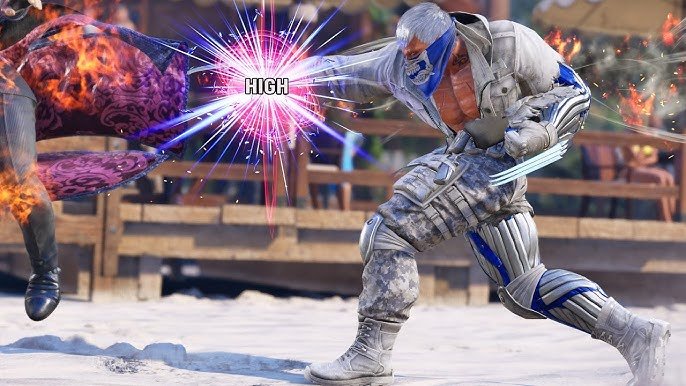
It’s important to understand that there are no Tekken 8 combos that work every time due to opponent variations, but practicing fundamental moves and string continuations will improve consistency.
The quest for guaranteed wins in Tekken 8 is something we all crave, isn’t it? We’ve all felt that frustration of a carefully planned combo failing in the heat of battle. This leads many to seek the mythical “Tekken 8 combos that work every time.”
While a truly infallible combo doesn’t exist, there is still much to learn. Instead of looking for that “magic bullet”, focusing on reliable character specific moves and solid fundamentals will get you a long way.

Tekken 8 Combos That Work Every Time
Alright, Tekken fans, let’s get down to brass tacks! You’re here because you want to dominate in Tekken 8, and that means learning combos. But not just any combos – you want the good stuff. The moves that connect again and again, even when your opponent is trying their hardest to block. We’re talking about reliable combos, the bread and butter of any successful Tekken player. This guide will help you find those combos, and understand why they work so well. We’ll break down some specific examples and give you the tools to create your own consistent offense.
Understanding the Core of Consistent Combos
Before diving into specific button sequences, it’s important to grasp what makes a combo “work every time.” It’s not about magic – it’s about understanding the mechanics of Tekken 8. Several key factors contribute to the reliability of a combo. Let’s explore them.
Frame Data: The Secret Language of Tekken
Imagine each move in Tekken has a hidden clock ticking. This clock is called frame data. It tells us exactly how long a move takes to start, how long it hits, and how long it takes to recover. This information is vital for combo success. A move with fast startup and good hit properties is essential for the start of a good combo. When you string moves together, you want to make sure that the recovery of your first move is faster than the startup of your next move, so that your opponent can’t interrupt your combo. This is called “linking”. Understanding frame data helps you avoid moves that will leave you vulnerable, and it also helps you find moves that can be chained together smoothly. Knowing the active frames (the part of the animation where the move can hit) is also crucial to consistently land follow-up hits. While memorizing every single frame might seem intimidating, having a general understanding of which moves are quick or slow, safe or unsafe, will help your game immensely.
Launchers: Getting Your Opponent Airborne
Many great combos start with a move that launches your opponent into the air. Launchers are special moves that, on a successful hit, make your opponent helpless for a brief moment while they’re being juggled. These launchers usually have good “hitstun” which is how long a character gets stunned when they are hit by this move. There are different kinds of launchers and not all launchers are created equal. Some are high attacks that can be ducked, while some are low attacks that can be jumped over. Some launchers are faster, but don’t offer as good follow-up options. Understanding the strengths and weaknesses of your character’s launchers are key to starting your combos. Remember, your goal isn’t just to launch them into the air, it’s to set them up for the rest of your devastating combo.
Wall Carry: The Art of Taking Them to the Wall
The wall is your friend in Tekken 8. Many combos take advantage of the wall to inflict even more damage. Wall carry refers to your ability to move your opponent toward a wall during a combo. Landing a wall splat is a fantastic way to end a combo. When your opponent hits a wall, they can’t block for a brief moment, which sets them up for a follow-up attack. Incorporating wall carry into your game can make your combos far more effective and increase the damage you inflict.
Beginner-Friendly Combos
Let’s start with some combos that are easy to learn and are very effective. These are the go-to combos you should practice when you’re starting to get a feel for a character. Remember to input the commands using the Tekken notation system (1=Left Punch, 2=Right Punch, 3=Left Kick, 4=Right Kick).
Simple Combos for New Players
Combo 1: 1, 2, 3 (Typically a string that most characters have, it’s a basic jab into a right punch into a left kick)
This is your fundamental bread and butter combo. It’s usually quick, and good for poking to test opponents.
Good for learning the timing for chaining attacks together.
Combo 2: Forward 1, 2 (A simple forward jab into a right punch, which is usually safe on block).
This is your basic poke to initiate an attack.
Use this to test your opponent and see their reactions.
Combo 3: Down+1, Down+2 (a low jab, into another low kick, often leading to a small combo starter or a mixup)
This is a low poke to throw off your opponents
It usually cannot be punished if blocked or only be punished with a quick move.
Practice tips: Focus on executing each button press correctly and with good timing. Don’t rush it. Speed will come as you get more comfortable. These are the foundational blocks that you will build on.
Why These Combos Work
These beginning combos are reliable because they typically include quick attacks with minimal recovery frames. This means that even if your opponent blocks or tries to interrupt you, they likely will not have enough time to retaliate immediately. The follow-up attack in each combo will come out before the opponent can block again, making it a “natural combo”.
Advanced Combo Structures
Now, let’s elevate the game a bit. Here are some examples of more complex and rewarding combos that, when practiced, become consistently useful. These combos might require a bit more practice and timing, but the damage is well worth the effort. Remember each character will have some unique versions of these combo ideas.
The Launcher, Juggle, and Enders
Step 1: Find Your Launcher : Start with a solid launcher that you can consistently perform.
Step 2: The Juggle : Following your launcher, use moves that will keep your opponent in the air. Usually, you will need to string together multiple moves which will juggle them. This part requires some timing, and the number of follow-ups you can do will vary by character and launcher.
Step 3: The Ender : You always want to finish strong! Use a move at the end of your combo that will do good damage or have other benefits such as sending your opponent toward a wall for more follow-up opportunities.
Example: Jin Kazama’s Consistent Combo
Let’s use a character like Jin to show how this looks in practice. Here is a sample combo for Jin that works in most scenarios.
Launcher: f, n, d/f+2 (Electric Wind Hook Fist)
This is a quick mid launcher with a good range.
Juggle: 3,1, 2,2
After launching the opponent, quickly input the following sequence. Make sure you do this with good timing.
Ender: f+4, 3
Jin’s forward right kick, into a left kick will often do enough damage and knock the opponent back.
Why This Combo Works: The launcher is quick and hits at mid-range, meaning it is difficult to react to. The juggle sequence keeps the opponent in the air for a decent amount of time, doing consistent damage before landing the ender to finish it up.
Example: Kazuya Mishima’s Consistent Combo
Here is a sample combo for Kazuya that works in most scenarios.
Launcher: f, n, d/f+2 (Electric Wind Hook Fist)
This is a quick mid launcher with a good range.
Juggle: 1,1,4
After launching the opponent, quickly input the following sequence. Make sure you do this with good timing.
Ender: d/f+1,2
Kazuya will do a quick jab into a mid punch which will do good damage and knock the opponent back.
Why This Combo Works: The launcher is quick and hits at mid-range, meaning it is difficult to react to. The juggle sequence is pretty easy to execute and does good damage before landing the ender to finish it up.
Example: Paul Phoenix’s Consistent Combo
Here is a sample combo for Paul that works in most scenarios.
Launcher: qcb+4
This is a quick low launcher with good range, but it can be jumped over, making it less effective against better opponents.
Juggle: 2, 1
After launching the opponent, quickly input the following sequence. Make sure you do this with good timing.
Ender: f+2,1
Paul’s forward right punch, followed by a left punch does good damage and will knock the opponent back.
Why This Combo Works: The launcher is a safe low attack that does high damage, and while its slow, it will catch your opponent off guard. The juggles and the ender, are very easy to pull off.
Wall Combo Strategies
Walls can drastically change the nature of your combos. They provide an opportunity for extra hits and can severely damage your opponent. Here’s how to effectively use walls to your advantage.
Using Walls to Extend Combos
When your opponent hits a wall, they enter what’s called a “wall splat”. This puts them in a vulnerable state, where they cannot block for a short time. You can use this brief window to get a free hit or extend your combo. Here are a few key concepts to keep in mind:
Wall Carry Moves: Certain moves will force your opponent to be carried toward the wall during the combo. Use these moves to set up the wall splat.
Wall Splat Moves: These moves cause your opponent to bounce against the wall after hitting it. Some attacks cause a hard splat which leaves the opponent vulnerable for longer, while others might cause a soft wall splat, which leaves the opponent vulnerable for less time.
Wall Combo Starters: Once your opponent is in a wall splat, find moves that allow you to continue your attack. This will require some experimenting with your specific character, as each character will have unique moves that will work after a wall splat.
Example Wall Combo
Let’s assume you have launched your opponent and carried them towards the wall with regular juggles. Your goal is to hit them into the wall and continue.
Step 1: Get them to the Wall – Make sure you use moves to move the opponent towards the wall during your regular combo.
Step 2: Wall Splat – When the opponent hits the wall, use an attack that will cause a wall splat, leaving them vulnerable.
Step 3: Wall Ender – After they hit the wall, use an attack that does high damage or sets up more attack opportunities. These can be anything from a simple mid-punch to a more complex move that leads to a ground attack.
How to Practice Efficiently
Knowing the combos is only half the battle, you also need to train them effectively to use them in real matches. Practice makes perfect, but practicing correctly makes it even better! Here’s how you should be practicing:
Practice Mode is Your Friend
Start Slow: Do not try to go fast from the beginning. Execute each move with precision and make sure you are comfortable with the timing of each move. Gradually increase your speed as you become more proficient.
Record Opponent Actions: Use the practice mode to record the actions of the AI to simulate your opponent. This allows you to practice your combos against actual attempts by your opponent.
Turn on Frame Data Display: Use the frame data display to analyze how the timing of your moves, which will be useful in finding good combos.
Consistency over Complexity
Focus on Fundamentals: It is much better to master a few simple combos that are reliable and consistent, rather than trying complex combos that are difficult to execute.
Work on Muscle Memory: The goal is for your combos to become second nature. Repeat your combos multiple times in practice to build the muscle memory needed to pull them off in real fights.
Don’t Get Frustrated: It’s common to fumble the inputs during a combo at the beginning, but don’t let that frustrate you. Keep practicing and you will get better over time.
Mix It Up
Don’t Be Predictable: Make sure that you don’t always use the same attacks or the same combos every time. If you only use one combo, your opponent will learn to adapt to that. This is why it is important to learn multiple combos and mix it up in a fight.
Learn to Adapt: Remember that Tekken is a dynamic game, and you need to be able to adjust your strategies based on your opponent’s actions.
By understanding the mechanics and practicing consistently, you’ll be landing those winning combos in no time. Remember, the most important factor is to keep trying and adapt to the situations. Good luck and have fun practicing these combos!
These “always work” combos are your bread and butter. They’re not flashy, but they are reliable. Remember that even the best players rely on these consistent bread and butter combos and practice them regularly. By learning the basic structure and the fundamental mechanics of the game, you will be able to create your own combos. Keep practicing, and you’ll be well on your way to Tekken domination.
Tekken 8 Jin Death Combo
Final Thoughts
Reliable combos are the key to victory in Tekken 8. Players can greatly improve their win rate using consistent sequences. These often involve launchers followed by juggles.
Focus on learning a few ‘Tekken 8 combos that work every time’. This will provide a solid foundation for more advanced play. Practicing these combos will build your muscle memory.

