
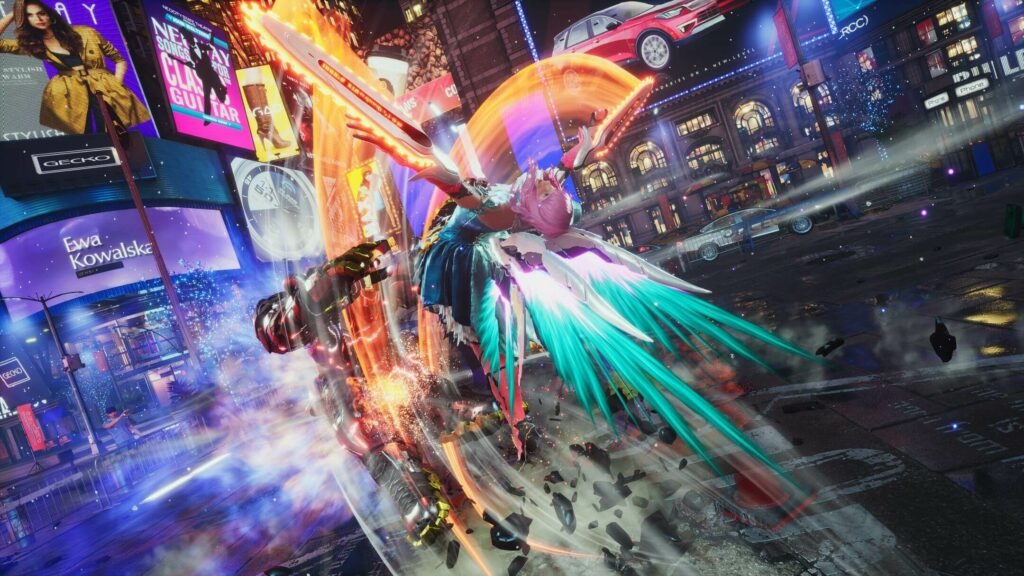
Tekken 8 controlling the pace of the match comes down to understanding character tools and utilizing movement effectively to dictate engagement timings and spacing.
Ever felt like you’re always reacting in Tekken 8? It’s a common struggle, but the truth is you can be the one calling the shots. The key concept centers around Tekken 8 controlling the pace of the match, that’s where true skill and strategy shines through.
It’s about more than just knowing combos; it’s about anticipating your opponent’s actions, and making them play at your tempo. You achieve this through calculated aggression and smart defensive tactics, dictating when and how exchanges happen.

Tekken 8 Controlling the Pace of the Match
Alright, let’s talk about something super important in Tekken 8: controlling the pace of the match. It’s not just about hitting cool combos; it’s about being the boss of how the fight flows. Think of it like being the conductor of an orchestra – you decide when things are fast, when they’re slow, and when it’s time for a big dramatic finish. If you can manage the rhythm, you’re already halfway to winning. In Tekken 8, every move, every step, and even every hesitation plays a part in this dance. So, how do we actually do it?
Understanding the Core Mechanics
Before we jump into fancy strategies, let’s quickly recap some of the basic stuff that affects the match’s speed. These are like the building blocks of controlling the pace.
Movement is Key
In Tekken 8, your movement isn’t just about dodging attacks; it’s about setting up your own. Think of it as a chess game. Side-stepping, back-dashing, and even just walking forward or backward affect the distance between you and your opponent. And that distance dictates what attacks are possible. If you create space, you’re telling your opponent they need to chase you, giving you a chance to react. If you get close, it’s your chance to get on the offensive.
- Backdash: This quick move moves you backward, away from your opponent. It helps to create distance and avoid incoming attacks.
- Sidestep: Moving to the sides to dodge vertical attacks and reposition yourself for a counter attack.
- Forward Movement: Getting in close to apply pressure, force mix-ups and initiate offense.
The Importance of Frame Data
Frame data might sound scary, but it’s actually quite simple. Every move in Tekken takes a certain amount of time to start (startup frames) and a certain amount of time to recover (recovery frames). Understanding frame data allows you to identify when you have an advantage. A quick move that recovers fast means you can attack again very quickly. A move that is slow but powerful gives you an idea when to play defensively. Think of it like knowing how long it takes to load a toy gun – if yours loads faster, you can shoot before the other kid!
Block, Hit, Throw, or Get Hit?
Tekken 8’s combat is built on a triangle: strikes beat throws, throws beat blocking, and blocking beats strikes. Understanding these interactions are key to controlling the match. If your opponent is trying to hit you with a lot of punches and kicks, try to block or sidestep and then go for the throws. If your opponent is constantly throwing you try to interrupt them with jabs and fast moves. If they block a lot, you can try throwing them. It’s all about reading your enemy and using the appropriate move at the appropriate time.
Controlling the Pace: Offensive Strategies
Now, let’s talk about how to use all that basic stuff to actually control the match speed. How can you be the person dictating the flow? Let’s start with offensive strategies, because being aggressive and keeping the pressure on is a very effective way to take control.
The Rushdown
The rushdown is all about getting up close and personal fast. This style of play involves using fast and safe moves that don’t leave you too open. The idea here is to make your opponent have very little space to breathe and react. A very fast and aggressive player can make their opponent feel overwhelmed, and force them to make mistakes.
- Mix-Ups: Using a variety of moves – both lows and highs – that are difficult to predict and block.
- Pressure: Staying close to your opponent, hitting them often and not allowing space or time to retaliate.
- Advancing Strings: Using attacks that move you closer to your opponent while you are hitting them.
Zoning
Zoning is the opposite of the rushdown. It’s about staying at a distance and keeping your opponent at arm’s length. You can do this by using moves that are safe at longer ranges. If you are in the control of the space on the field you can force your opponent to take risks to get closer to you. The key here is to make sure they make the first move and to punish them if they make a mistake.
- Pokes: Using small, quick moves to interrupt your opponent and control the space between each other.
- Projectiles: Some characters have projectile-based moves (fireballs, etc) that keep opponents at distance and chip away their health.
- Safe Spacing: Positioning yourself at the optimal distance so your attacks are safe to use and hard to punish.
Creating Oki
Oki (or “okizeme”) is all about offense after you’ve knocked your opponent down. It is about creating pressure after your opponent gets knocked down and has to get up. Many offensive players use this time to attack again and again, or try to predict how they’ll try to block and then use a throw to catch them off-guard. This keeps the opponent in a very hard position, unable to get out of the pressure. This is a great way to maintain offensive pressure and keep the pace in your favor.
- Wake-up options: Understand your opponent’s options after they have been knocked down.
- Delayed attacks: Using moves that are timed to hit the opponent as they are getting up.
- Ground game: Some characters can attack opponents while they are down for additional damage and setups.
Controlling the Pace: Defensive Strategies
Offense is not always the best option. Sometimes, slowing things down and playing defensively is the best way to win. And controlling the match pace can be used when playing defensively, too. Here are some key things you can do.
Patient Defense
Sometimes, the best way to control the match is to do the opposite of attack. Playing defensively doesn’t mean just blocking everything and hoping for the best; it’s about patience and smart reactions. Sometimes waiting for your opponent to make a mistake is the best way to win. A defensive-minded player can punish an aggressive player for making a mistake. You are making the aggressive player play to your pace.
- Punish: Waiting for the opponent to overextend so you can punish with your fast, hard hitting attacks.
- Reactive: Reading your opponent’s tendencies and making the correct moves in response.
- Spacing: Maintaining a distance where it is safe for you to block, sidestep, and move.
Whiff Punishment
When someone misses an attack (that is, “whiffs”), they often have a short period of time when they can’t block or move. This is your perfect chance to punish them for making a mistake. By doing this consistently, your opponent will be more careful about their moves and think twice before throwing out risky attacks, which causes them to play on your terms.
- Range awareness: Knowing how far your opponent’s moves can reach and staying just outside this range.
- Fast Attacks: Using quick attacks that come out fast to capitalize on your opponent’s mistake.
- Punishment combos: Knowing the best combos to use to maximize damage after a whiff.
Reading Your Opponent
The absolute best way to control the match pace is to predict what your opponent is going to do. This isn’t just about reading their moves; it’s about understanding their play style and habits. For example, does your opponent always throw after a blocked attack? Do they always duck when you attack high? Understanding their habits allows you to predict and counter them very easily.
- Pattern Recognition: Looking for repeating patterns or tendencies in your opponent’s play style.
- Adaptation: Changing your game based on what you are learning about your opponent.
- Mind Games: Mixing up your attacks and throws, or not doing what the opponent is expecting.
Changing the Pace During a Match
The pace of the match isn’t static, and knowing when to speed things up and slow things down is just as important as choosing which moves to do in a vacuum. It’s like a game of chess: you need to change your strategies depending on what’s going on. Here’s how you can adjust to the flow of the match and take command of it.
Knowing When to Switch
Understanding when to change your tactics is very important. If your opponent is used to your aggression, it might be time to switch to a more defensive play-style. Likewise, if your opponent is trying to stay far away from you, it’s time to go aggressive and stay up in their face. The best players are constantly reading their opponents, and switching up the pace to keep them guessing.
- Momentum shifts: Identifying when the match is shifting in your or your opponent’s favor.
- Opponent’s Adjustment: Recognizing when your opponent is starting to adapt to your tactics.
- Resource management: Figuring out when it’s time to switch your game plan.
Baiting and Punishing
Baiting is about making your opponent do what you want them to do and then punishing them. For example, maybe you are making it seem like you’re going to do a big attack, but instead you block and wait for them to attack first. This technique will force your opponent to think twice before they make a move and make them play to your pace. Think of it like setting a trap and waiting for your opponent to fall into it.
- Feinting: Making a move that is different from what you were expecting to do.
- Predictable Patterns: Using an attack or throw repeatedly so you can set a trap.
- Psychological Games: Trying to trick your opponent by doing what they don’t expect.
Using Rage and Heat
Tekken 8’s rage and heat systems are crucial elements in controlling the pace of the match. Using these correctly can turn the tide of any fight. Rage and heat are designed to give a player a chance to get back in the match even when they have taken a lot of damage. The more damage they take, the more they get charged up. Heat adds extra power to your attacks, and gives you some new options you wouldn’t normally have. Rage is when you’re very low on health and gain access to an incredibly powerful, game changing move. Using these mechanics wisely allows you to change the course of the game.
- Rage Art: A powerful special attack to secure a win when you’re low on health.
- Heat Engage: Activation of heat mode, enhancing your attacks and abilities.
- Heat Smash: A very powerful, unblockable attack only usable when heat mode is active.
Controlling the pace in Tekken 8 is a skill that takes practice and understanding of all the different parts of the game. It is more than just button mashing, and it involves a lot of thinking and reading your opponent. By understanding the movement, spacing, offense, and defense of the game, and by using the unique mechanics of Tekken 8, you can gain control and improve your overall game!
TEKKEN™8 – Jin School – Rhythmic Pressure part 2 – Pace Control
Final Thoughts
Tekken 8 lets players dictate the battle’s rhythm. Aggressive styles can push forward, while defensive ones can wait for openings. This flexibility lets you outmaneuver opponents with careful timing and specific moves.
The game provides tools for both types. Tekken 8 controlling the pace of the match is key to victory. A player must understand when to attack or to fall back. This control directly impacts the outcome of each fight.

