
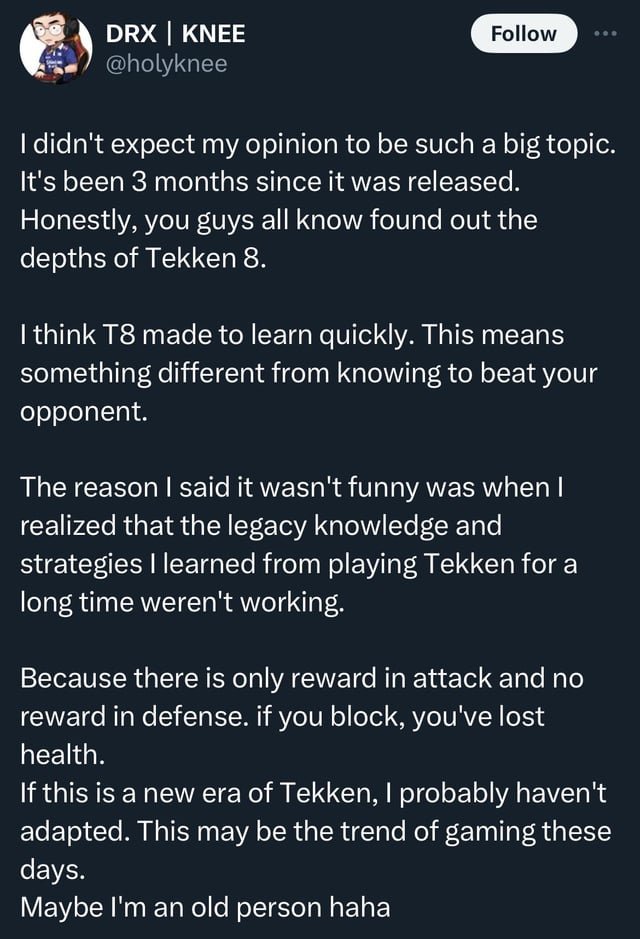
Adapting to habits in Tekken 8 requires recognizing your tendencies, then consciously choosing different actions and reactions in matches.
Are you stuck in a rut, feeling predictable in your Tekken 8 matches? It’s common to develop patterns, but opponents quickly adapt. That’s why knowing how to recognize and change your go-to moves is essential.
Learning to anticipate their game plan allows you to counter effectively. Instead of relying on what’s comfortable, practice new tactics and movement. This shift helps you to evolve beyond your ingrained habits and become a more adaptable player. Improving Tekken 8 how to adapt to habits can significantly enhance your win rate.

Tekken 8 How to Adapt to Habits
Alright, fighting game fans! Let’s talk about something crucial to getting better at Tekken 8: adapting to your opponent’s habits. In Tekken 8, just like in any fighting game, players tend to fall into patterns. They might always start a round with the same move, use the same string of attacks, or consistently block low after a specific poke. If you can figure out these habits, you can turn the match in your favor. But figuring them out isn’t enough, you need to learn to exploit these patterns. This section will take you deep into spotting, analyzing, and reacting to opponent’s routines so you can dominate in Tekken 8.
Recognizing Common Tekken 8 Habits
Before we can adapt, we need to know what to look for. Many players, especially when they’re starting, tend to rely on specific attacks and movement patterns. It’s about understanding the mind of your opponent by observing how they engage.
Startup Tendencies
Pay close attention to how your opponent starts the match. Do they like to:
- Dash forward immediately?
- Use a specific long-range attack?
- Go for a quick low poke?
- Stay defensive and wait for you to move first?
These starting actions are often a player’s go-to. Once you identify them, you can start to counter them. If they always start with a dash, you can use a move with good range to punish them for coming close too fast. If they keep poking low, you can prepare to block low and punish them when they finish their string.
Attack Patterns
Attack patterns are sequences of attacks a player likes to use. These can be simple like jab-jab-string or more complex combinations. Ask yourself:
- Do they favor high attacks? If they do, try ducking.
- Are they always going for lows? If so, try using quick mid attacks.
- Do they like to finish strings with a specific move?
- Are they predictable with their launchers?
- Do they often rely on wall splats?
When you see a pattern, you can start to anticipate it. For example, if they always finish a specific string with a low attack, you can block low, punish it, and disrupt their game plan.
Defensive Behaviors
Defense is just as important as offense, and players tend to have habits in their defensive play too. You can find clues in their:
- Blocking habits. Do they block low more than high, or vice versa?
- Backdashing tendencies. Do they often backdash after blocking or getting hit?
- Do they try to sidestep after blocking?
- How they react to being pressured. Do they stay defensive or become aggressive?
Knowing this allows you to open up their defense. If they block low all the time, mix in some mid attacks. If they backdash a lot, use moves that track and close the distance.
Movement Patterns
A player’s movement around the stage can also reveal habits. Look out for:
- Constant backdashing.
- Forward dashing with no purpose.
- How they use sidestepping. Do they only sidestep to the right or left?
- How often they use the wall? Do they like to corner you and perform combos there?
If they always backdash, you can use a move to chase them down. If they keep sidestepping in one direction, you can use tracking moves that will catch them. Try to control the space and limit their options based on how they move.
Analyzing and Exploiting Habits
Okay, you’ve spotted some habits. Now, what do you do with this information? It’s time to analyze and exploit those patterns like a pro. This involves critical thinking, making adjustments and adapting to any changes your opponent throws at you.
The Mental Checklist
While playing, keep these questions in mind:
- What is the very first thing my opponent does?
- Which attacks do they use the most?
- How do they react when I attack?
- How do they defend against my attacks?
- What do they do when they are pressured?
- Do they do a particular move when they think I’m blocking a specific way?
Think of it like a detective gathering clues. This constant observation will help you recognize patterns that might not be immediately obvious.
Testing the Waters
Sometimes, you need to deliberately test your opponent’s reactions to figure out what they’re doing. Here are some ideas:
- Use a move you don’t often use and see how they react.
- Try a different kind of attack, such as a mid attack when they are always blocking low.
- Use a poke to see how they respond to pressure.
- Vary the timing of your attacks.
By doing this, you’re not only testing their reactions, but you’re also seeing if you can create new opportunities for yourself.
Countering the Habits
Now comes the fun part: taking advantage of those habits. Here are some examples:
- If they always start with a forward dash: Use a long-range move that will hit them before they get to you.
- If they use the same string over and over: Learn the timing of the string so you can block the last hit or use a move to interrupt them.
- If they always block low: Throw in some mid attacks that they will not see coming.
- If they constantly backdash: Use moves that chase and close the distance to them.
- If they sidestep in the same direction: Use tracking moves to catch them sidestepping
- If they throw out a specific low poke: Learn to block it and punish them.
- If they keep using wall splat combos: Try not to get yourself cornered, or be ready to reverse if you can.
The goal is to disrupt their flow and force them to play a different way. As you force your opponent to move away from their habits, this may make them hesitant, and even confused as they are moving away from what they know.
Mix-ups and Mind Games
Adapting isn’t just about countering specific moves. It’s also about using mix-ups and mind games to keep your opponent guessing. A mix-up is when you use different types of attacks so your opponent can’t just block in one direction.
- Mix high and low: If they are blocking low, hit them high. If they block high, hit them low.
- Mix mid attacks in: These attacks are especially good against people who are too used to blocking high or low.
- Vary your pace: Don’t always attack at the same speed. Sometimes, wait a beat before attacking to throw off their timing.
- Feint moves: Pretend to attack, and then wait to see how they react. Then use the real attack.
The key here is to make your offense unpredictable. This will force your opponent to be more careful, and it’ll make them less likely to fall back into their bad habits.
Be Ready to Adapt to Their Adaptations
The beauty of Tekken 8 is that the fight is a constant back and forth, a mental battle. As you are adapting, the good opponents will start to adapt to your adaptations. This is why we do not want to rely on just one habit, or pattern of our own. So if an opponent is countering your attempts to counter their habits, it’s time to start re-evaluating. You must always be ready to pivot.
- Vary your patterns: If you always follow up the same attack string, they will catch on. Instead, mix it up, and don’t be predictable.
- If they are ready for your mix-ups: Change the mix up. Use your mid attack more or less, or maybe a different combination of attacks.
- Watch out for reversals: If they are catching you in a pattern, watch out for reversal techniques that they may begin using against you.
A good fighting game player is always watching, learning, and adapting. When the tide shifts in your matches, make sure you adapt again. If they are now blocking your mid attack, change your strategy.
Advanced Strategies for Habit Adaptation
Once you’ve got the basic habit adaptation down, it’s time to think about some advanced strategies. These techniques will add even more depth to your gameplay.
Punishment Training
Knowing your opponent’s habits is only half the battle, you also need to know how to punish those habits. Punishing means taking advantage of an opening when your opponent uses a unsafe move that leaves them vulnerable for a short period of time.
- Learn the frame data: If you know the start up and recovery frames of your opponent’s moves, you will know which of your moves can punish it.
- Practice your punish combos: You need to know the combos that punish certain moves.
- Be ready to react: When you recognize a habit that’s punishable, be ready to instantly react and capitalize on it.
Punishing effectively can make a huge difference in a match, it can punish a player for being too predictable, as well as keep you on the offensive.
Layering Strategies
As you get better at adapting, start layering your strategies. This means not just reacting to habits, but also trying to bait your opponents into habits.
- Establish patterns and then break them: Use a pattern often enough for your opponent to start expecting it, and then use a different move to catch them off guard.
- Play mind games: Pretend to do one thing, but then do another.
- Use conditioning: Do one action many times, and when they start expecting that, switch it up.
Layering allows you to control the tempo of the match and create openings where they did not exist before. This is the key to becoming a complete fighter.
Using Recorded Gameplay
It is useful to record and watch your games to see your bad habits, and also spot your opponent’s patterns. In Tekken 8 you can save replays of your matches, and reviewing them afterwards will help you grow as a player. Here is how to get the most out of replays:
- Watch your own habits: See if you’re being predictable in any way.
- Analyze your opponent’s patterns: Were there any habits you missed during the match?
- See where you could have punished moves: Often, you’ll see chances you missed during the game.
- Learn from both wins and losses: Both offer valuable information on how you and your opponent play.
By regularly reviewing your gameplay, you can find your weak spots, and improve your strategies for the next time you play.
Staying Calm Under Pressure
Adapting to habits isn’t just about skill, it’s also about your mental game. When you’re under pressure, it’s easy to lose focus, or revert back to your own habits. Staying calm can be one of your biggest advantages.
- Take deep breaths: This can help you clear your head and refocus.
- Don’t get tilted: Getting angry will only make you play worse. If you find yourself getting upset, take a break.
- Focus on what you need to do: Don’t get distracted by mistakes or bad luck.
- Be patient: Sometimes adapting takes time. It is better to take a loss and learn, rather than panic and lose anyway.
A calm mind is the biggest secret weapon in any fighting game. Learn to stay cool, and you will be able to adjust your strategies and exploit your opponent’s bad habits, or your own bad habits if you find yourself getting too predictable.
Adapting to your opponent’s habits in Tekken 8 is a vital skill that will make you a much better player. It requires observation, patience, analysis, and being able to adapt. If you can recognize your opponent’s patterns, and adjust your strategies, you will be able to take control of the match and improve your gameplay. So get out there, practice, and become the fighting master you were born to be.
Advice On How to Adapt & Download Your Opponents
Final Thoughts
To overcome predictable patterns in Tekken 8 how to adapt to habits, vary your offense. Mix up lows, mids, and throws to keep opponents guessing. Don’t get stuck repeating the same sequence.
Pay close attention to your rival’s tendencies. If they always duck after a certain move, capitalize with a mid. Analyzing is must to improve and break bad habits.
Adjust your strategy based on their reactions to your adjustments. Successful adaptation makes you a more unpredictable and formidable player.

