
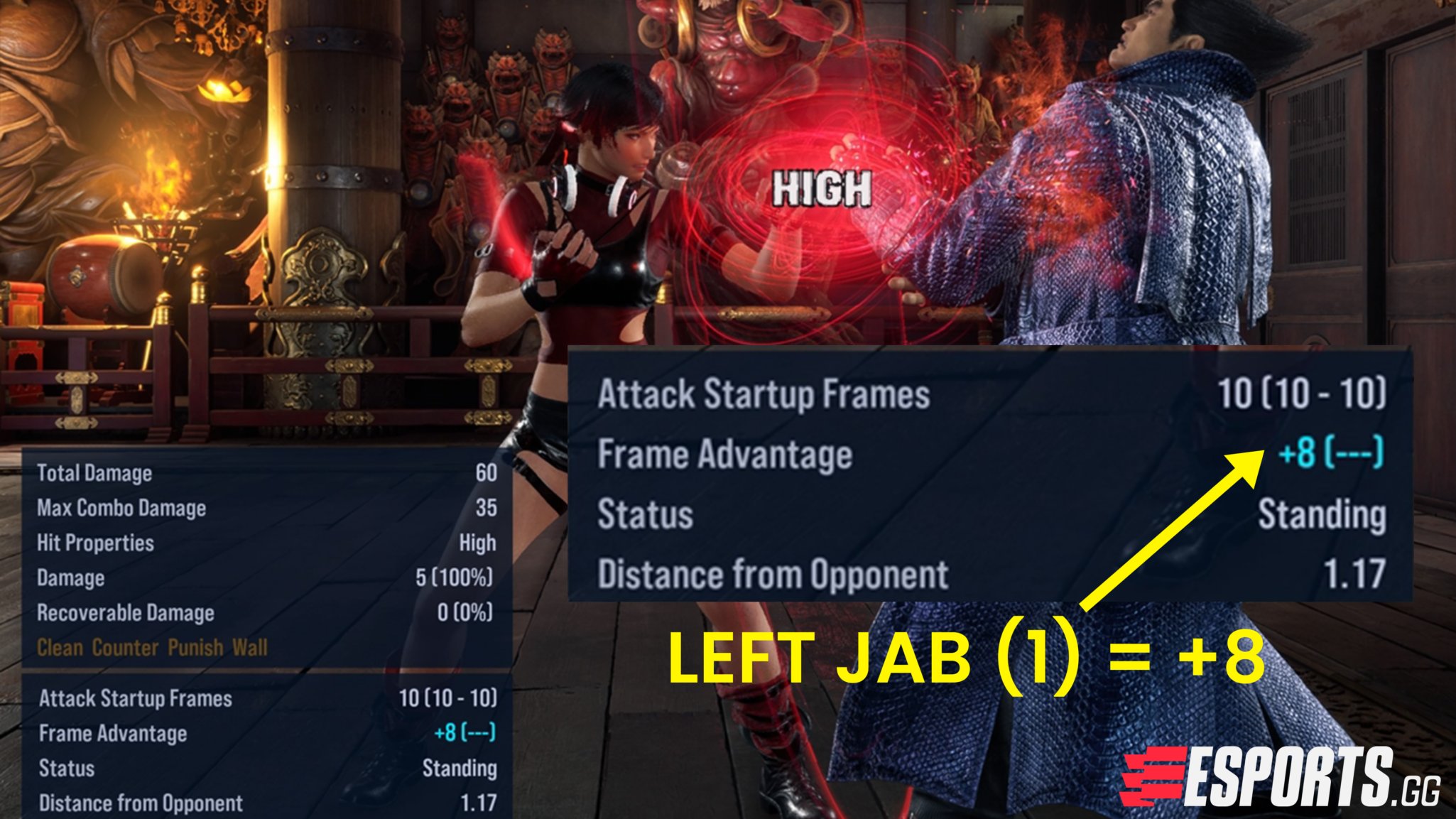
Frame advantage in Tekken 8 is analyzed by comparing the recovery frames of your move versus your opponent’s. A positive number indicates you’re faster, allowing you to act first.
Figuring out when you have the upper hand in Tekken 8 is crucial, and it all comes down to frame data. Understanding how to analyze frame advantage is the key to creating offensive pressure or defending against a relentless attack. This is where learning frame data is important and it will enable you to become a stronger player.
Knowing which moves have frame advantage and when will give you a crucial edge in matches, enabling you to know when to apply more pressure or take a breather. Analyzing your own moves is as important as understanding your opponent’s.

Tekken 8 How to Analyze Frame Advantage
Understanding frame advantage in Tekken 8 is like learning a secret code that lets you control the flow of the fight. It’s all about timing and knowing which moves give you the upper hand. When you know if your move leaves you with an advantage or disadvantage, you can plan your next move. Let’s break down how to analyze this crucial aspect of the game.
What Are Frames in Tekken 8?
Imagine a movie. It’s made up of many still pictures, called frames, that flip by super fast to look like movement. Tekken 8 works similarly. The game runs at a specific frame rate (usually 60 frames per second). Each move you do takes a certain number of these frames to complete. Frame data is a specific set of information that tells us about each move, including how long it takes to start (startup frames), how long it’s active (active frames) and how long it takes to recover before you can do another action (recovery frames).
Startup Frames
Startup frames refer to the period before a move starts hitting. Think of it like winding up to throw a punch. The longer the startup frames, the more time your opponent has to react and block or interrupt. Moves with shorter startup frames often make it easier to catch the opponent off guard.
For example, a quick jab might have only a few startup frames, while a big, powerful swing might need more time before it connects.
Active Frames
Active frames are the frames where your character’s attack can actually connect with the opponent. During these frames, your hurtbox has a hitbox attached to it. The size of active frames of the move will determine how long that move can connect. Some moves can only hit for a brief instant while others can have longer active time. The timing of these frames is important in terms of spacing and how your opponent will react.
Recovery Frames
Recovery frames are the frames that follow after a move ends. During this period, your character returns to a neutral position, meaning they cannot immediately block or do another action. If your recovery frames are high, you will be vulnerable to your opponent’s attacks. Smaller recovery frames usually make it easier to keep the offensive advantage.
Understanding Frame Advantage and Disadvantage
Frame advantage happens when your move’s recovery frames end before your opponent’s. This difference in timing provides you with a window of opportunity to attack again or use other options to keep the advantage or maintain pressure. Conversely, frame disadvantage means your recovery time is longer than your opponent’s, letting them attack or do a move that will be faster than your next one, placing you in a vulnerable position.
Here’s a simple way to think about it:
- Frame Advantage (+): Your character can act sooner than your opponent. You get to keep the pressure going.
- Frame Disadvantage (-): Your opponent can act sooner than your character. You are open to attacks or can be interrupted.
- On Block: The frame situation changes if your move is blocked. Some moves that have an advantage on hit can become disadvantageous when they are blocked.
Frame advantage is displayed in a form of plus (+) sign, and it means your character has the advantage in terms of attacking first. Frame disadvantage is displayed in a form of minus (-) sign and it means your opponent has an advantage in terms of speed. A value of zero (0) or neutral frame means both characters recover at the same time.
How to Read Frame Data
Tekken 8 provides frame data within its practice mode. You can activate frame data display to show the number of frames for your move. Understanding frame data values of different moves is the key to frame advantage mastery.
Here’s a detailed breakdown of what each value means. Let’s look at an example of a move displayed in frame data.
- Startup: This is how many frames before the move hits the opponent. The lower the startup, the faster the move.
- Block: This indicates the frame advantage or disadvantage if the move is blocked. A + value means you get the advantage and can act first. A – value means your opponent has the advantage and can act first. A 0 or +/- value means neither character gains frame advantage.
- Hit: This value indicates frame advantage or disadvantage if the move connects. A positive value means you have an advantage and can attack again, while a negative value will likely result in your character being attacked first.
- Counter Hit (CH): This value shows the frame situation if your move lands as a counter hit. Counter hits often grant a higher frame advantage that will usually lead to guaranteed combos.
For example, if a move has a “Block: +2”, it means that if your opponent blocks your attack, you can act 2 frames before your opponent. If your move’s data shows a “Block: -3,” that means you have to wait for 3 frames after being blocked before you can do your next attack. The faster your next attack, the more likely that you will interrupt them.
Applying Frame Data in a Match
Reading frame data is helpful in practice mode. The real challenge is applying that knowledge in a live match. You do not have access to frame data information in live matches. However, understanding frame advantage and disadvantage gives you an advantage over other players. Here’s how to utilize frame advantage and disadvantage situations in matches:
Capitalizing on Frame Advantage
When you have a frame advantage, you have a window to apply pressure. Use these options:
- Throw: With a frame advantage, your throw will likely connect before they can do any other action.
- Mix-ups: Use quick, low-hitting attacks along with high and mid-hitting moves to force your opponent to guess, making them difficult to defend against.
- Continue Pressure: Chain moves that allow you to retain the frame advantage.
Dealing with Frame Disadvantage
When you’re at a frame disadvantage, you have to be on defense. Some things you can do include:
- Block: The most important thing to do is block. Blocking is better than getting hit by attacks.
- Side Step: Move left or right to avoid the incoming attacks.
- Duck: Ducking helps you to avoid high hitting moves.
- Parry: Parrying can stop some of your opponent’s moves and gives you frame advantage.
Specific Examples of Frame Advantage in Tekken 8
Let’s look at some real-world examples of frame data that shows frame advantage in Tekken 8:
Example 1: A Quick Jab
Let’s say your quick jab has the following frame data:
- Startup: 10 Frames
- Block: +1
- Hit: +3
In this situation, if your jab connects on hit, you have 3 frames to perform your next action. On block you have 1 frame advantage. This allows you to follow up with another quick jab, a throw, or a mix-up.
Example 2: A Powerful Mid Attack
Let’s look at a mid attack that is a little slower and more powerful:
- Startup: 18 Frames
- Block: -2
- Hit: +5
If this mid attack hits, you have a 5 frame advantage which can lead into a combo. If this attack gets blocked, you are at a disadvantage, so it might not be safe to follow up this move.
Example 3: A Risky Low Attack
A common strategy is to use low attacks to make your opponent get down on their guard and force them to change their defensive strategy. A risky low attack may have frame data like:
- Startup: 24 Frames
- Block: -12
- Hit: +2
On hit, you get a 2 frame advantage which you can use to make a mix-up. But on block, you are open for your opponent to attack first. These low attacks can be risky if you use them at the wrong time.
Common Mistakes and How to Avoid Them
Here are some of the common mistakes that beginners make when it comes to frame data:
- Ignoring Frame Data Entirely: Playing without considering frame data limits your ability to make the right decisions in fights.
- Only Focusing on Hit Advantage: Sometimes, moves with good hit advantage are unsafe on block. It’s crucial to know your move’s frame data on block as well.
- Not Adjusting to Your Opponent: Frame advantage changes during different situations, based on whether your move hit, was blocked, or was a counter. Adjust your game plan accordingly.
Using Frame Data to improve Your Game
Frame data is just one of the many tools to improve your game. Don’t try to remember every single move’s frame data at the same time. It takes practice and time to learn the frame data of moves in Tekken 8. Start with moves that you use frequently, and gradually learn the frame data of your most used moves. Here are some tips to help you improve using frame data:
- Practice Mode: Spend time in practice mode, testing moves, and understanding their frame data.
- Focus on a Character: Instead of trying to learn the frame data for everyone, focus on the one character that you want to learn.
- Watch Replays: Analyze replays of your fights, notice frame situations where you were open for attacks, and adjust your game plan.
Learning frame data is not just about knowing the numbers; it’s about gaining an understanding of the rhythm and flow of the game. When you know if a move will leave you at an advantage or a disadvantage, you can improve your game by taking calculated risks. Frame advantage knowledge helps you predict your opponent’s next moves. And it can be your edge in becoming a better Tekken 8 player.
With practice, you will develop an instinct for how the game is flowing and understand your character’s moves and the frame advantage they provide. This knowledge will improve your game, letting you take control of fights and improve your winning percentage.
Frame Traps For Dummies – Tekken 8
Final Thoughts
Understanding frame advantage is key to winning in Tekken 8. Analyzing move data helps identify which actions allow follow-ups. This knowledge lets you pressure opponents effectively.
Practice using frame data tools to get a feel for different character’s moves. Tekken 8 how to analyze frame advantage involves recognizing both plus and minus frames. This allows for more successful offensive and defensive strategies.

