
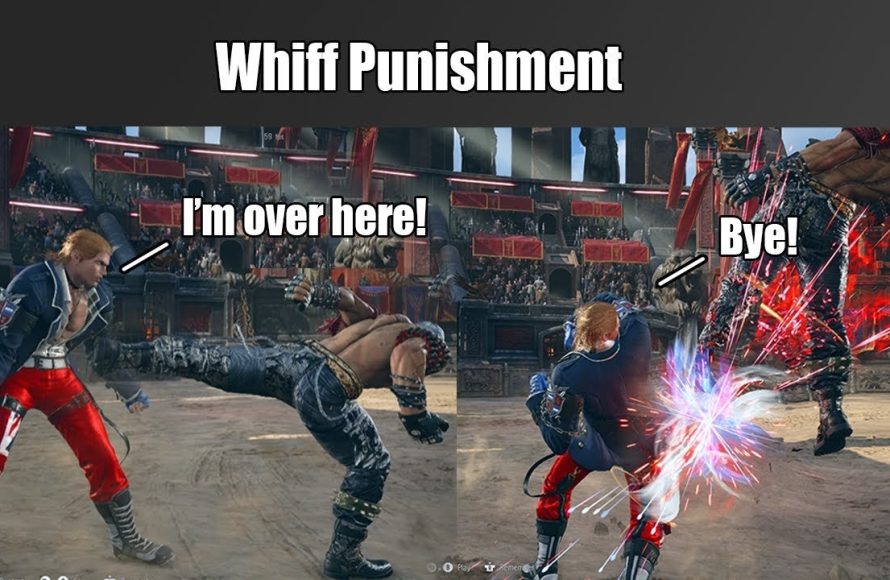
To punish a whiff in Tekken 8, quickly react with your fastest move that reaches the space where your opponent’s attack missed.
Ever felt frustrated when your opponent seems to be throwing out moves that miss you but you can’t seem to capitalize? Figuring out Tekken 8 how to punish whiff is a key skill. It separates a decent player from a truly dangerous one. Learning to identify these moments and reacting accordingly will drastically improve your win rate and confidence in battle.

Tekken 8 How to Punish Whiff
Okay, so you’re playing Tekken 8 and you see your opponent swing and miss – they whiff! This is your golden chance to hit back hard and turn the tide of the fight. But how do you actually do it? It’s not just about mashing buttons. It’s about understanding what a whiff is, recognizing the opportunity, and then knowing which moves will make your opponent regret that missed swing. Let’s dive deep into the world of punishing whiffs in Tekken 8.
Understanding What a Whiff Is
First things first, let’s define what a whiff actually means in Tekken. Simply put, a whiff is when an attack doesn’t connect with anything. It’s a swing and a miss. Maybe your opponent tried to hit you but was just a little too far away, or they aimed at where you were but you moved. Whatever the reason, they swung and missed, and that miss is your opportunity.
A key part of understanding whiffs is recognizing that every move in Tekken has a different recovery time. Recovery time is how long it takes for your character to be able to act again after doing a move. When a move whiffs, the character is usually left in a vulnerable state while they recover. This is why whiff punishing is so essential in Tekken; it capitalizes on these recovery frames.
The Significance of Recovery Frames
Imagine your opponent throws out a slow, powerful kick, but you sidestep it. Now, they’re stuck in the animation of that kick for a moment before they can do anything else. That’s their recovery period. If their kick had connected, they’d likely be able to act again much faster. But because they missed, they have to wait a little longer. This delay is your window of opportunity. The bigger the whiff, the longer the recovery, and the bigger the punishment you can deliver.
Think of it like this: It’s like someone trying to punch you in real life and missing. For a brief moment, they’re off balance and vulnerable, perfect for a counter-attack. In Tekken 8, understanding the recovery period of your opponent’s moves will help you predict when they will be vulnerable to a punish.
Recognizing a Whiff: Key Visual Cues
Now that we know what a whiff is, how do we actually spot one in the heat of battle? Here are some important things to look for:
- Visual Movement: Watch for your opponent’s character’s arms or legs to move through the air without hitting you.
- Distance: Pay attention to the space between you and your opponent. If they swing at where you were, but not where you are, it’s a clear whiff.
- Sound: While not always reliable, sometimes you can hear the distinct sound of a move whizzing past instead of connecting.
- Animation: Many moves have specific animations that signal their end, which can be longer when they whiff. Learn these animations to identify opportunities to punish them.
Reacting to a whiff is not just about seeing a missed move. It also comes with experience. The more you play Tekken, the better you will become at noticing these cues almost automatically.
Selecting Your Punishing Moves
Okay, you’ve seen the whiff! What do you do now? It’s crucial to have a set of reliable punishing moves ready. Not every move is suitable for punishing, and some are more effective than others. You need moves that are:
- Fast: Your punishing move needs to come out quickly to land before your opponent recovers from their whiff.
- Long-Range: Some whiffed attacks can leave your opponent far away. Having moves with good reach is important to still punish them.
- Damaging: The goal of whiff punishing is to hurt your opponent, so it’s best to have moves that deal a good amount of damage.
The Importance of Frame Data
This is where understanding frame data becomes very useful. Frame data refers to the number of frames it takes for a move to start up, connect, and recover. Moves with a quick startup and good range are perfect for whiff punishing. Checking frame data for your character is a very important step to make you better in Tekken. You can find frame data resources online and it will make your punish game a lot more consistent.
Common Punishing Move Categories
- Jab Strings: Jabs are the quickest moves in Tekken, usually coming out in around 10 frames or less. A string of jabs can be a very effective way to punish quick moves.
- Mid Attacks: Mid attacks are useful for catching people off guard. Some mids have great range, and good damage for punishing whiffs.
- Low Attacks: Low attacks are also useful for punishing, but be careful, they are often slower than jabs or mid attacks. They can be a great option for punishing very slow and unsafe moves.
- Power Crush: Some characters have power crush moves that can absorb attacks. While they are not the fastest moves, they can be used against slower whiffs.
- Launchers: Launchers are moves that send your opponent high into the air, allowing you to do big damage combos. If your opponent whiffs a big move, landing a launcher is the best punishment.
Specific Punishing Strategies
Now that you know the general idea, let’s explore some specific strategies for punishing whiffs.
Punishing Common Whiff Scenarios
Certain moves in Tekken 8 are notorious for their whiff potential. Here are a few common situations and how to punish them:
- Slow, Long-Range Moves: If an opponent does a slow, long-range move that misses, you can punish with a fast mid or long reaching attack. For Example, if a player does a slow spinning move with a long range and misses, it is a great opportunity to punish.
- Vertical Attacks: If an opponent does a vertical attack, you can sidestep them and punish with a fast attack, or a launcher.
- High Attacks: High attacks can be ducked easily, and if they miss, you can punish them with a low attack, or a mid attack.
Spacing and Movement
Proper spacing is essential for both setting up your own whiffs and for capitalizing on your opponent’s. By moving in and out of range, you can bait out attacks from your opponent, forcing them to whiff. You can use movement options like:
- Backdashing: Moves you out of range of some attacks. It is useful to bait out the opponent to swing.
- Sidestepping: Lets you move to the side of an attack, it is good to punish linear moves.
- Walking: Walking forward and backward is simple and good, if you predict your opponent swing.
Mixing up your movement is key, making you unpredictable and more likely to cause your opponent to make mistakes.
Adapting to Your Opponent
Every player has a style of play. Some players are very aggressive, and some are passive. Adapting to your opponent is very important. If they are whiffing frequently, punish them accordingly. If you noticed they don’t swing much, then be more careful on spacing. Also, take note of the moves that they usually whiff, and be ready to punish it accordingly. Adjust your punishment strategy based on how they like to play and make adjustments along the way.
Training Your Whiff Punishing Skills
Like any skill, whiff punishing takes time and practice to become second nature. Here are a few tips on how to train your whiff punish reactions:
Practice Mode Drills
The best way to train whiff punishes is in the Practice Mode. Here are a few drills that you can do:
- Record Whiffing Attacks: Record your character doing attacks and then record the bot doing the same attacks. Then, try to punish the bot when they whiff. This way, you can train your muscle memory.
- Vary the Distance: Change the range where the bot whiffs. This can help you practice punishing moves from various distances.
- Change the Attack: Start by recording simple attacks, and then move on to more complex attacks. This will let you adapt to all kind of whiffs.
Analyzing Your Replays
Watching your match replays can offer a lot of information. It lets you see from another angle. Watch your previous matches and see if you missed an opportunity for a punish, or if you were getting punished a lot yourself. Identifying these moments can help you learn faster and prevent the same mistakes in the future.
Playing Against Different Opponents
While it is good to practice in Training mode, nothing beats playing real players. Playing against different people will let you adapt to different styles of play, and improve your whiff punish reactions. Playing against different people can help you learn faster, and can teach you new things too.
Advanced Whiff Punish Concepts
Once you’ve got the fundamentals down, you can start exploring more advanced techniques for whiff punishing.
Punishing While Stepping
Sidestepping isn’t just for avoiding attacks; it can be used to set up big whiffs. Many players rely on linear attacks, which can be easily sidestepped. Sidestepping an attack at a good angle will leave your opponent vulnerable. After stepping the attack, you will want to punish with a fast mid, or a launching move.
Punishing with Movement
Good movement in Tekken can be very powerful. When you are in a good range, you will be able to make your opponent whiff and make them pay with your punishing moves. The key is to move in and out of range, so your opponent does not get used to your movement pattern. Movement is a very important part of Tekken and can be used as an offensive, and defensive tool.
The Mind Game
Whiff punishing is not just about being faster than your opponent. It’s about understanding their intentions. Sometimes, you can create mind games to bait out whiffs by purposely getting in their range. It’s like a dance, you must constantly read your opponent, adapt to them, and punish them for making mistakes.
Frame Traps
Frame traps are when a player attacks you but is at a slight disadvantage in terms of frame data. This can lead to a situation where the player attempts to punish you after a block, but their attack is too slow and gets interrupted. Using frame traps is a great way to make your opponent whiff and make them think twice about attacking you all the time.
Specific Character Matchups
Certain characters in Tekken have moves that are more punishable than others. For instance, some characters have moves that leave them vulnerable. Knowing these match ups can be vital when it comes to whiff punishing. Learning which moves are punishable is a very important part of improving in Tekken.
Whiff punishing in Tekken 8 is a cornerstone of higher-level play. It’s not just about reacting quickly; it’s about understanding movement, frame data, and your opponent’s habits. It is a complex skill, but with consistent practice, you’ll start spotting those whiffs more naturally and turning them into opportunities for big damage.
By mastering the art of punishing whiffs, you’ll not only improve your win rate, but you will also enjoy Tekken 8 even more. Keep practicing, keep learning, and most importantly, keep having fun in your Tekken journey.
Four Steps to PERFECT WHIFF PUNISHMENT – Tekken 8 Intermediate Tips
Final Thoughts
Effectively punishing whiffs in Tekken 8 requires understanding your opponent’s moves and your character’s reach. React quickly to their missed attacks to capitalize. Practice recognizing common whiff patterns and have your punishes ready.
Good positioning will aid in your whiff punishment. Don’t overextend yourself, stay ready for their mistakes. Proper timing and spacing are key components of executing successful counters in Tekken 8 how to punish whiff.
Use this knowledge to apply pressure. Punishing consistently will help you control the flow of the fight.

