
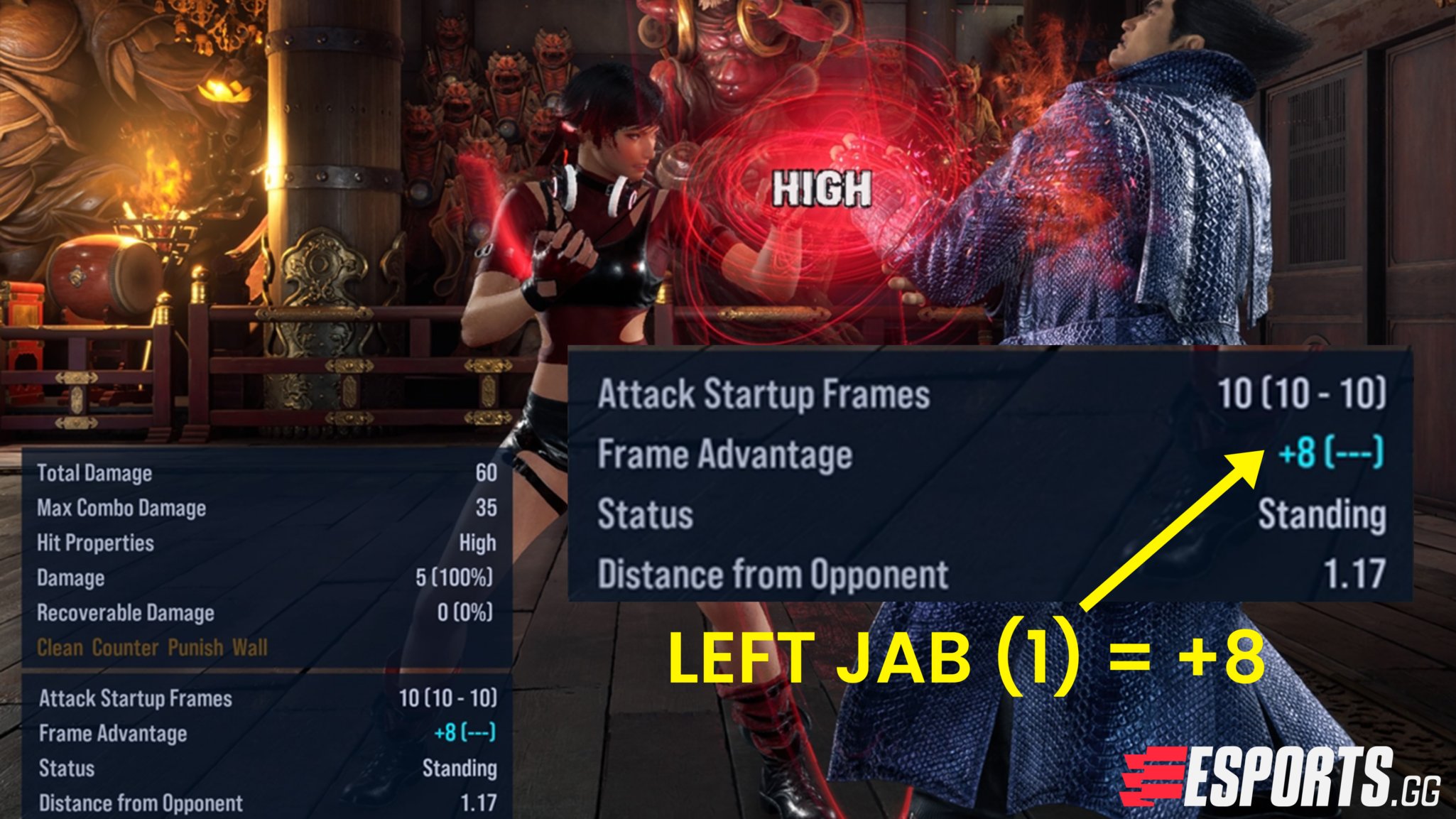
To recover frames in Tekken 8, utilize sidesteps, backdashes, and guard cancels effectively after being on the receiving end of an attack. Proper movement and defensive actions are key to regaining the advantage.
Struggling to get back into the fight after getting hit? Understanding how to regain momentum is crucial in Tekken 8. Many players find themselves constantly on the defensive, and knowing how to recover frames in Tekken 8 is a skill that separates the good from the great. This article will give you quick tips to help you stop being pressured.
It’s not just about blocking; it’s about creating space and opportunities to counterattack. You’ll learn specific techniques that will give you the upper hand even after taking a beating. By understanding these concepts you will be able to punish your opponents more efficiently.

Tekken 8 How to Recover Frames
Okay, so you’re getting your butt kicked in Tekken 8? It happens to the best of us! A big part of getting better is learning about something called “frame data.” Now, don’t let that term scare you. Frame data basically tells you how fast your character’s moves are. And understanding frame data helps you learn how to “recover frames” – which means creating opportunities for you to attack, and preventing your opponent from doing the same. Let’s dive deep and make this concept super clear.
Understanding the Basics: What are Frames?
Think of a video game like a flipbook. Each page of the flipbook is a “frame.” In Tekken 8 (and most fighting games), the game runs at 60 frames per second. This means that 60 little pictures flash by every single second to make the action look smooth. When we talk about moves being “fast” or “slow,” we’re really talking about how many of those tiny little frames it takes for that move to happen.
Startup Frames: These are the frames it takes for a move to start. Imagine winding up to throw a punch – that’s the startup. The fewer startup frames, the faster the move.
Active Frames: These are the frames where your move can actually hit the opponent. It’s the part of the move when your hand connects with them, the energy hits, or the blast comes out.
Recovery Frames: These are the frames after the active frames where your character is vulnerable and unable to do anything else. This is when you pull your hand back from the punch. The fewer recovery frames, the quicker you are ready to act again.
The Relationship Between Frames
It’s important to understand that these three types of frames happen sequentially in a move. A move will have startup, then active, and finally recovery frames. Knowing the frame data of a move is the first step to understanding how to use it and how to counter it. For instance, a move with 10 startup frames, 2 active frames, and 15 recovery frames, is different from a move with 20 startup frames, 5 active frames, and 10 recovery frames.
What Does Recovering Frames Actually Mean?
Recovering frames refers to the situation in which you can act faster than your opponent after a move. It’s all about the recovery frames! If your move has fewer recovery frames than your opponent’s move, you have “frame advantage.” This means you can block or even attack before they can do anything at all. If your move has more recovery frames than your opponent’s move, they have the “frame advantage,” or it is called, “you are at a frame disadvantage”.
Here’s how it breaks down:
Frame Advantage: You have the advantage and are ready to act first. Usually this mean, the opponent who made a move, is still in recovery and vulnerable.
Frame Disadvantage: You are slower and vulnerable after your move. The opponent will attack you first if they want to, because of your move.
Frame Neutral: No one has an advantage. Both players can move at the same speed.
How to Achieve Frame Advantage
Knowing how to recover frames is not always about memorizing frame data of all the moves from the characters. Here is more about how to get frame advantage:
1. Blocking: Blocking is one of the most crucial things in fighting games. A lot of the time, if you block an attack successfully, it will put your opponent into frame disadvantage. When you block a move your opponent is most of the time not able to attack immediately. This will give you frame advantage to attack them first.
2. Whiff Punishing: If an opponent does a move and misses, they will most likely be at frame disadvantage. This is your chance to attack with your fast moves before they can recover. A “whiff” is when a move doesn’t connect. This is one of the basic skills you need to master to win more matches in fighting games.
3. Using Plus on Block Moves: Some moves are “plus on block”. This means that even if your opponent blocks these moves, they will put your opponent at frame disadvantage. This is a very important tool to open up opponents in fighting games.
4. Learning Your Character’s Frame Data: It’s a good idea to check out a frame data resource online or from a website to see which moves are faster, and which put the enemy at a frame disadvantage. Tekken 8, like other games, has frame data available, use it!
5. Low Parries: If someone throws a low attack and you parry it, you can follow up with a heavy attack because you gained frame advantage.
6. Punishing unsafe moves: Many moves are “unsafe” meaning they have high recovery on block. Learn which moves have this property so you can punish them with your own attacks.
Specific Techniques to Recover Frames
Let’s go through specific actions and strategies you can use in Tekken 8 to control frames. This will not only improve your offense but also boost your defense capabilities.
Utilizing Block Strings
Block strings are simply a series of moves that you do after one another. When the first attack is blocked, it often forces the opponent into a defensive state, making them vulnerable to the subsequent attacks. The goal is to use moves that don’t leave you at a disadvantage if blocked, allowing you to stay in control. This is a perfect example of using frames to your advantage, as you keep pressuring with small attacks, without allowing a way out for your opponent.
A good example would be a move that has a small amount of recovery if blocked and immediately following up with another attack. If the opponent keeps blocking this string, it can lead to a successful guard break and you can follow up with heavy damaging attacks.
Effective Use of Sidestepping
Sidestepping is a very essential mechanic in Tekken. Sidestepping can avoid many linear attacks, leading to your opponent missing the attack. Now the opponent is at frame disadvantage, and you have the perfect chance to punish them. This is a great technique to use against opponents who spam linear attacks, and if you can master this technique, you will drastically increase your win rate.
Understanding and Exploiting Frame Traps
A frame trap is when you intentionally create a situation where your opponent thinks they can act, but you punish them for it. For example, after a move that leaves you at a small disadvantage (let’s say -2), your opponent might press a button to try and attack, but a good player will use this small time gap to attack first. This can be very tricky to pull off in the beginning. The way to master this technique is to practice it repeatedly, against real opponents, and you’ll start to get a sense of when an opponent is going to attack in that small gap, and you can punish them for it.
Analyzing Opponent’s Tendencies
Understanding how your opponent plays is just as important as knowing the frame data of your own character. Do they like to press buttons when they have a slight advantage? Then, you can use the techniques we learned earlier in this article to bait and punish them. For instance, using frame traps, and making them think they have an opening. Do they like to block a lot? Then use throws or guard-break moves. By observing their gameplay tendencies, you can anticipate their moves and react accordingly, leading to better frame control.
Frame Data Tables
Here is an example of how frame data looks in a table. This example will explain why different moves have different properties and different timings:
(Note: This is a simplified example; real frame data is much more complex)
| Move | Startup Frames | Active Frames | Recovery Frames (on hit) | Recovery Frames (on block) | Frame Advantage (on hit) | Frame Advantage (on block) |
|—————–|—————-|—————|————————–|—————————-|————————–|—————————-|
| Jab | 10 | 2 | 5 | 10 | +10 | -2 |
| Low Kick | 14 | 3 | 10 | 15 | +12 | -5 |
| Mid Power Move | 20 | 4 | 15 | 25 | +8 | -10 |
| Heavy Attack | 30 | 6 | 20 | 30 | Knockdown | -15 |
As you can see, the simple jab is very fast at 10 startup frames, and very good at getting an advantage (+10) if it hits. However it is disadvantageous if blocked (-2). This is the beauty of Tekken and its deep mechanics. By learning the basics like this, you can greatly improve at this game.
Practice and Repetition
There is no better way to get better than by practicing. Here are some ways to improve in Tekken:
Training Mode: Use training mode to understand the moves better and test their frame data against a dummy character. This is the best way to get a feeling for the speed and distance that you need to be at, to properly use different types of moves.
Replay Analysis: Watch your replays closely. Look for times you are being punished. Try to analyze what your enemy did to get a frame advantage, and try to understand the reason why that happened. Learn from your mistakes and try to improve on them.
Match Practice: The more you play against different people the more you learn. Don’t be afraid to lose. Each loss is a learning opportunity!
Understanding frame data is a journey, not a destination. It takes time, patience, and practice to get a grasp on it, and to learn how to use this knowledge in real matches. But, the rewards are significant. You’ll find yourself controlling the pace of matches, dictating exchanges, and punishing your opponents effectively. This will not only help you win more matches, but it will also make you a better fighting game player overall.
Remember the basics, learn your character, practice hard and good luck in Tekken 8!
What Tekken 8 Doesn't Tell You About Frame Advantage
Final Thoughts
Effectively using frame recovery is key to success in Tekken 8. Practice different moves and their recovery animations. Understanding frame data makes a huge difference.
Learn which moves allow for quick movement after they connect or are blocked. This allows you to maintain pressure or escape danger. ‘Tekken 8 how to recover frames’ is vital for both offense and defense.

