
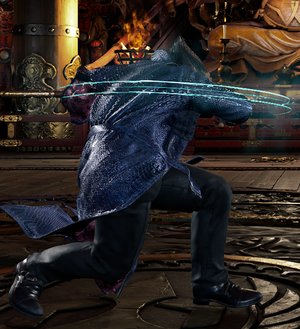
Understanding your opponent’s tendencies is key; observe their frequently used moves and patterns during matches to track moves in Tekken 8 effectively.
Knowing your opponent is crucial in Tekken 8, right? It’s not just about knowing your own combos. To truly get an edge, learning Tekken 8 how to track moves is essential. This skill lets you anticipate attacks and punish with precision, providing a significant advantage.
Observing your opponent’s habits is the first step. Do they favor certain strings, or always launch with the same move? This pattern recognition enables you to predict and counter effectively.

Tekken 8 How to Track Moves
Alright, Tekken fans! Let’s talk about something super important: tracking moves in Tekken 8. It’s like being a detective in a fighting game – you need to figure out what your opponent is doing to win. Knowing how to track moves will make you a way better player, letting you block, punish, and predict what’s coming next. We’re not just talking about memorizing button presses; we’re diving into understanding the why behind the what. Get ready to level up your Tekken game!
Understanding the Basics of Move Tracking
Before we get into the nitty-gritty, let’s understand what “tracking” actually means. In Tekken, tracking refers to the ability of certain moves to follow your character’s movement. If you try to sidestep or walk away from a move that tracks, it will still hit you. There are moves that don’t track (linear attacks), these moves only go straight forward, and there are moves that track very well. Recognizing which moves track and which don’t is super important. It helps you choose the right defensive options.
Types of Tracking Moves
Not all tracking is created equal! Here’s a breakdown:
- Basic Tracking: These moves can follow slight movements to your left or right. They aren’t super aggressive at tracking, but they will catch you if you aren’t paying attention.
- Strong Tracking: These moves are more persistent. They follow you more effectively, even if you’re moving quite a bit. They can be very difficult to avoid without precise sidesteps or other advanced techniques.
- Homing Moves: Think of these as heat-seeking missiles. Homing moves will adjust their trajectory significantly to hit you, making them almost impossible to sidestep or evade by simply walking.
Understanding these different types helps you plan your defense. You wouldn’t try to sidestep a homing move the same way you would a basic tracking move.
Visual Cues: What to Look For
Tekken 8 doesn’t explicitly tell you which moves track, but it gives you clues. Watching your opponent closely is key. Here’s what to keep an eye out for:
- Animation: Pay attention to how a character moves. If their animation seems to “curve” or adjust its direction while being performed, there’s a high chance it’s a tracking move. Some moves also look like they are “reaching out” for you.
- Foot Placement: If your opponent moves their foot when they attack, it might indicate the type of tracking and you can quickly determine if it tracks left or right.
- Hit Effects: Did the hit connect even when you thought you were out of the way? That’s a clear sign the move tracked you. Note the animation and the movement.
These aren’t always foolproof, but they give you a good starting point. The more you play, the more you’ll pick up on these visual cues.
Practice Makes Perfect: Training Mode is Your Friend
The best place to learn how to track moves is in training mode. Here’s a simple way to get started:
- Pick Two Characters: Choose the character you want to learn and an opponent.
- Record Moves: Set the opponent to perform a move you suspect is tracking. Record different variations of this move. You can also record a mix of moves.
- Experiment: As the opponent replays the recorded attack, try to move out of the way by sidestepping or walking. See what the moves catch and what they don’t.
- Adjust and Repeat: If a move is tracking, try different sidesteps. Sometimes sidestepping left will avoid a move, but sidestepping right will get you hit. If a move isn’t tracking, you know that a simple sidestep will be enough to avoid it in the future.
Focusing on one move at a time helps you truly understand its properties. This way, you don’t get overwhelmed and you can learn how to properly avoid each move, one at a time.
Setting up Training Mode for Tracking Practice
To get the most out of your training, adjust some of the settings. Here’s a good setup:
- Move Display: Turn on move display to see the input of your opponent and your own inputs. This helps you connect what you’re seeing with what you’re doing.
- Frame Data: While initially a bit advanced, understanding frame data can really clarify how a move works. Learn what is punishable and what is safe, by checking the frame data on moves. Frame data is very important to be able to track moves.
- Repeat: Make sure that the moves you are recording repeat over and over. This will allow you to get the most practice and the best analysis of the moves you are observing.
Don’t be afraid to experiment! Try different characters and moves. Practice is the single most important aspect in improving your tracking skills.
Understanding Movement Options and Their Impact on Tracking
The way you move impacts how well a tracking move works against you. Let’s look at the primary movement options:
- Walking: Walking is often the least effective way to avoid tracking moves. It’s slow, and tracking moves will generally catch you. Walking is great to get into closer position or to get into the “perfect” space for certain types of sidesteps.
- Sidestepping: This is your primary tool against tracking moves. Sidestepping is effective against moves with poor tracking but not as effective against moves with good tracking.
- Back Dashing: While not as reliable as sidestepping, back dashing can help avoid some linear attacks. But, be careful, as a good tracker will punish a backdash.
- Jumping: While jumping can be good at evading low attacks, jumping is not effective at avoiding tracking moves.
Choosing the correct option is part of the mind game in Tekken. You need to think about what your opponent is going to throw out, and the best way to avoid that specific attack.
Character-Specific Tracking: Not All Characters Track the Same
Every character in Tekken has their own unique set of moves and, thus, tracking characteristics. Some characters are known for strong tracking moves, while others may be more linear and predictable. This means that what works against one character may not work against another. It is essential to become familiar with each character’s move set in order to fully understand tracking moves in Tekken 8.
Key Characters with Strong Tracking
While every character has tracking tools, some stand out:
- Law: His stance transitions can lead to hard-to-predict tracking moves.
- Jin: Has many strong tracking moves within his stance. He is able to shift his momentum and still connect with his target.
- King: King has several grabs with tracking properties.
- Bryan Fury: Bryan has a plethora of tracking moves, that can leave the opponents guessing on how to avoid it.
- Hwoarang: Has a great mixup game with strong tracking moves.
Don’t limit yourself to this list – every character has tricks up their sleeve. The key is to get familiar with all of the characters in Tekken 8.
Tracking and Frame Data: Advanced Concepts
Frame data is the backbone of high-level Tekken. Understanding it helps you know not only if a move tracks, but also when it tracks and when you can punish it. Here’s a quick breakdown:
- Startup Frames: How quickly a move starts. Moves with longer startup are easier to react to.
- Active Frames: How long a move is capable of hitting. Knowing the active frames helps you avoid a move or to punish it during the active frames.
- Recovery Frames: How long it takes for a character to recover after a move. Moves with long recovery can be punished if blocked.
By learning about frame data, you can more effectively understand when to sidestep or block. It’s not enough to just know that a move tracks; it’s important to know when it tracks.
Putting Frame Data to Practical Use
Imagine your opponent uses a move that has 20 frames of startup and a lot of active frames. While they are executing it, you see an opening and you decide to sidestep and hit them during the recovery frames. This is what using frame data can do for you.
Here are some ideas to better put frame data to practical use:
- Learn the safest way to punish: Use frame data to check what type of moves will result in a counter hit.
- Avoid getting punished: Learn which of your moves are unsafe and should not be overused.
- Learn how to apply pressure: By understanding frame advantage and disadvantage, you can plan your attacks in a way that will make it harder for your opponent to recover.
Combining your knowledge of tracking with frame data gives you a massive edge in fights.
Predicting Opponent’s Moves: The Next Level of Tracking
The best tracking isn’t just about reacting, it’s also about predicting. If you can anticipate what your opponent will do, you can position yourself to avoid attacks even before they happen. This is known as the reading game. You are reading your opponent by recognizing the patterns they use.
Recognizing Patterns
Pay attention to these factors:
- Repetitive Moves: Does your opponent use the same moves again and again? This is a sign that they may be unaware of their own patterns.
- Stance Transitions: Do they always go into a specific stance after certain actions? This can give you a hint on what to expect.
- Pressure Sequences: If they often attack after a specific move, get ready to sidestep or block.
The better you understand patterns, the better you can predict your opponent’s next action. This is how you outmaneuver opponents in high-level play.
Common Mistakes and How to Avoid Them
Even with all this knowledge, people often make mistakes. Here are some of the most common:
- Sidestepping Too Late: If you wait until the move is already coming, you might not have enough time. Learn to read the animations and anticipate the attacks.
- Relying Only on Sidesteps: Sometimes you need to block or backdash. Don’t rely solely on sidestepping. Mix it up!
- Ignoring Character Tendencies: Each character has their unique moves. Knowing them is the best way to avoid getting hit.
- Not Practicing: No amount of reading will replace practicing. The more you practice, the faster your reactions will become and the better you will get at reading patterns.
By being aware of these mistakes, you can actively work to avoid them.
Advanced Tracking Techniques
Once you’ve got the basics down, there are a couple of advanced things you can explore:
- Delayed Sidesteps: Instead of sidestepping immediately, try to delay it by a split second. This can sometimes trick an opponent.
- Sidestep Cancels: You can cancel a sidestep with certain moves. This can allow you to keep moving while being ready to attack.
- Using Movement to Bait: Try to use movement to make your opponent think you are going to move to one side, only to move to the other side, or to stay still.
These advanced techniques can help you really confuse and outmaneuver your opponents, but be careful to not get too predictable. Mix it up!
Tracking moves in Tekken 8 is a deep topic, but it’s not impossible to understand. By practicing regularly, understanding the game mechanics, and paying attention to animations and movement, you can greatly improve your skills. Don’t worry if you don’t understand everything immediately. Just keep practicing, keep learning, and keep playing. You will get better over time.
Tekken 8 Complete Beginner Guide
Final Thoughts
Effectively tracking opponents’ moves in Tekken 8 requires observation and practice. Players should pay close attention to animations and timing. This allows anticipation of attacks and strategic counterplay.
Analyzing common strings and patterns proves beneficial for defense. Consistent practice will improve move recognition. Learning these fundamentals is key for improvement in the game.
Therefore, improving at Tekken 8 how to track moves requires focused effort and time. Players need dedication to learning and applying these techniques. This leads to better reactions and overall gameplay.

