
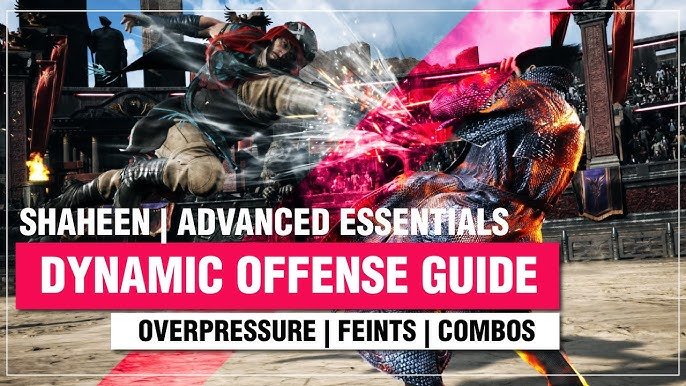
Offensive play in Tekken 8 revolves around applying pressure with varied attacks, mixing up lows, mids, and highs, while managing frame data to create openings for powerful combos.
Getting good at Tekken 8 involves more than just learning combos; it demands a strong understanding of how to attack effectively. Tekken 8 offensive play fundamentals are crucial for dictating the pace of a match.
Good offense means making your opponent guess and reacting to their defensive tactics. This often requires good character knowledge to understand what moves are safe.
It’s all about forcing your foe to respect your game and open up opportunities.

Tekken 8 Offensive Play Fundamentals
Okay, so you’re ready to get aggressive in Tekken 8! That’s awesome. This game rewards players who take the initiative, but just mashing buttons won’t get you far. True offense in Tekken 8 is about understanding the tools available to you and using them smartly. It’s not just about hitting your opponent; it’s about forcing them to react, making predictions, and creating openings for bigger damage. Let’s break down some core concepts that will make your offense much more potent.
Understanding Frame Data: Your Offensive Compass
Frame data might sound scary, but it’s basically the timing of every move in the game. Each attack takes a specific number of frames (or fractions of a second) to start up, connect, and recover. Knowing the frame data of your character’s moves allows you to understand which attacks are safe, which are risky, and which can be used to create pressure. Here’s what you need to know:
Startup Frames
These are the number of frames it takes for a move to actually begin hitting. Faster startup means less time for your opponent to react.
Active Frames
Active frames are the period during which the move will actually hit the opponent. Some moves have more active frames, making them easier to connect.
Recovery Frames
Recovery frames are the time it takes for your character to go back to their neutral stance after a move. Moves with long recovery frames are often unsafe, allowing your opponent to punish if you miss.
You will need to learn some basic frame data of your character. This allows you to determine how safe or unsafe a certain move is. For example, a move with a lot of startup frames can be interrupted before it hits. While a move with a lot of recovery frames might give your opponent an opening to punish.
Pro Tip: While memorizing exact frame numbers for every move isn’t necessary, having a general idea of which moves are quick and which are slow will give you a huge advantage. You can usually find this kind of information online. Certain moves of a character are always best to use on offense, and certain moves should only be used when you’re defending. Understanding frame data really helps with figuring this out.
The Art of Pressure: Keeping Your Opponent on Their Toes
Pressure is about forcing your opponent to defend and react constantly. It’s not just about blindly throwing out attacks. It’s about layering your moves in a way that makes it difficult for them to escape or retaliate. Here are some ways you can apply effective pressure:
Using Mix-ups
A mix-up is when you use different types of attacks to make it hard for your opponent to predict your next move. These can be high, low, or mid attacks, as well as throws. If you keep doing the same attack, a smart opponent will recognize the pattern and punish you. Keep them guessing by mixing things up.
- High Attacks: These are the most common, and are usually the fastest, but can be blocked by standing.
- Low Attacks: These hit opponents who are standing, but can be blocked by crouching.
- Mid Attacks: These can only be blocked standing. They’re often a little slower but are great for getting through opponents’ defenses.
- Throws: Throws cannot be blocked, but they can be broken by pressing the throw buttons when the grab animation starts.
Mixing up your high, low, and mid attacks keeps your opponent guessing and makes it hard to block everything. When you get them scared of getting hit, they’re more likely to make mistakes.
Staggering and Frame Traps
Staggering is when you use moves with different frame properties to create a difficult-to-defend sequence. For example, you might use a move that recovers quickly followed by a slower, but powerful mid attack. This forces your opponent to choose between attempting to retaliate early and getting hit by the second attack, or blocking and being on the back foot. You can also use frame traps which are similar to staggering, but specifically leave your opponent in a very small gap where they think they can punish you, but your next move will hit first, because of the frame data.
Using Movement Offensively
Movement is a key element in Tekken. It’s not just for dodging, but for getting into a position to start your offense. Use your movement to get close to your opponent, get to their side, or get them where you want them. A quick dash forward can catch your opponent by surprise. Sidestepping allows you to evade linear attacks. Backdashing helps with spacing. Good movement is very important to keep control of a match, and to set up your offense.
Spacing: The Dance of Offense
Spacing refers to the distance between you and your opponent. Being at the right range is very important for executing your offense properly. Certain moves will be very useful at certain ranges and absolutely useless at others. Some characters want to be very close and use close-range punches and kicks, and other characters want to have some space where they can use long reaching moves, and even projectiles.
Finding Your Ideal Range
Different characters have different ideal ranges. Some excel at close quarters, while others are much better at keeping a distance. Knowing your character’s strengths will help you use the space well. For example, some characters are great at poking from a medium range, while others are better when they’re in someone’s face.
Controlling Space
It’s not just about finding your space, but it is about controlling the space on the screen. You want to push your opponent to the corner, or trap them somewhere where you have the advantage. If they are against the wall, it makes it more predictable how they will move, so you can predict their movement and punish them much easier.
Good spacing lets you use your best moves at the right time. It also makes it harder for your opponent to punish you. Think of it like a dance, you want to maintain the correct distance to control the flow of battle.
Punishment: Turning Mistakes into Opportunities
Punishing is the art of attacking your opponent when they mess up. If your opponent throws out a move that is unsafe (has too much recovery frames), you should take that opportunity and strike. Learning how to punish your opponent is one of the main skills that you should learn if you want to get better at tekken. This concept is very important for a strong offense, because if your opponent can not do the moves they want without getting punished, it forces them to be more defensive, and allow you to pressure them.
Identifying Punishable Moves
The first step to punishing is knowing what moves are unsafe. Many slow, powerful moves can be punished, and sometimes even some very fast moves have a punishable recovery. As you play, start to recognize the moves that are unsafe. Keep track of what moves give you an opportunity to counterattack.
Using Quick Punishers
Once you spot an unsafe move, it’s important to have a fast move to take advantage of it. These punishers should be quick moves with good range. Having a good punisher will give you free damage any time your opponent gets too predictable or uses a move that has too many recovery frames.
Punishing isn’t just about dealing damage; it also discourages your opponent from using the same unsafe moves again, and it makes them scared to attack freely, which gives you the advantage to pressure and control the match more easily.
Knowing Your Character’s Strengths
Each character in Tekken 8 is unique, with their own strengths and weaknesses. Understanding your character’s unique abilities is important to create strong offense.
Learning Essential Moves
Every character has certain moves that are vital to their offense. These might be quick pokes, powerful launchers, or strategic approach tools. Find your character’s essential moves and make sure to use them often. Some moves may be safer to use than others, some may have better range, some might do a lot of damage. Learn which moves are most suitable for your game plan.
Creating Offense with Unique Tools
Some characters have special moves or stances that can add new dimensions to your offense. Things like wavedashing and sidestep cancels can give you a variety of mixups that are very hard to react to. Learn how to use your unique moves and stances and they will help you control the battle.
Mental Game: Reading Your Opponent
Tekken 8 isn’t just about button inputs, it’s a lot about the mental game. Reading your opponent’s tendencies is a very important skill to learn to be able to get better at the game.
Recognizing Patterns
Does your opponent always block low after a certain attack? Do they always throw after getting hit with a mid attack? Are they always sidestepping to their left? Once you start to recognize these patterns, you can start punishing them based on that. If you notice your opponent constantly blocking low, you can start hitting them with high and mid moves to damage them more easily.
Adapting Your Strategy
Don’t be afraid to change your offensive strategy if your opponent is reading you. If you notice your opponent is recognizing your mixups, switch to a new mixup pattern. Good Tekken players are able to adapt and change their strategies throughout a match.
By understanding your opponent, you can predict their moves, make fewer mistakes, and win more matches.
Effective Use of Rage
In Tekken 8, Rage is a powerful mechanic that gives players a chance to turn the tide of battle. When you get to low health, your character goes into rage mode which empowers your attacks and allows you to use special rage moves. Learning how to use this rage properly can allow you to get comeback wins, or push an advantage even more.
Rage Arts
Rage Arts are very powerful special moves that do a lot of damage and often have a lot of range. These can often finish opponents, but they are very telegraphed, and some can even be punished when blocked. It’s important to be very careful when you decide to throw out a rage art. If you overuse it, your opponent may recognize your pattern and punish you. Use these strategically and don’t waste them.
Rage Drives
Rage Drives are empowered versions of your special moves. These are much more versatile than Rage Arts, because they can be incorporated into combos or used as pressure moves. They often have improved frame data and can be a good way to open up your opponent when you are in rage mode. If you know which moves get improved by your rage, it can allow you to use moves that are normally unsafe to become a very powerful offensive tool.
Properly understanding how to use your rage moves is an important part of your offense. Knowing when to use rage arts to end the round, and when to use rage drives for more offense is important for good Tekken offense.
Practice and Repetition
Like anything else, good offense in Tekken 8 comes with practice. You cannot become good at a game without putting in the time to practice, and learn your character. Here are some good ways to get better at your offensive game.
Practice Mode
Practice mode is your best friend in Tekken 8. Use this mode to learn your character’s moves, explore different combos, and try out various offensive strategies. Set your AI opponent to different settings, so that you can test how they react to your moves.
Playing against Real Players
While practice mode is great for learning the basics, nothing can prepare you for the randomness of an opponent. It is important to get out there and fight other players to get better. Be aware of your mistakes and adjust your game plan as you play more and more matches.
Regular practice and repetition will build your muscle memory and help you quickly decide what you will do in battle, helping you create offense much more intuitively.
Tekken 8 offensive play is a deep and rewarding part of the game. It requires a lot of learning and practice, but with dedication, anyone can become an offensive master. Take your time learning your character, learn some basic frame data, learn to move well and learn to mixup your attacks and be patient, and your offense will improve with every game you play.
Tekken 8 Basics: Offense (beginner Guide/Tutorial)
Final Thoughts
Aggression in Tekken 8 centers on pressure. Utilize frame traps and plus-on-block moves effectively. Mix up your approaches to keep opponents guessing. Don’t be predictable.
Offensive play also involves knowing your character’s key moves. Understand their range and speed. Applying these tools correctly leads to successful offense. Focus on momentum.
Ultimately, improving your offense means practicing and adapting. These are vital parts of understanding Tekken 8 offensive play fundamentals. Consistent application of these key factors will win more matches.

