
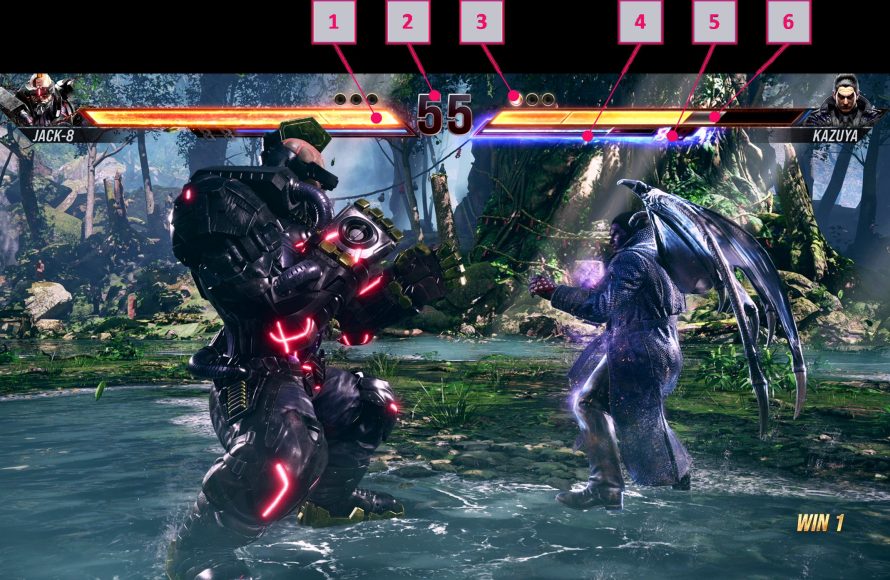
The Tekken 8 overall battle system emphasizes aggressive play through its new Heat system, rewarding offense with increased power and unique character abilities.
The clash of fists and fury returns with Tekken 8, bringing a revitalized fighting experience. This installment introduces fresh mechanics that significantly impact the series core gameplay loop. We will dive into what makes the Tekken 8 overall battle system different.
The Heat system injects a layer of risk and reward, pushing players to become more proactive. This contrasts previous Tekken titles, where defensive play sometimes dominated. Tekken 8 encourages direct confrontation.

Tekken 8 Overall Battle System
Alright, let’s dive deep into what makes fighting in Tekken 8 so exciting! It’s not just about button mashing; there’s a whole world of cool mechanics that come together to create epic battles. Whether you’re a seasoned fighter or just starting, understanding the battle system is key to getting better and having more fun. We’ll explore everything, from the basic moves to the more complicated strategies, so you can get the most out of each fight. So get your controllers ready, and let’s get started.
The Core Mechanics: Movement and Attacks
At the heart of Tekken 8 is the way your characters move and attack. Movement isn’t just about running left and right. It’s about getting into the perfect spot to land your hits and avoid getting hit yourself. Think of it like a dance, where your steps are just as important as your punches.
Basic Movement
Tekken 8 gives you lots of ways to move around. You can:
- Walk: Use the joystick to move slowly, great for precise positioning.
- Run: Push the joystick quickly in one direction to run. This helps you close the distance to your opponent fast.
- Backdash: Quickly tap back twice to move away. This is a critical move to create space.
- Sidestep: Tap up or down quickly to move to the side. This will help you avoid some attacks that only go straight.
- Crouch: Hold down on the joystick to duck under some high attacks, making yourself a smaller target.
- Jump: Press up on the joystick. You can use this to jump over low attacks, but be careful; it can leave you vulnerable.
Attacking
Attacks in Tekken 8 are connected to the buttons on your controller. Every button corresponds to a certain limb of your character. Usually, there are four buttons, each tied to the left punch, right punch, left kick, and right kick. But it’s not that simple though! There are so many different moves you can do by pressing these buttons in different combinations, like for example:
- Basic Punches and Kicks: Pressing a single button does a simple punch or kick.
- Strings: Pressing the buttons in a certain order will make your character do a chain of attacks. Some are quick, while others are slower but more powerful.
- Throws: Pressing a button with a direction at the same time can do a throw, which can’t be blocked, but can sometimes be escaped.
- Special Attacks: Each character has a bunch of special moves that are done with unique button combos. These can be very powerful if you learn how to use them well.
- Rage Arts: When your health gets low, you can use a super powerful move called a Rage Art. These moves can change the tide of battle.
Each character has their own set of moves, so taking the time to check out their full move list is a very good idea. Knowing your character well is an important part of winning.
Heat System
Tekken 8 brings in a fresh new mechanic called the Heat System, which adds a whole new layer to the game. It can change the entire flow of the battle and add a lot of depth to your strategies. When you use Heat, your character gets stronger for a limited time.
Activating Heat
Each character has a special button or combination of buttons to activate Heat. Once you do that, your character will get a visual effect and a boost in power. Heat lasts for a short time, but during this time, you can do some super cool things. Some ways to activate Heat are as follows:
- Heat Engager Moves: Each character has a special move or moves that activate heat when they hit the opponent.
- Direct Activation: Some characters can activate Heat by simply pressing a certain button or combination.
Heat Effects
Once your character is in Heat, they get extra advantages:
- Increased Damage: Your attacks will hurt more when Heat is on.
- New Move Options: Some characters get extra moves or special powers in Heat.
- Chip Damage: Even if your attack is blocked, it will do a little bit of damage when Heat is active.
- Heat Smash: When Heat is active, you can perform a powerful attack that ends the heat state.
- Heat Dash: Most characters can use a special quick dash forward to keep pressure when heat is on.
Using Heat well will help you go on the attack and put your opponent on the defensive. But it only lasts for a short period, so you must make sure to use the time wisely and get as much as possible in a short period of time.
Recovering from Attacks
Getting hit is part of the game, but Tekken 8 gives you a few ways to recover and get back into the fight.
Ground Recovery
When you’re knocked down, you aren’t stuck there. You can use these techniques to get back on your feet quickly:
- Quick Rise: Press a button right when you hit the ground to get up quickly.
- Roll: Press forward or backward when you are downed to roll either away or into your opponent.
- Get Up Kick: You can press a kick button while on the ground to do an attack when you get up, but it is sometimes easy to avoid and punish.
- Stay Down: You can also choose to stay on the ground to confuse your opponent, and sometimes this can be a good strategy to try to make them attack, so that you can recover.
Blocking and Guarding
Blocking is your main way to defend against attacks. Just hold back on the joystick to block high and mid attacks. To block low attacks, hold down and back. Keep in mind, throws can’t be blocked, so you need to find other ways to avoid or escape them.
The Rage System
When your character’s health is very low, they go into Rage. This system adds a big dose of drama to the battle, and gives you one last chance to win.
Rage Activation
When your health bar is almost empty, your character will get a red aura and become stronger. This means you can use a Rage Art. The Rage system serves as a comeback mechanic, giving the player one last chance to come back from a losing position.
Rage Art
Rage Arts are powerful moves that can do a lot of damage. They can turn the battle around instantly. Each character has a special Rage Art, and it’s important to know what it does. Rage Arts are usually very cinematic and visually impressive.
Using Rage Effectively
While Rage Arts can be game-changers, they need to be used carefully. A lot of players will just block the first hit of rage art and then punish you when you are in recovery. Knowing when to use Rage and when to hold it back makes a big difference. Also, keep in mind that Rage is lost when you use your Rage Art. You only get one shot with it, so you have to make it count.
Character Specific Moves
Each character in Tekken 8 has their own unique set of moves, strategies, and play styles. This is the beauty of the game, as it allows you to find a character that suits the way you like to play.
Exploring the Move Lists
It’s important to take some time to go through the move list for any character you want to play. Here are some tips:
- Special Moves: See what kind of special moves your character has. Some of them may have powerful launchers, or moves that can help them apply pressure.
- Strings and Combos: Check out different strings and combos that your character has and get comfortable performing them. Some characters rely more on poking and pressure, and some may rely more on big combos.
- Throw Game: Find out the kind of throws your character has. Is there a command throw? This can be a huge help when you are pressuring an opponent.
- Punishes: Learn what your character’s best moves are for punishing mistakes from your opponent.
Finding Your Playstyle
Some characters are better up close and aggressive, while others do better when they’re at a distance, poking the opponent. Some characters have unique movement options, or moves that take advantage of being in the air. It’s important to find one that suits you. Here is an example of character playstyles:
- Aggressive/Rushdown: Some characters excel at getting up close and personal, mixing up their moves and attacking quickly. For example, characters such as Bryan Fury and Steve Fox are often considered aggressive characters.
- Defensive/Zoning: Others are more comfortable at a distance, using poking moves and long-range attacks to keep the opponent away, and creating space. Characters like Alisa Bosconovitch or Lei Wulong can be good examples of defensive fighters.
- Mix-Up Characters: Many characters are a mix of both aggressive and defensive. Players can be hard to predict since they can switch their playstyles from offensive to defensive and vice versa.
- Gimmick Characters: Some characters have a lot of gimmicks, or tricks that you can use to confuse the opponent. These kinds of characters can be more difficult to play, but can be rewarding when mastered. For example, characters like Yoshimitsu or Ling Xiaoyu can be very hard to play against if you don’t know their gimmicks.
Understanding Frame Data
Now let’s get a little more technical. Frame data is all about how many frames a move takes to start and end. A frame in video games is a single picture shown on the screen. It goes by very fast, but understanding how it works can make your game much better.
What are Frames?
Think of a fighting game like a cartoon. Each move is made of many small still pictures played quickly. Each one of those pictures is called a frame. Knowing how fast each move is in terms of frames helps you understand the timing of attacks.
Startup Frames
Startup frames are how long it takes for a move to start doing damage. For example, a move with 10 frames of startup will start hitting your opponent faster than a move with 20 frames. Moves with fewer startup frames are harder to react to, since they come out quicker. But sometimes moves with more startup frames can do more damage.
Active Frames
Active frames are the time during a move that can actually hit the opponent. If a move has a lot of active frames, it means that your opponent will have a harder time dodging it. Some moves have many active frames, and some only have a few active frames.
Recovery Frames
Recovery frames are the time it takes after a move is finished, before you can start another move or block. If your move has a lot of recovery frames, your opponent will have an easy time hitting you back when you’re vulnerable. Some moves have short recovery frames, so that you can continue attacking quickly.
How Frame Data Helps
Knowing frame data is important because it helps you understand:
- Punishing Opponents: If an opponent uses a move that has many recovery frames, you can hit them before they can block.
- Safe Attacks: You can choose moves that have very short recovery so that you don’t get punished easily.
- Combo Timing: You can perform combos more effectively by knowing when moves will connect, and when you can move on to the next one.
It’s okay if you don’t fully grasp frame data right away. But knowing the basics can help you become a much better player. Don’t feel like you have to know all the frame data; just be familiar with the basics.
Practice and Experimentation
The key to getting better at Tekken 8 is to practice and experiment with the tools you have. Don’t just play matches, take the time to learn and practice.
Practice Mode
The practice mode is your best friend. In practice mode, you can:
- Test Moves: Practice each move and see how they work.
- Combos: Try out different combo chains and learn when to do each move.
- Frame Data: Look at the frame data for moves. You can also practice punishing specific moves from your opponent.
- Movement Drills: Practice your movement skills, such as backdashing and sidestepping.
Experimentation
Once you know the basics, try things out for yourself:
- Mix It Up: Don’t use the same moves all the time. The best players always mix up their strategy and change their moves to make it harder for the opponent to predict them.
- Different Characters: Don’t be afraid to try playing with different characters. It will give you an idea of how the game plays overall and it will also show you what each character is capable of.
- Look at Replays: When you lose, look at replays and see what you could have done differently.
- Online Matches: Fight other players and try out new things that you practiced.
Tekken 8 has many moving parts, and learning it all takes time. But it’s worth it when you master a character. If you keep working hard and focus on learning, you’ll definitely improve, and winning will be so much more satisfying.
In summary, the battle system is complex yet rewarding. Understanding movement, attacks, heat, recovery, rage, and character specifics is vital. Frame data and the nuances of each characters moves are there for more in depth learning. Regular practice, experimentation, and consistent learning are your best paths towards becoming a great player.
TEKKEN 8 New System Mechanics Breakdown (and everything in between.)
Final Thoughts
Tekken 8 overall battle system encourages aggressive play with its heat mechanic and rage system, rewarding forward movement. The game’s emphasis on offensive pressure makes matches feel intense and dynamic. Players must adapt quickly, using new tools and updated move sets.
The enhanced movesets, coupled with the game’s focus on close combat, creates fast-paced and strategic fights. These changes in Tekken 8 overall battle system require players to think on their feet. Matches are less about waiting and more about creating opportunities.

