
Mastering the Tekken 8 control scheme means achieving fluid and precise execution of character-specific moves, combos, and strategies through dedicated practice and understanding the game’s mechanics.
Tekken 8 presents a fighting experience that’s both exhilarating and demanding. The path to victory isn’t just about button mashing; it’s about a deep understanding of the intricate control system. Really, Tekken 8 what it means to master the control scheme becomes the central question for any serious player.
Learning the basic moves is the first step, but true expertise requires mastering movement, cancels, and punishes. This also involves adapting to various situations, as well as anticipating your opponent’s next actions.
Ultimately, skilled play in Tekken 8 requires dedication and a willingness to learn the nuances of each character. Consistent practice is key to success in this complex fighting game.

Tekken 8: What it Means to Master the Control Scheme
So, you’re diving into Tekken 8? Awesome! It’s a fighting game known for its deep combat system and a huge list of characters. But to really compete and have fun, understanding the controls is super important. It’s not just about mashing buttons. It’s about learning the rhythm, the precise inputs, and how they all connect. Let’s break down what it really means to get good at Tekken 8’s controls.
The Basics: Movement and Attacks
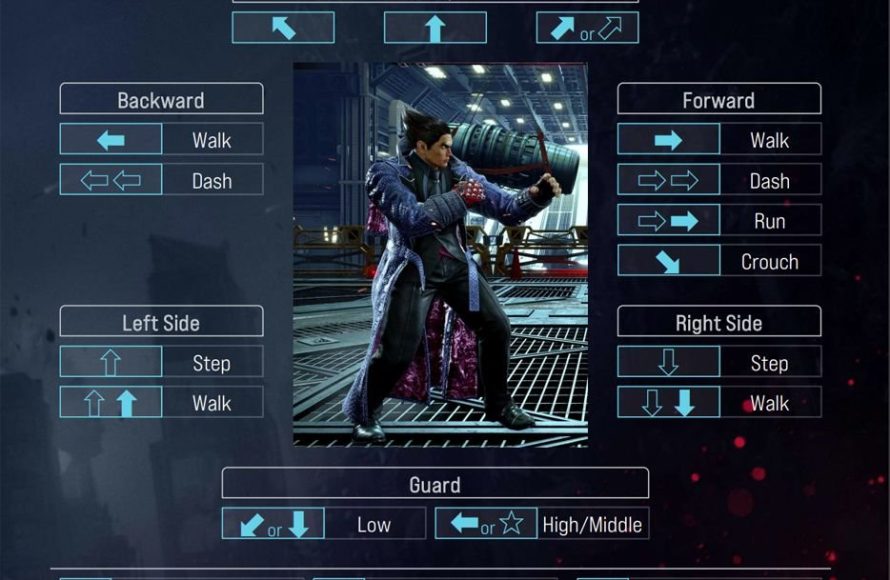
Before we get into complex combos, we need to talk about moving around and doing basic attacks. Think of it like learning to walk before you run. Tekken uses a four-way directional system: forward, back, up, and down (or if you prefer, the joystick or D-pad directions). Each direction lets you move and guard differently.
- Forward: Moves your character closer to the opponent, great for closing the distance.
- Back: Moves your character away, helpful for creating space and avoiding attacks.
- Up: Makes your character jump. Jumping can be good for evading low attacks, but it can also leave you open to other moves.
- Down: Makes your character duck. Ducking is super important for avoiding high attacks, and it allows you to perform low attacks of your own.
The face buttons – usually Square, Triangle, Circle and X (or their equivalents on other controllers) – are your main tools for hitting. Each button is assigned to a limb. For instance, Square might be a left punch, Triangle a right punch, X a left kick, and Circle a right kick. But here’s the thing: those aren’t just four separate moves! The direction you press while using these buttons totally changes the attack that comes out. That’s where it starts to get deep.
Understanding Attack Categories
Tekken categorizes attacks by height and speed. Knowing these is the first real step into control mastery. Let’s check those out:
- High Attacks: These are fast, but they are easily blocked if your opponent is standing and can be ducked under.
- Mid Attacks: These are blocked by standing and crouching opponents, and can’t be avoided by crouching. These are probably most used moves in the game.
- Low Attacks: These are the attacks that hit opponents when they are standing, but your opponents can block it by crouching, These attacks are usually very good for pressuring your opponents.
Understanding the difference is crucial. You cannot just use high attacks and expect to win, you need to diversify. You need to mix different attacks so that your opponent does not predict your moves. You can make them guess if you go high, mid or low, and this is what good players do.
The Importance of Stance and Movement
Movement in Tekken isn’t just about running away or going to the enemy. It also about stances and creating openings. The better you move, the better your opportunities for attacking will be.
Here’s a breakdown of movement:
- Sidestep: Tapping up or down while neutral, makes your character take a small side step to the left or right. This move is great for dodging linear attacks and create opportunities for countering your opponent.
- Backdash: Tapping back twice quickly makes your character dash backwards. It is a fast way to get out of harms way and reset the fight to neutral.
- Crouch Dash: Tapping down, forward, down, forward makes you crouch dash and can allow for mixups.
Stances also play a big role. Different characters can get into unique stances with unique moves. You might see characters like Yoshimitsu who has multiple stances and is very difficult to play against when you don’t know his moveset. You need to experiment with different characters to figure out what kind of playstyle you like.
Special Moves: Beyond the Basics
Special moves are where characters really show their personalities. These moves require specific button sequences, usually with directional inputs. They are way more powerful than basic attacks.
Command Lists: Your Best Friend
Every Tekken character has a command list, and you can find this in the game menu. This command list is your instruction manual. It shows you every single move that your character has at their disposal. It lists the button inputs for each move, along with information like the attack level and a damage information. Some moves have special properties, which will also be listed in the command list. Spend time going through the command list so you understand all the tools in your arsenal.
Executing Special Moves
Special moves need precise timing and a good sense of direction. Imagine your character’s special attack as a musical sequence, you need to get all the notes right at right time. It’s not enough to just press the buttons randomly; you need to input the movements with precision. Think of it as practicing a piano piece. Practice each move slowly, and then gradually increase the speed and try to do them in sequence.
- Practice Mode: This is where you want to be spending most of your time to master those moves. Practice mode lets you perfect the timing of the moves and allows you to practice without worrying about losing a round.
- Repetition: No easy way around this. You have to do it over and over again. Practice specific moves you are struggling with, until you get perfect at it.
- Timing: Tekken isn’t just about pressing the right buttons but knowing when to do it. You cannot just throw out a move; you need to do it at the right time to catch your opponent.
Combos: Putting it All Together
Now, let’s talk combos. Combos are sequences of attacks that connect, preventing the other player from doing anything. Stringing together multiple attacks can quickly turn the tide of the match. Learning combos is also one of the main goal for many players, as these combos can look very flashy. But to get good at these combos, you must have the foundations.
To master combo you must:
- Memorization: You need to memorize the combos. This can take time. Use the command list or external resources to learn the basic and intermediate combos of your selected character.
- Practice: Spend time in practice mode. Start slow, learn the timing of each move, and practice until you can do it with your eyes closed.
- Consistency: The real test is doing those combos in the heat of battle. That’s when all your training is put to the test. Practice consistently in practice and in actual fights against other players.
The Combo Structure
Many combos in Tekken follow a particular structure: a launcher, several follow up moves and ender. The launcher is a move that lifts your opponent into the air, making them vulnerable. The follow up moves are usually quick attacks that you can hit while your opponent is in the air. The ender is the finishing blow. This basic structure can be tweaked depending on the character and situation.
Advanced Techniques
Alright, you are now pretty good at movement, attacks, specials moves and combos. But you want to get even better? Tekken has many techniques which can take your gameplay to next level.
Punishing: Capitalizing on Mistakes
Punishing is about taking advantage when your opponent does a move that is unsafe. Some moves leave your opponent open for attacks. If you know which moves are unsafe, you can punish the opponent by hitting them while they are recovering. Learning which moves have long recovery times is key here.
Spacing: The Art of Distance
Spacing means knowing where to stand relative to your opponent. You want to be close enough to hit them, but not too close that they can easily punish you. Some characters like to be in close range, other characters like to keep some space in order to control their opponents. Spacing is a very important aspect that many beginners ignore, but it is what separates the bad players from the good players.
Frame Data: The Math Behind the Moves
Frame data is the science of Tekken. Each attack in the game has a different number of frames, where frame is the smallest unit of time in video games. Understanding this information is important for more advanced players to understand exactly how fast a particular move is and its properties, such as advantage or disadvantage after the move. This might sound difficult and scary, but you will get used to it the more you play the game.
Mental Game: It’s Not Just About Buttons
Tekken is a fighting game, but a huge part of it is in your head. It’s about reading your opponent, predicting their next move, and not getting predictable yourself. This is more than just pressing buttons, it’s a mental game.
- Adapt: If you see your opponent doing the same thing over and over again, change your strategy. Do not get predictable.
- Patience: Don’t rush in and do random moves. Wait for the right opportunity and play carefully.
- Calm: Keep your cool. Getting upset will cause you to make mistakes. Even if you are losing, just try to calm yourself down and focus on the next round.
Choosing a Main Character: Finding Your Style
With a roster as big as Tekken 8, there’s a character for everyone. Try out a few characters, learn about their playstyle, their moves and see what sticks. It’s better to focus on one or two characters, rather than trying to master the entire cast.
The Journey Never Ends: Continuous Learning
Mastery of Tekken 8’s control scheme is not an end goal but rather a continuous journey. You have to constantly adapt and learn new things. The best players are those who are always learning new strategies, techniques and characters. You have to embrace the challenge and have fun with the game. The most important thing is to enjoy the game.
Getting good at Tekken 8 takes time, effort, and a lot of practice. It is not easy, but do not get discouraged. Remember that every pro player started somewhere, and they got good at the game because they invested time and effort. It’s all about learning the basics, experimenting with moves, perfecting your combos and enjoying the process. So get out there, practice, and good luck!
Tekken 8 Complete Beginner Guide
Final Thoughts
Tekken 8 what it means to master the control scheme involves dedicated practice. The game demands precision and understanding of each character’s unique movements. True mastery comes from anticipating your opponent, not just reacting.
It requires deep knowledge of frame data and animation cancels. Effectively using the heat system is also must for high-level play. Tekken 8 what it means to master the control scheme is about consistently executing complex techniques under pressure.

