
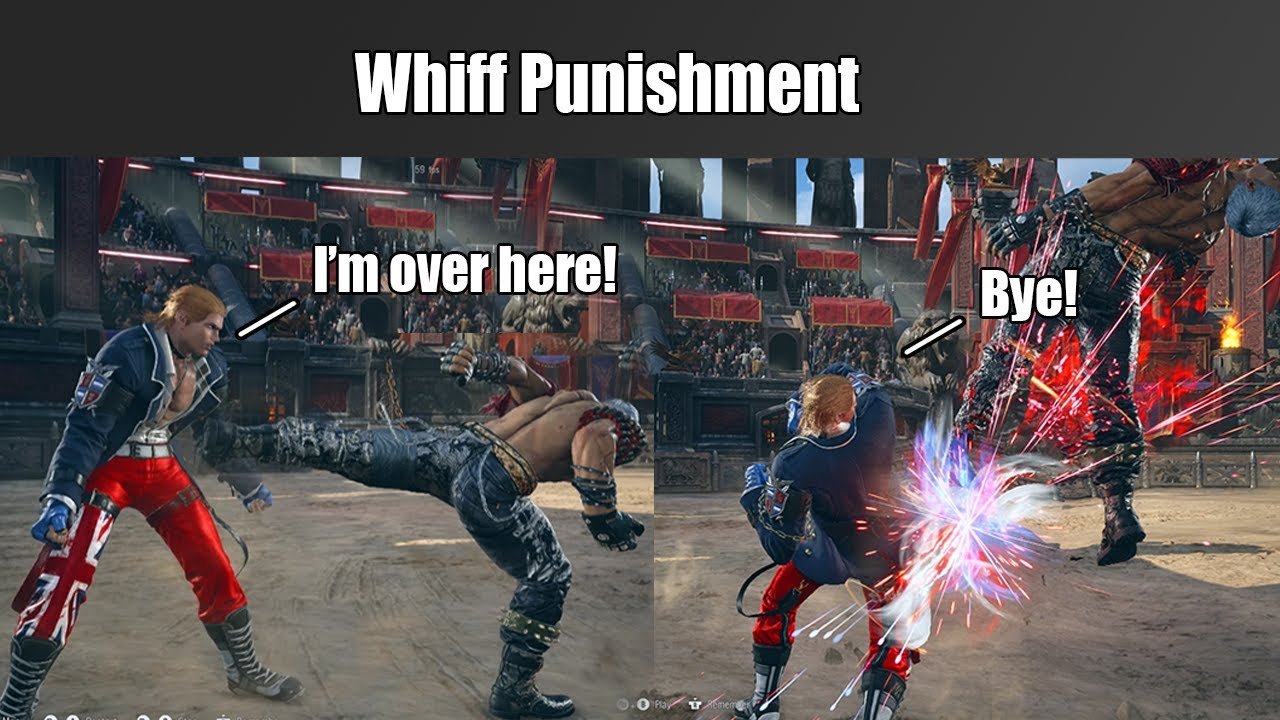
Tekken 8 whiff punishing involves capitalizing on your opponent’s missed attacks by quickly launching your own powerful moves while they’re vulnerable.
Ever feel like your Tekken 8 matches are a chaotic flurry of blows? You’re not alone. The key to gaining an edge often lies not in simply landing your own attacks, but also in taking advantage of your opponent’s errors, specifically through effective Tekken 8 whiff punishing. This skill is crucial for turning defensive situations into offensive opportunities.
Learning to recognize when a move whiffs is the first step. It allows you to react with a swift and damaging attack. A good punish can completely change the flow of a match.

Tekken 8 Whiff Punishing: A Comprehensive Guide
Okay, so you’re diving into the world of Tekken 8, and things are getting intense! You see opponents throwing out moves, some connect, some miss – that’s where whiff punishing comes in. It’s a super important skill that separates good players from great ones. Basically, a “whiff” happens when your opponent tries an attack, but it doesn’t hit you. When this happens, it leaves them open, and that’s your golden opportunity to strike back! This isn’t just about hitting them when they’re not blocking; it’s about capitalizing on their mistakes. It’s about making them think twice before throwing out unsafe moves. In Tekken 8, whiff punishing is a core mechanic, and learning it will seriously improve your game.
Understanding the Basics of Whiffing
Before you can punish a whiff, you need to know what it looks like! Think of it like this: imagine you’re playing tag, and someone reaches out to tag you but misses. For that brief moment, they’re off balance, right? The same thing happens in Tekken 8, though instead of tagging, its characters are throwing kicks, punches, and other wild moves.
What Makes a Move Whiff?
Several things can cause a move to whiff:
- Range Issues: A move might have a short range, and if you’re too far away, it will miss.
- Poor Timing: If you move just as your opponent attacks, their move might go right past you.
- Sidestepping: Moving to the side can cause many linear moves to miss you completely.
- Crouching: Some high attacks will whiff over a crouching opponent.
Knowing when and why moves whiff is the first step in learning how to punish them. A good player is always analyzing the opponent’s range, timing, and tendencies in their attack patterns.
Identifying Whiffing Moves
It takes practice, but you’ll start to notice certain moves that are prone to whiffing. For example:
- Many slow, long-range attacks have a lot of “recovery” time when they whiff, making them easy to punish.
- Some moves track less well, meaning they don’t follow you as you move, making sidestepping a very effective way to force a whiff.
- Moves that move the character far forward might leave them in an unsafe position, susceptible to a punish if they miss.
Pay attention to how each character moves and attacks. The more you play, the more you’ll get a sense of what’s likely to whiff.
The Art of the Punish: Capitalizing on Whiffs
Alright, your opponent just whiffed. Now what? This is where the fun begins! Punishing a whiff means landing an attack on your opponent during their recovery frames, the short period after their attack animation ends but before they can block or move again. The goal is to hit them when they are vulnerable.
Choosing the Right Punish Move
Not all punishes are created equal. You need to choose the right move for the situation. Consider the following:
- Speed: You need a move that comes out fast enough to hit your opponent before they recover. If you’re too slow, they might block or counter you first.
- Range: Your punish move should reach your opponent from where they whiffed. A close-range jab won’t do you any good if they whiffed from halfway across the screen.
- Damage: Some moves do more damage than others. After a big whiff, you want to hit them with a harder punish that does more hurt.
- Properties: Certain moves have better properties, for example, some moves might give you a combo opportunity after hitting, some might be unblockable, while some might knock the opponent down.
Generally, quick jabs, fast mids, and some well-timed launchers are great for punishing whiffs. Experiment with different moves on different whiffs to find what works for you. You’ll develop your own personal punish game over time.
Common Punish Examples
Here are some basic examples of good moves to use for punishing whiffs. Please note that these are general examples and the best punish might change with characters, situations, and range.
- Quick Jabs: Fast, short-range attacks that are very reliable for punishes, great after very close whiffs.
- Standing or Crouch 1, 2 Punches: Many characters have very reliable standing 1, 2 or crouch 1, 2 combinations that are fast and safe to punish whiffs.
- Fast Mid Kicks: They have better range than jabs and can be useful against whiff moves with slightly bigger gaps.
- Launchers: If the whiff move has a lot of recovery, a launcher will let you do a full combo and get a lot of damage.
Again, you should practice your chosen moves so you can execute them without hesitation. The faster you can react to a whiff and punish, the better you will be at whiff punishing.
Advanced Whiff Punishing Techniques
Now that you have the basic concepts of whiff punishing down, let’s delve into some advanced techniques to elevate your gameplay. These are harder to learn, but will make a real difference.
Range Management: Making Them Whiff
A key to whiff punishing is to control the distance between you and your opponent. By understanding the range of your moves and theirs, you can bait them into whiffing. For example:
- Walking Backwards: Move back just outside the range of their attack and punish when they swing and miss.
- Dash Blocking: Dash away from them to make them miss their moves and then punish them.
- Walking Forward and Backwards: Walk forward to bait out an attack and quickly move backward to make them miss.
Range control is a dance, and it takes practice to learn how to play this game of push and pull with your opponents. The better you are at this, the more whiff punishes you’ll secure.
Sidestepping and Whiffing
Sidestepping, or moving to the side, is a powerful tool in Tekken 8. Many moves in the game are linear, meaning they only go straight forward. If you sidestep correctly, you can make these moves whiff, leaving them very open.
- Sidestep Right/Left: Practice sidestepping right or left when an opponent goes for a big move. Learn to punish the whiff after you sidestep the move.
- Sidewalking: Some characters have a better sidestep, called a sidewalk. This can lead to more and better whiff punish opportunities.
Be careful with sidesteps, though, as some attacks can track you and hit you even if you sidestep. Learning which attacks are sidestepable is a big part of the skill.
Using Movement to Create Whiffs
Tekken 8 isn’t just about blocking and attacking. Movement plays a huge role. Use movement to create situations where your opponent will whiff:
- Backdashing: Backdashing can put you out of range of certain attacks, forcing a whiff.
- Crouching: Crouching makes high attacks miss, giving you a great opportunity to punish.
- Jumping: Jumping can also make certain ground attacks miss. However, beware of anti-air attacks which can be very strong.
Movement can be used in so many ways. Experiment and find what works best for your character and your style of play.
Frame Data: Understanding the Numbers
Tekken 8, like other fighting games, uses something called frame data. Frame data tells you exactly how many frames it takes for a move to come out, how many frames the animation takes, and how many frames it takes for a character to recover. If you really want to dive deep into Tekken 8, learning how to interpret and use frame data will drastically improve your game.
- Startup Frames: This is how long it takes for a move to become active and hit the opponent.
- Recovery Frames: This is how long it takes for a character to go back to neutral after doing a move.
- Block Advantage: This is the change in frame advantage you have on a block.
By understanding frame data, you can better predict which moves are punishable and when you have the best opportunity to punish them. Frame data is very advanced and not required for beginner or intermediate level play. It is best to learn it after getting good at basics like whiff punishing.
Practice Makes Perfect
Like any skill, whiff punishing takes practice. You can’t become an expert overnight. Here are some things you can do to improve your whiff punishing skills.
Training Mode
Training mode is your best friend. Use it to:
- Set Opponent to “Whiff”: The training mode allows you to make the AI opponent do specific moves so you can practice punishing them.
- Practice Your Punish Moves: Spend time practicing your punish moves to get their timings and spacing down.
- Experiment with Different Setups: Try using different combinations of movement and distance to set up whiffs, and then punish them.
Training mode gives you the time and space to experiment and improve without the stress of actual matches.
Playing Against Other Players
While training is helpful, nothing beats experience. Play against others online or offline to practice your whiff punishing skills in a real match:
- Pay Attention to Opponents’ Habits: Watch how they move and attack, and look for patterns that you can exploit.
- Don’t Be Afraid to Get Hit: It’s okay to lose and get hit while learning. Each match is a learning opportunity.
- Review Your Replays: After matches, watch your replays and see where you could have punished a whiff.
Playing with others is the best way to figure out which moves are working and which moves are not working. Do not take losses too seriously. Learn from your mistakes.
Patience and Consistency
Improving at whiff punishing takes time. You need patience and consistency:
- Don’t Get Discouraged: Everyone makes mistakes. Don’t let losses get you down.
- Practice Regularly: Consistent practice, even for short periods of time, will yield better results than practicing for long periods occasionally.
- Focus on Small Improvements: Don’t try to learn everything at once. Focus on small improvements, and eventually, you will become proficient at whiff punishing.
Always be striving to get better. Never give up and never stop learning.
Whiff punishing in Tekken 8 is a skill that requires understanding, practice, and patience. It’s not a magical trick, but a core mechanic that will greatly improve your ability to win matches. By learning to identify whiffs, choosing the correct punish, and refining your movement and spacing, you’ll become a much more formidable player. This knowledge will enhance your gameplay, and give you more competitive edge. So, go out there, practice, and make those opponents pay for their mistakes!
Four Steps to PERFECT WHIFF PUNISHMENT – Tekken 8 Intermediate Tips
Final Thoughts
Effective Tekken 8 whiff punishing relies heavily on anticipating opponent moves and quickly reacting. Knowing range and frame data allows for optimal punishes, turning enemy mistakes into your advantage. Practice consistently to improve reaction times.
Understanding move recovery and your character’s options is key. Capitalize on openings created by missed attacks. Successful Tekken 8 whiff punishing significantly impacts match control and winning chances.

