
Understanding the specific terms used in Tekken 9 is essential for players seeking to improve; this Tekken 9 terminology glossary will assist with that.
Ever felt lost in a sea of ‘oki’ and ‘whiff punishes’? Navigating the world of fighting games, especially a complex one like Tekken 9, requires a specific language. This Tekken 9 terminology glossary will help you understand the commonly used words and phrases. We will break down essential terms used by pros and the community. Getting familiar with this glossary is the first step towards success.

Tekken 9 Terminology Glossary
Welcome, future Iron Fist champions! Tekken 9 is coming, and it’s going to be awesome. But like any great game, it has its own special language. Don’t worry; we’re here to help you learn all the cool terms you’ll need to know. Think of this as your guide to Tekken 9 talk, a special dictionary of sorts. Get ready to level up your game knowledge!
Basic Movement and Stances
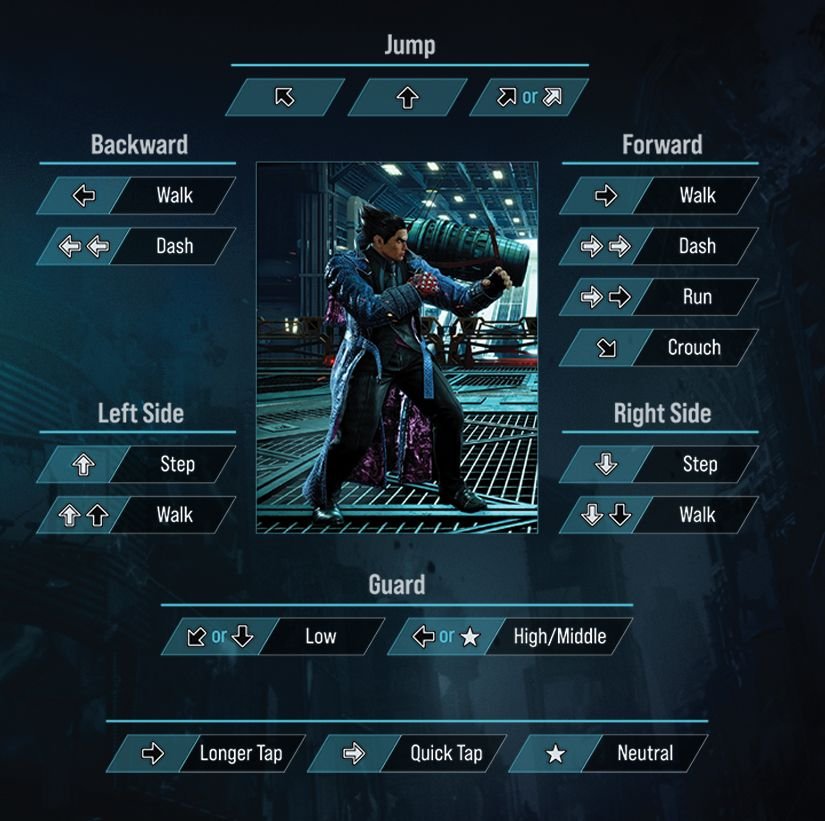
Let’s start with how your character moves around and stands. These are key to making your fighter do what you want.
Forward (f) and Backward (b)
These are pretty easy. ‘f’ means to push the stick or button to move your character toward the opponent. ‘b’ means to move them away. These are fundamental for positioning in a match. Remember, where you stand matters a lot.
Sidestep (SS)
Sidestepping lets you move around your opponent quickly in a circular motion. It’s not about moving away or towards, it’s about going around. This can help you avoid attacks and find better angles to strike. Think of it like a quick dance around your opponent.
There are different kinds of sidesteps too:
- Sidestep Right (SSR): Move to the right side.
- Sidestep Left (SSL): Move to the left side.
Crouch (c)
When you crouch, your character goes down low. This can help you duck under high attacks and set up sneaky moves. Crouching also changes the properties of some of your attacks.
Neutral Stance (N)
Neutral stance is just standing there, ready for action. It’s the position you’re in when you aren’t moving, crouching or doing other special things. It’s like the starting block for your actions.
Attack Types
Now, let’s learn about how you hit your opponent. There are many different types of attacks, each with their own strengths and weaknesses.
High Attacks (h)
High attacks hit your opponent when they’re standing straight up. These attacks can be easy to see and can be ducked. Imagine a punch to the head – that’s often a high attack.
Mid Attacks (m)
Mid attacks hit your opponent whether they’re standing or crouching. They’re tricky because they aren’t so easily ducked. Many basic punches and kicks are mid attacks. They are good for keeping your opponent guessing.
Low Attacks (l)
Low attacks hit your opponent when they’re standing, but can be blocked while crouching. These are great for catching people off guard. Kicks to the legs are usually low attacks. They are important for starting your combo.
Throws (th)
Throws are special attacks where you grab your opponent. They can’t be blocked, but they can be broken. This means you need to watch your opponent and try to guess when they will attempt one. It’s like a little mini-game within the fight.
Power Crush (PC)
Power crushes are attacks that can absorb hits while they come out. They can get you out of trouble if used properly, but aren’t invincible. You can often still take damage while using them, so use them carefully.
Armor Move
Armor moves have a similar function to power crushes, but with variations depending on the character. They typically will absorb hits while executing their attack. This can be useful for pushing your offense through your opponent’s attack.
Input Notations
Okay, this might look a bit like math, but it’s just a way of writing down the buttons you press to do a move. Think of it as a secret code for Tekken masters.
Number Pad Notation
Tekken uses a number pad to represent directions. Here’s what it looks like:
| 7 | 8 | 9 |
| 4 | 5 | 6 |
| 1 | 2 | 3 |
So, if you see “4”, it means “back,” “6” means “forward,” “2” means “down,” and “8” means “up.” This notation helps to explain inputs accurately. “5” means neutral, which means you’re not holding any direction.
Button Notation
Each button on the controller also has a number:
- 1: Left Punch
- 2: Right Punch
- 3: Left Kick
- 4: Right Kick
When you see a number, it refers to that specific button. For example, if you see “1+2,” that means you need to press the left punch button and the right punch button at the same time.
Special symbols
- +: press two or more buttons at the same time. Like 1+2, which means left punch and right punch at same time.
- ,: means press the buttons sequentially. Like 1,2, which means press 1 button first, and then immediately after press 2.
- ~: press the buttons in very quick succession, like 1~2.
Advanced Techniques
Now we’re getting into some of the more complicated stuff! These are the moves and strategies that will separate beginners from seasoned players.
Combos
Combos are when you string together multiple attacks that hit your opponent one after another without them being able to block. These are the backbone of good Tekken play. Practice makes perfect when learning combos.
Juggle
A juggle is a combo where you keep your opponent in the air by hitting them before they hit the ground. This is a very satisfying way to do a lot of damage. You might see moves which are called jugglers, meaning that they can launch the opponent up for a juggle.
Punish
Punishing is about hitting your opponent when they miss an attack. You get a chance to punish when your opponent performs an unsafe move, leaving them open to a counter. Knowing when to punish is essential for good defense.
Frame Advantage and Disadvantage
Every move takes a certain amount of time to start and recover. If you hit with a move that recovers faster than your opponent’s, you have frame advantage. This means you can attack again first. Frame disadvantage means the opposite – your opponent recovers faster and can attack first. Understanding frames can help you decide when to attack and defend.
- On Block: When a move is blocked, the attacker is at disadvantage or advantage based on their frame recovery
- On Hit: When a move connects, the attacker is at disadvantage or advantage based on their frame recovery.
- Launch: A specific move that throws the opponent airborne for a juggle.
- Safe Move: A move which does not leave you at a disadvantage when blocked.
- Unsafe Move: A move which leaves you at a disadvantage when blocked, meaning the opponent can punish your attack.
Okizeme (Oki)
Okizeme, or “wake-up game,” is what you do after you knock your opponent down. This includes planning how to attack them as they get up. Setting up an advantageous situation on a grounded opponent.
Mix-up
A mix-up is when you use a variation of moves to keep your opponent guessing, so they don’t know if you will use a high, low or mid attack. This helps keep your offense strong and make it harder for opponents to predict your actions.
Whiff
This is when your attack completely misses your opponent. This means they were out of range or at a better position to not get hit by your attacks. When you whiff, it can sometimes leave you open to be punished.
Character Specific Terminology
Tekken has a lot of different characters, and each of them have different moves and styles, leading to unique names.
Stance
Characters can sometimes get into a different pose, which provides access to special moves and can change the properties of regular attacks. Certain characters often have stances which are unique to them.
Rage Art (RA) and Rage Drive (RD)
These are special moves that you can use when your health is low. Rage Arts are super powerful attacks that can turn the tide of battle. Rage Drives are powered up versions of normal moves that can lead to high damage. If you are at low health, your character will glow, signaling that you can use these moves.
Heat System
Tekken 8 added a new Heat System. When you use Heat, you get unique bonuses, moves and properties of attacks. Some characters have specific tools that help them gain heat more effectively than others. Heat can be activated once per round.
General Terms
Here are some more words that will help you understand what’s going on in the Tekken world.
Match-up
A match-up is the situation of one character fighting another specific character. Certain characters may have an advantage or disadvantage against others, leading to good or bad match-ups. Some match-ups are easier than others for certain players.
Tier List
A tier list is a ranking of characters based on how strong they are in the game. “Top tier” characters are considered the strongest, while “low tier” characters may have a harder time winning. These lists are just general opinions of players and can often be subjective and biased.
Meta
Meta refers to the most common and effective strategies used in the game. Players can follow the meta to find powerful strategies or they can go against the meta. The meta can constantly change as players discover new ways to play.
Frame Trap
A frame trap is when you do a sequence of moves that make your opponent think it is their turn, but they will be hit if they try to attack. They often rely on the timing between your attacks and take advantage of their frame data.
Advanced Strategy Terms
Spacing
Spacing refers to how far away you position yourself from your opponent. This can impact the success of certain moves, as some moves have limited range. Knowing what the range of your attacks are and understanding the spacing with your opponent is a core aspect of Tekken.
Mind Games
Mind games are when you use strategies to trick your opponent. This could be anything from using the same moves in different ways to making them think you’re going to do one thing when you’re planning to do another. Playing with the opponent’s mind can throw them off and help you gain an advantage.
Option Select (OS)
An Option Select is when you perform a single command that can result in different actions, depending on what the opponent is doing. For example, if you input a move which can be used as a block punish, that can be an option select to automatically punish an unsafe move, if they happen to do that move.
Tech
Tech is a short term for technique. It’s basically a way of doing something that takes skill and can help you win. This could be something like teching a throw, doing a specific counter move or using a particular strategy that requires a lot of skill.
Backdash
Backdash is when you quickly move backwards. This is a common way to retreat and create space between you and the opponent. A backdash can be canceled with another backdash to retreat quickly. Players will use backdashes to avoid attacks and set up counter attacks.
Learning the Lingo
Learning all of these words might seem like a lot at first, but don’t worry! The more you play Tekken 9 and watch other players, the more these terms will make sense. Use this glossary as your reference as you continue to improve in Tekken. You’ll be talking like a pro in no time!
So, there you have it – your guide to all the important Tekken 9 terminology. Take your time to understand each term, and before you know it, you’ll be navigating the world of Tekken like a seasoned pro. Remember, practice is key, and don’t be afraid to try new things. Good luck, and have fun!
terminology the Tekken do not use Obelisk #kemet #nswt #Egypt
Final Thoughts
Tekken 9 offers a complex system, so understanding its language is crucial. Familiarizing yourself with terms, from “heat” to “rage art,” significantly improves gameplay. This knowledge empowers players to compete effectively.
Players must learn the different move properties and frame data to get ahead. A solid grasp of attack types and character-specific mechanics also is important. Thus, using a comprehensive ‘Tekken 9 terminology glossary’ becomes essential for any serious competitor.

