
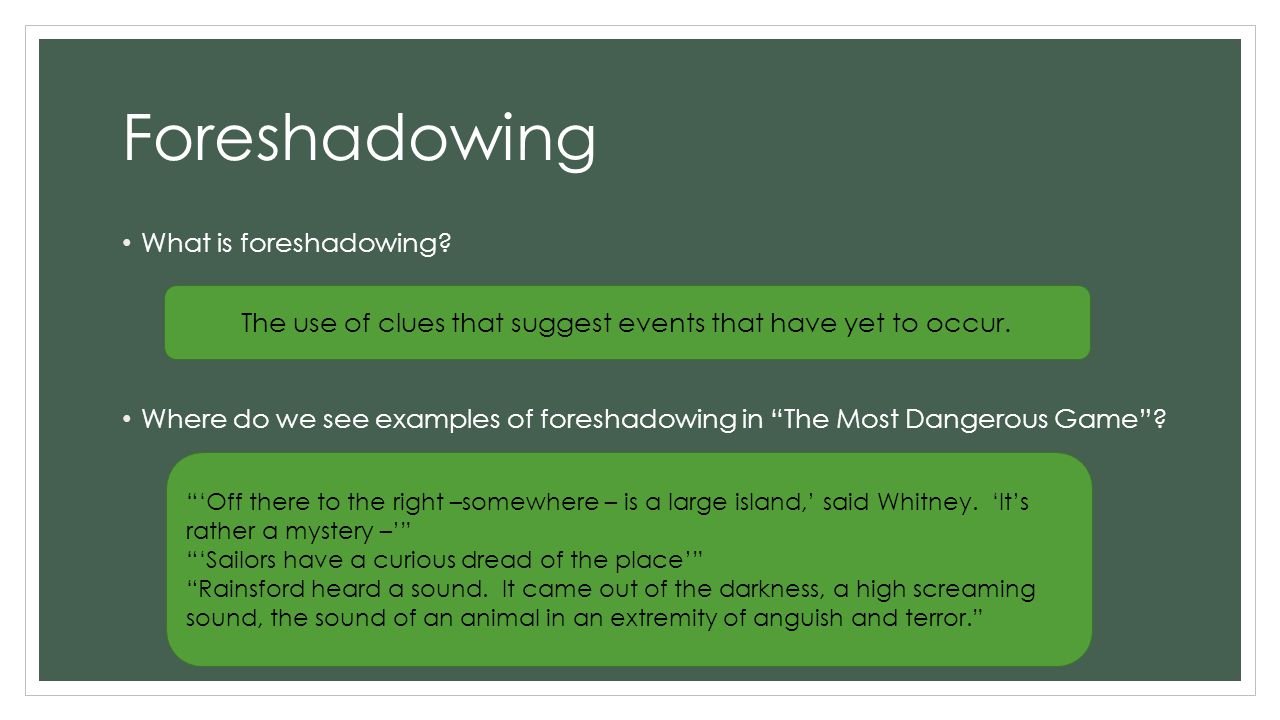
“The story includes examples of foreshadowing such as Whitney’s discussion about the island’s sinister reputation and Rainsford’s comments about hunting instincts, both hinting at the deadly game to come.”
Have you ever read a story that sent shivers down your spine? “The Most Dangerous Game” is certainly one of those, and its use of suspense is truly remarkable. One clever tool Richard Connell employs is foreshadowing. This technique allows the author to hint at events that will occur later in the narrative. So, what are examples of foreshadowing in the most dangerous game?
The conversation between Rainsford and Whitney at the beginning is crucial. They discuss Ship-Trap Island’s evil reputation. Also, Rainsford’s own thoughts on hunting, where he declares that hunted animals lack any understanding of fear, are clues about what is going to unfold. These subtle moments create a sense of unease for the reader.

What Are Examples of Foreshadowing in The Most Dangerous Game?
Let’s dive into the exciting world of “The Most Dangerous Game,” a story filled with suspense and clever clues. Foreshadowing is like a secret whisper from the author, giving us hints about what’s going to happen later in the story. It’s like leaving breadcrumbs on a trail, leading us to the big events. In this story, Richard Connell uses foreshadowing brilliantly to build tension and make the reader’s heart race. So, what are some of these breadcrumbs in “The Most Dangerous Game”? Let’s explore.
The Island’s Ominous Reputation
The story begins with a very important piece of foreshadowing: the ominous reputation of Ship-Trap Island. Whitney, Rainsford’s friend, tells him about the island, mentioning that sailors have a bad feeling about it. He explains that “even cannibals wouldn’t live in such a godforsaken place.” This immediately creates a sense of unease. We learn that the island has a dark history and that something dangerous might be waiting there. This isn’t just some random island; it’s a place where bad things happen. The way Whitney describes it makes us feel like something terrible could occur. He talks about the island’s “evil” reputation, which clearly foreshadows the dark events ahead.
The Sailor’s Fear
The sailors’ fear also provides significant foreshadowing. Their fear of the island is not based on any specific event that is previously explained in the story. Instead, it’s a deep, instinctive fear, as though they know something is wrong with that place. These are experienced sailors who have seen all sorts of things on the sea. But Ship-Trap Island terrifies them. This tells us there’s something truly dangerous on that island, something more than the usual storms and rough seas. This is like a warning bell ringing, telling us that Rainsford is heading into a very unsafe place. It’s a big clue that the island isn’t just another location; it’s a place of deadly secrets. The discussion between Rainsford and Whitney regarding the fear of the island also helps build the story’s suspense and provides critical clues about the coming plot.
Rainsford’s Views on Hunting
Rainsford’s own views on hunting also serve as a crucial example of foreshadowing. Initially, he doesn’t see animals as having feelings. He sees them only as something to be hunted. He says to Whitney that, “the world is made up of two classes — the hunters and the huntees. Luckily, you and I are hunters.” This sets the stage for the main twist. We, as readers, see this as an ordinary and quite accepted idea, but this statement becomes ironic when Rainsford becomes the hunted, and his perspective on hunting changes dramatically. It’s as though the author is saying, “Be careful what you believe, because life can turn the tables on you.” He is so confident and arrogant in his role as a hunter that he doesn’t realize the irony of his statement.
The Conversation About the Hunter and the Hunted
The entire conversation between Rainsford and Whitney about the hunter and the hunted is full of foreshadowing. It is not just about the animals being hunted, but the story also sets up the idea of who gets hunted and who does the hunting. This concept becomes the center of the story when Rainsford himself becomes the prey. It highlights the theme of empathy and how quickly perspectives can shift, as Rainsford goes from being the predator to the prey. This discussion lays the foundation for the rest of the story and makes the readers curious about how these roles might switch. It plants the seed in our minds that Rainsford’s views will be tested. He doesn’t get it yet but he will. The author is planting the seeds of future conflict early on.
The Sounds of the Island
The sounds Rainsford hears after falling off the yacht offer another clue of what is coming. He describes the sound as coming from a “pistol shot” which leads him toward the island, and shortly after he hears a “high screaming” sound which he could not identify. These sounds are both unsettling and unusual, and this creates a sense of mystery and danger. It creates a sinister atmosphere around the island, and gives the audience a hint that things are not normal. These odd noises hint that the island holds dangerous secrets and that Rainsford is not alone. These clues are meant to create an environment of mystery and unease. It is a sign that things are about to become dangerous for Rainsford, a warning that he is heading into an unknown and hazardous situation.
The Mysterious Screams
The mysterious screams, especially, act as important foreshadowing. Rainsford can’t quite place the noise at first, it’s not a typical animal sound which only adds to the suspense. The fact that he’s unsure of what he’s hearing makes it all the more chilling. These screams are the sounds of Zaroff’s previous hunts, which is something Rainsford only realizes later. The mystery surrounding the noises builds suspense. This mystery of strange sounds creates anxiety, telling us the island has some hidden, scary secrets. They create an atmosphere of fear and curiosity, making the reader more invested in Rainsford’s journey.
General Zaroff’s Appearance
Even General Zaroff’s physical appearance provides foreshadowing to his true nature. He’s described as having “handsome,” and “remarkably fine” features, yet he is also described with a pale face, pointed teeth, and red lips. These features make him appear slightly unsettling. This combination of good and sinister features is a clue that Zaroff is not just an eccentric hunter, but there is something truly dark about him. These subtle cues help us as readers understand that he is a man of contradictions, a man who hides his cruelty behind a veneer of civility. Connell uses appearance to create a sense of unease in the reader and make us wonder about Zaroff’s true nature. These subtle details give the idea that there is more to Zaroff than what meets the eye, suggesting that he is hiding a dark and dangerous side.
Zaroff’s Eccentric Behavior
Zaroff’s unusual and eccentric behavior, like his overly polite manners, also hints at his twisted nature. He is very sophisticated and well-mannered, yet he hunts humans for sport. These subtle hints, like his unnerving gaze and the almost too-perfect politeness, provide clues to his true personality. His behavior is a warning sign that things are not as they seem and that Rainsford is in grave danger. This combination of elegance and cruelty makes the reader question his motives, and gives readers an idea that he is hiding some secret. The way he treats his hunting game as just that – a game- is another way that the author uses him to foreshadow the terrible experience that awaits Rainsford.
The Hunting Trophies
The collection of hunting trophies in Zaroff’s home is another important piece of foreshadowing. There are many trophies on the walls of the mansion, and Rainsford initially presumes that these are all animals until he notices that some of them are much larger than any animal he has ever encountered. The fact that these are not animals is another clue that there is something terribly wrong here. This detail is another dark hint from the author, telling the readers that something is not right, and that Zaroff is not like other hunters. The display of these trophies isn’t just about Zaroff’s hunting prowess; it’s about the dark nature of his preferred game. It prepares the reader for the revelation that Zaroff hunts human beings. The author sets a dark and dangerous tone when revealing these trophies.
The Size of the Trophies
The fact that some trophies are bigger than any animal that Rainsford has encountered is a critical clue. This builds the sense of mystery and tells the reader that these are not animals, which further adds to the suspicion of General Zaroff’s true nature. By setting up a mystery about the trophies, Connell effectively uses foreshadowing to make the reader anticipate some terrible revelation. This hints that the hunt is not what Rainsford expected and that he’s dealing with a dangerous man. The size discrepancy indicates that Zaroff is hunting something unusual, and as such, it intensifies the anticipation that builds within the reader. This creates a chilling environment that prepares the reader for the dark reality of the island.
The Conversation About Boredom
Zaroff’s discussion about boredom is another important instance of foreshadowing. He talks about how he has become bored with hunting animals. He claims it is “too easy” for him. This statement is important because it explains why he has now taken to hunting humans. It’s a subtle hint of his dark motives, and it tells the readers that he needs a greater thrill in his life to feel fulfilled. It also shows his lack of empathy. The confession of boredom shows that Zaroff’s need for excitement and his twisted sense of sport have led him to a disturbing place. This dark confession isn’t just casual conversation, it shows his terrible moral state, and it sets the stage for the deadly game that is about to be played.
Zaroff’s Lack of Empathy
Zaroff’s lack of empathy is another significant clue, and helps readers understand his cruel nature. He sees humans as prey, not as living beings. This is made clear when he tells Rainsford that the “scum of the earth” are an excellent challenge. This shows that he believes he is superior to others. This lack of compassion is a big clue that Zaroff is a dangerous man who sees his fellow humans as just a source of amusement. This complete lack of sympathy highlights his dangerous side, and it paves the way for the shocking events to come. The absence of any empathy prepares us for the cruel acts that Zaroff is about to commit.
The Rules of the Game
The rules of the game that Zaroff lays out are clear foreshadowing. He explains that he gives his prey a head start, a knife, and three days to survive. These rules seem civilized on the surface, but they also show how twisted the game is. These conditions give a chilling hint to the dangerous experience Rainsford is about to face. These rules don’t just show how the game is played, but also show Zaroff’s sick pleasure in the hunt, which intensifies the suspense of the story.
The Three-Day Timeline
The three-day timeline is a critical piece of foreshadowing. It sets up a clear time limit which increases the suspense. This detail lets the readers know that Rainsford’s survival depends on his skills and wit within a very limited period of time, and it increases the stakes. This makes the story more tense and thrilling, as it builds the suspense and makes us wonder if Rainsford can survive within this timeline. These details add a sense of urgency to the story and make the reader invested in Rainsford’s chances of survival.
The Final Confrontation
The ultimate confrontation between Rainsford and Zaroff was hinted at throughout the story. All the tension and dread that had been created leads up to this moment. This is where we see the culmination of all the foreshadowing, where all the clues come together. The author has used all the prior events to lead up to this ultimate showdown. The fact that Rainsford turns the tables on Zaroff and becomes the hunter is the final, powerful act of foreshadowing. The earlier discussion of hunter and huntee is now realized in this moment. The author has used the entire story as a way to lead up to this dramatic confrontation and it ends up being the most surprising and satisfying event.
The Role Reversal
The role reversal, where Rainsford becomes the hunter and Zaroff becomes the hunted, is the ultimate example of foreshadowing in the story. This was hinted at all along, as was Rainsford’s previous opinion of the hunted. This is where all the previous clues and hints come together, making the ending very powerful. This isn’t just a twist, but it shows that life can be ironic, and that positions can change very quickly. The role reversal is the most effective way to portray the ultimate message of the story.
In conclusion, “The Most Dangerous Game” masterfully uses foreshadowing to create a suspenseful and gripping narrative. From the ominous reputation of Ship-Trap Island to the unsettling details about General Zaroff and his game, these hints prepare the reader for the story’s dark twist. The use of foreshadowing not only increases the tension but also makes the story’s eventual reveal much more impactful, illustrating the powerful theme of the hunter becoming the hunted. By planting clues early on, Connell ensures that the ending is both surprising and satisfying, leaving a lasting impression on the reader.
Characterization, Foreshadowing, & "TMDG"
Final Thoughts
The unsettling jungle island setting and Rainsford’s initial conversation about hunting foreshadow danger. Whitney’s tale of Ship-Trap Island’s evil reputation also hints at the peril awaiting Rainsford. These details are key in building the suspense.
Zaroff’s peculiar calmness and his obsession with hunting foreshadow his human prey game. His talk about boredom and hunting the ‘most dangerous game’ clearly shows his true nature. These early examples create suspense and make the reader anticipate the impending deadly contest.
So, what are examples of foreshadowing in the most dangerous game? The isolated island, talk of hunting, and Zaroff’s strange actions all point to the horrific hunt. These events must prepare us for Rainsford’s fight for survival.

