
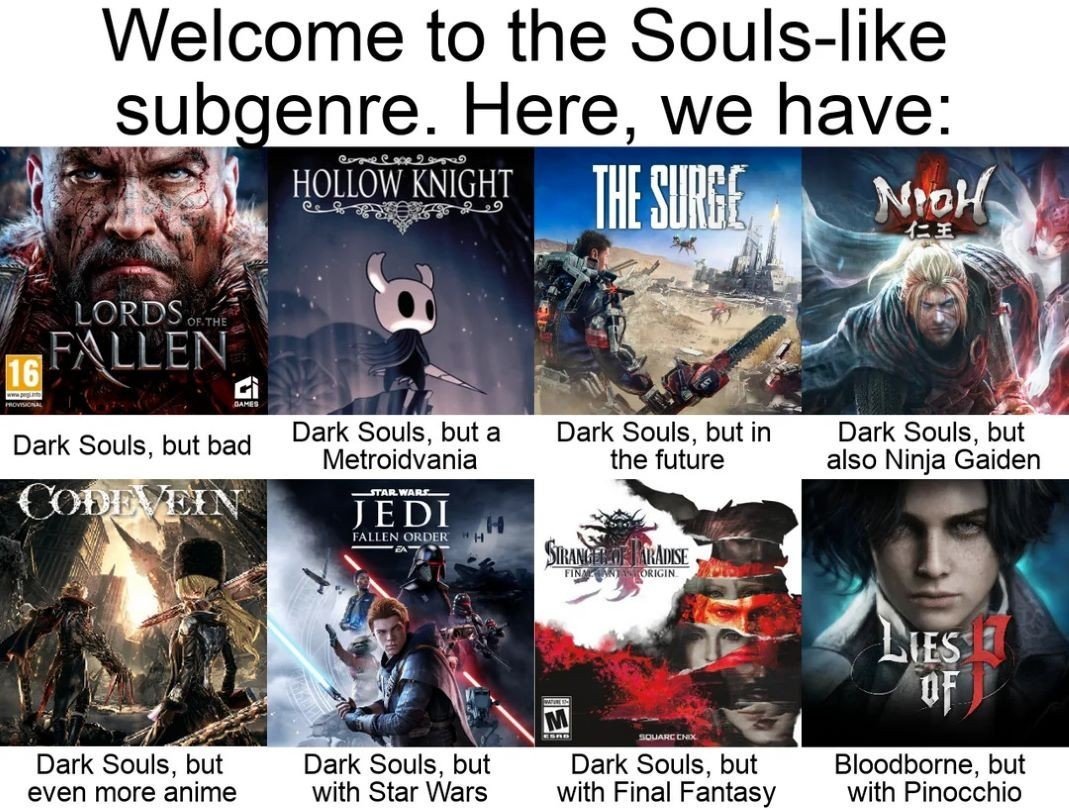
Soulslike games are action role-playing games known for their high difficulty, deliberate combat, and interconnected world design often featuring a dark fantasy setting.
Have you ever faced a challenge so immense it made victory feel incredibly rewarding? That’s the essence of what are soulslike games. These aren’t your average hack-and-slash; they demand patience, strategy, and precise timing.
They typically present complex combat systems, punishing death mechanics, and worlds that loop back on themselves, encouraging exploration and learning. Players often feel a profound sense of accomplishment after overcoming the obstacles they face in these games.

What are Soulslike Games?
Ever heard someone talk about a game being “like Dark Souls” and wondered what that meant? Well, you’re in the right place! Soulslike games are a specific type of action role-playing game that have become super popular. They’re known for being challenging, having cool worlds, and making players feel really accomplished when they finally beat them. Let’s dive deep into what makes a game a “soulslike” and why so many gamers are drawn to them.
The Core Elements of a Soulslike
It’s not just about being hard; there’s a recipe to making a game feel like a true soulslike. Let’s break down some of the key ingredients:
High Difficulty
This is probably the most well-known trait. Soulslike games aren’t afraid to punish mistakes. Enemies are often tough, and even regular fights can feel like boss battles. You’ll probably die a lot, but each death is a chance to learn and get better. This isn’t about artificial difficulty; it’s about demanding precision and careful planning. Forget button mashing; you need to observe enemy patterns and react accordingly.
Challenging Combat System
The combat in soulslike games isn’t just about hitting buttons; it’s about strategy. You need to manage stamina, which limits how often you can attack, roll, or block. You need to think about your positioning, and how your attacks interact with the enemy’s defenses. This makes each fight a puzzle to solve, and victory feels very earned. Timing is everything; a single mistimed dodge can spell disaster. The combat is deliberate, not frantic.
Interconnected World Design
Forget sprawling, empty maps. Soulslike games often feature intricate, interconnected worlds. Levels loop back on themselves, opening up shortcuts and creating a sense of exploration. This often means areas are not just straight lines, you can explore, find hidden treasures and new paths to take. These designs encourage a sense of discovery and reward for paying attention to the environment. You feel a genuine sense of accomplishment when you find a new pathway.
Estus Flasks and Bonfires (or Equivalent)
Health is not something you simply regenerate in these games. Soulslike games usually have a limited healing item, commonly known as “estus flasks,” or a similar concept. These items can only be replenished at checkpoints – often called bonfires, or other similar locations. Resting at these checkpoints can also respawn enemies, which adds another layer of challenge. It makes you think twice before jumping into a dangerous area, as you must decide if your current health is enough to carry you through. These checkpoints are not just safe zones, but also a place to strategize.
Loss of Currency/Progress Upon Death
When you die in a soulslike game, you often lose something valuable, like the in-game currency, souls, or similar resource. This lost currency can usually be reclaimed if you can make it back to where you died, but failing to do so means they are gone for good. This creates a tension where every fight matters. The risk of loss gives the fights real consequences and makes the rewards feel that much more satisfying. It creates an addictive loop, where you want to improve and not die so you don’t lose the progress you have made.
Indirect Storytelling
Don’t expect a lot of cutscenes with characters giving you lengthy explanations. Soulslike games often tell their stories through item descriptions, environmental details, and character dialogue. This often leaves you to piece together what’s going on, adding a sense of mystery to the experience. You might have to talk to many different characters or explore the game world to understand the main plot. The story unravels as you play, making each play-through feel unique.
Limited Character Customization
While character customization is possible, it often doesn’t allow you to drastically change the skills or attributes of your avatar. It is more about choosing the starting class that will give you certain advantages rather than molding the character’s stats to your liking. Instead, the focus is on learning the game’s systems and getting better as a player, not on creating a character that’s inherently powerful. The core of advancement relies on skill development and not stat boosts. This also allows for replayability as the game will give you a unique experience if you start with a new class.
Why Soulslike Games are So Popular?
You might be thinking, “Why would anyone want to play such a hard game?” It’s a fair question. But, the difficulty is exactly what makes these games so rewarding. Here are some reasons why they’re so popular:
A Sense of Accomplishment
When you finally defeat a tough boss or overcome a challenging area, the feeling of accomplishment is incredible. It’s not a victory handed to you; you earned it through hard work and determination. This is a large contrast from some other games where you sometimes can breeze through the levels. The feeling of mastery over a game system is what makes players come back to them again and again.
Learning and Improvement
Soulslike games are about more than reflexes; they’re about learning. Each death teaches you something new about enemy patterns, level layouts, or your own combat style. The more you play, the better you get, and it’s easy to see your improvement. You see your failures as opportunities to get better, and every mistake helps you improve. This is a really rewarding learning experience, unlike the typical video game experience.
Challenging, Yet Fair Gameplay
While these games are hard, they usually feel fair. Deaths aren’t because of cheap tricks or unfair mechanics, but usually because of your own mistakes. This makes you want to try again, as you know with more planning, you will be successful in your next run. This is a big reason why people play them despite their difficulty. The game challenges you in a fair way, not by cheating.
Unique Atmosphere and World Design
The worlds in soulslike games are often dark, mysterious, and captivating. They have a unique sense of art direction that captures the imagination. This gives the player the drive to explore every corner and find secrets that could help them or enrich the story. The atmosphere is often brooding, adding to the sense of adventure. The immersive environment contributes to the player’s desire to stay within the game.
A Shared Experience
Because these games can be so difficult, players often come together online to share tips, strategies, and discuss their challenges. This sense of community adds another layer of appeal. This online community can be a great resource when you find yourself stuck. Also, knowing that other players are going through the same challenges can be encouraging.
Not Just Dark Souls: Defining the Genre
While the name “soulslike” comes from the Dark Souls series, many other games have adopted similar mechanics, and some even improve upon the soulslike formula. Here are a few examples of other popular soulslike games:
Nioh and Nioh 2
These games are set in feudal Japan and add a unique layer of loot to the gameplay. They also feature more varied combat options. The variety in enemies and weapons will be a nice change if you are a seasoned soulslike player. The high emphasis on combat techniques will also give a new challenge.
The Surge and The Surge 2
These games put a science fiction spin on the soulslike formula, where you are using exoskeletons and are fighting against other humans and machines in a futuristic environment. This setting is a refreshing change of pace from the fantasy settings in the Souls series. The limb-targeting mechanic adds a new layer of strategy to each fight.
Lords of the Fallen
This title was one of the first to try and capture the essence of Dark Souls, and though it had its flaws, it established the basic soulslike formula. It provides a solid experience, even though it is not considered as one of the top soulslike titles. It gives players a clear picture of how soulslike games work.
Code Vein
This game takes the soulslike formula and adds an anime-inspired aesthetic, allowing you to use various “gifts” or abilities. It offers a slightly different take on the genre with its unique story and characters. The ability to switch between different gifts makes it a great game for people who are looking for more customization options.
Elden Ring
Often cited as the evolution of the soulslike, Elden Ring offers an open world, which was previously not explored in the FromSoftware games. It is an excellent game that pushes the genre to new heights, and if you are looking for a new entry point in the series, it is a great title to start with. The open world will allow players to explore at their own pace while also giving them access to a larger arsenal of weapons and abilities.
Lies of P
A recent and notable addition to the genre, Lies of P is set in a captivating Belle Époque-inspired world that takes its influence from the story of Pinocchio. What sets it apart is its unique crafting system, which gives you the ability to modify your weapons and the game’s interconnected levels and strong combat, make it an instant classic in the genre.
Other Notable Soulslike Games
- Salt and Sanctuary
- Mortal Shell
- Remnant: From the Ashes
- Blasphemous
- Hollow Knight (Metroidvania with Soulslike elements)
- Wo Long: Fallen Dynasty
Soulslike vs. Souls-Inspired
Sometimes, you might see games described as “souls-inspired” rather than “soulslike.” What’s the difference? Typically, a “souls-inspired” game will take some elements from the soulslike formula, but might not have all of them. Here’s a simple breakdown:
| Feature | Soulslike | Souls-Inspired |
|---|---|---|
| High Difficulty | Typically very high | May be high, but can vary |
| Challenging Combat System | Core gameplay feature | Often present, but can be different |
| Interconnected World Design | Usually a key design element | May be present, but not always |
| Estus Flasks/Bonfires | Often present in similar mechanic | May have a different healing/checkpoint system |
| Loss of Currency/Progress Upon Death | Usually a feature with consequences | May have different consequences upon death |
| Indirect Storytelling | A common method of storytelling | Can be different or direct |
| Limited Character Customization | Often emphasizes learning the systems over stat boosts. | Might offer more traditional RPG customization. |
A souls-inspired game might have hard combat and exploration, but maybe its story is told through cutscenes. Or it might have an open world but lacks the interconnected level design. It’s all about the mix of features. For instance, a game like Hollow Knight takes heavy inspiration from soulslike games, but also draws heavily from Metroidvania games, and would be better described as souls-inspired rather than a traditional soulslike.
Soulslike games offer a unique and very rewarding experience to players. They require hard work and dedication to play, and their emphasis on learning game mechanics rather than character building is a core element of the genre. While the difficulty may scare many gamers away, the sense of accomplishment you get when you beat a difficult boss is unmatched, making them a very rewarding experience.
What is a Souls-Like?
Final Thoughts
Soulslike games present a specific challenge. They emphasize deliberate combat and require players to learn enemy patterns. Death is a core mechanic, often leading to loss of progress, but also valuable learning opportunities.
These games typically feature interconnected world design. Players explore areas at their own pace. The narrative is usually conveyed through item descriptions and environmental details.
So, what are soulslike games? They are action RPGs inspired by FromSoftware’s titles, characterized by demanding gameplay and a unique approach to storytelling. These elements combine to form the core soulslike experience.

