
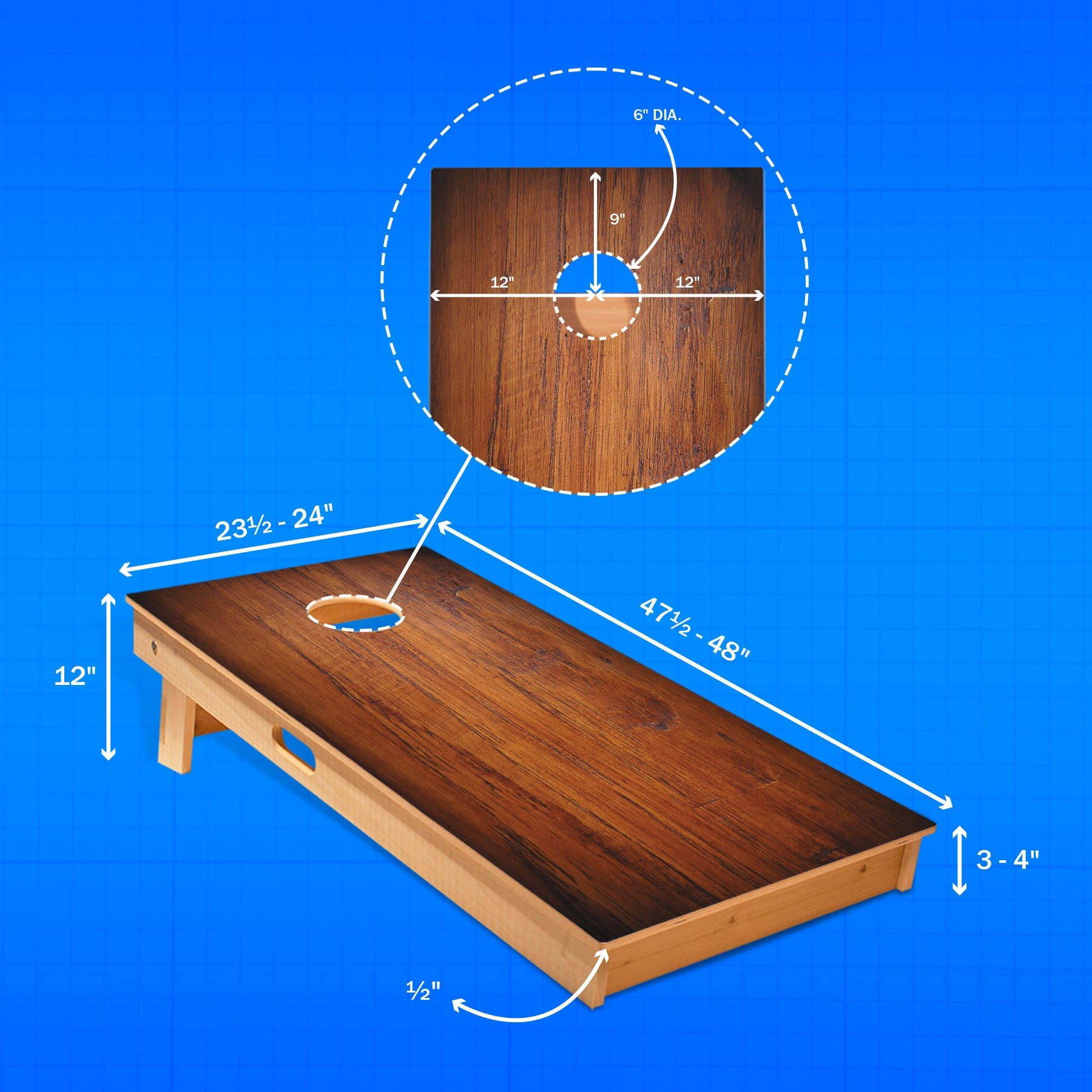
The official dimensions of a cornhole game include a board that measures 2 feet by 4 feet, with a hole that is 6 inches in diameter, and the front edge of the board should be 9 inches from the ground, the back edge being 12 inches from the ground.
Ever wondered about the specifics of a cornhole setup? You know, that fun backyard game with bean bags and wooden boards? It’s more than just tossing bags; knowing what are the dimensions of a cornhole game is key to fair play.
Having the correct measurements makes sure everyone enjoys the game and it’s not too easy or difficult. These standardized dimensions enable consistency across play areas.

What are the Dimensions of a Cornhole Game?
Let’s dive into the specifics of cornhole dimensions! When you’re setting up for a friendly game of cornhole, or maybe even building your own boards, it’s super important to get the measurements just right. Playing on boards that are the correct size ensures a fair and fun game for everyone. Think of it like having the right size court for basketball or the right length of the field for football – it just makes the game work better!
The Official Cornhole Board Size
The official size for a cornhole board, the kind you’d see in tournaments or serious competitions, follows specific rules set by organizations like the American Cornhole League (ACL). These official measurements make sure everyone is playing on a level playing field, literally! Knowing these details is helpful whether you are a competitive player, or just someone building your own backyard setup.
The Board’s Overall Dimensions
- Length: An official cornhole board is 48 inches long, which is exactly 4 feet.
- Width: The board measures 24 inches wide, or 2 feet.
- Thickness: The board should be at least half an inch thick, but can be more. Many prefer using a plywood that’s three-quarters of an inch thick for added sturdiness and to reduce bouncing.
The Cornhole Hole Dimensions
- Diameter: The hole in the board is 6 inches in diameter. This is big enough for the bean bags to go through but small enough to make it a challenging target.
- Placement: The center of the hole is placed 9 inches from the top edge of the board and 12 inches from each side edge. This precise location ensures a balanced and consistent gameplay experience.
The Cornhole Bean Bags
It’s not just the board that has specific measurements. The bean bags, also known as corn bags, have their own set of rules.
Size and Weight of the Bean Bags
- Size: Official cornhole bean bags are 6 inches by 6 inches.
- Weight: Each bag should weigh between 15 and 16 ounces when filled.
- Fill Material: They’re usually filled with either plastic pellets or dried corn, which gives them that classic “thud” when they hit the board.
The Playing Area Dimensions
Setting up the game correctly is as important as the board and bags. There are some standard distances for the boards and player positions. This creates a good challenge and fair play environment.
Distance Between Boards
- Board to Board: The front edges of the two boards should be exactly 27 feet apart. This is the distance that professional players use.
- Player Pitching Boxes: Each player stands within a designated area on either side of their own board. These boxes are typically 3 feet wide and 4 feet long, running parallel to the boards.
Layout of the Court
The whole layout isn’t just about the board-to-board distance, it also includes the areas where players stand and any space around the boards. The following are useful in setting up your cornhole area:
- Foul Lines: The imaginary foul line in cornhole is at the front of each board, where the distance between the boards (27 feet) is measured. Players must not cross this line when tossing the bags.
- Side Space: While not strictly measured, it’s good to have at least 3-4 feet of open space on the sides of the boards. This lets players move easily and reduces the risk of interfering with other players or structures around the playing area.
- Back Space: It’s also beneficial to have at least 3-4 feet of space behind each board. This provides room for bags that might sail past the target and for players to retrieve them comfortably.
Having these extra spaces is more of a recommendation for comfortable game play, but the 27-feet distance between the boards and proper player box area is an important rule for playing.
Why These Dimensions Matter
You might wonder, “Why are these measurements so specific?” Well, it’s all about making the game fair and consistent. When everyone plays with the same sized boards, bags, and distances, it eliminates any unfair advantages. Whether you’re playing for fun or in a tournament, the standard dimensions are the best way to ensure a great experience.
Fair Play and Consistency
Consistent dimensions means that anyone can play anywhere and have the same experience. When boards are built to standard, players can move from location to location, practice to competition, and know exactly what to expect. This level of predictability is key to skill development and fair game play.
Skill Development
The established dimensions provide a consistent standard for skill development. Whether you’re a beginner just learning the ropes or an experienced player honing your technique, using standard boards helps you to accurately gauge your improvements and consistency.
Variations in Board Sizes
While official cornhole boards are standardized, you might come across different sizes for various reasons. There are smaller versions of cornhole boards that are often sold or used in areas where there isn’t much space.
Tailgate or Travel Boards
Sometimes, you might see cornhole boards that are a little smaller than the official size. These are often called “tailgate” or “travel” boards. They’re made to be more portable and easier to carry around.
- Dimensions: A common size for a travel board might be 3 feet long by 2 feet wide. While this makes them easier to move, it also means the game is slightly different, and won’t be comparable to competition play.
DIY and Custom Builds
When people build their own boards, they sometimes tweak the dimensions to fit the space they have or their preferences. This can lead to variations in size, but if you want to practice and learn on the board that you will be using in competition, you should use the standard dimensions.
- Customization: While you can build boards of different sizes for fun, always stick to the official dimensions if you’re aiming for a more competitive or standardized game.
Building Your Own Cornhole Boards
If you’re interested in building your own cornhole boards, here’s a quick rundown of what you’ll need to keep in mind:
Essential Materials and Tools
- Wood: You’ll need a sheet of plywood at least half an inch thick (¾ inch is often preferred for its durability).
- Measuring Tools: A measuring tape and a straight edge are essential for precise cutting and markings.
- Cutting Tools: A saw for cutting the wood to size, and a hole saw or jig saw for cutting the hole.
- Fasteners: Screws and wood glue for joining the pieces together securely.
- Sanding Tools: Sandpaper or an electric sander to smooth the edges and surfaces.
Step-by-Step Building Guide
Here is a general guide for making your cornhole board:
- Cut the Wood: Cut your plywood to the official dimensions – 48 inches long and 24 inches wide.
- Mark the Hole: Find the center of the hole by measuring 9 inches down from the top and 12 inches in from each side. Mark the spot.
- Cut the Hole: Use a 6-inch hole saw to cut the hole at the spot you marked. If you don’t have a hole saw, you can use a jigsaw to cut along a marked circle.
- Build the Frame: You can build a frame with 2x4s or other material, to attach to the bottom of your board for stability and to lift the top of the board to the official height in the back (12 inches).
- Sand the Board: Sand all the edges, and surface until they are smooth to reduce splinters and to allow the bags to slide across the top of the board.
- Paint/Decorate: Now is the fun part: you can paint or decorate your board how ever you wish.
Cornhole and Accessibility
It’s important to consider how to make cornhole accessible to people with different abilities. Some variations in rules and dimensions can help make the game inclusive to more people.
Adaptations for Different Needs
- Seated Play: For players in wheelchairs, the distance between boards may need to be shortened to make it easier to throw.
- Modified Bags: Players who have a harder time gripping can use larger bean bags or bags with handles for easy grip.
- Lower Boards: Lowering the boards can be beneficial for players of different ages or those with physical limitations. However, this should not be done in official play.
Ultimately, the goal of any game should be to have fun and foster a welcoming environment. Whether you’re following the official dimensions or making necessary adaptations, the most important thing is that everyone can join in and enjoy themselves.
So, there you have it! The dimensions of a cornhole game, the bean bags, and the playing area all work together to create the perfect setup. Whether you’re a seasoned pro or a casual player, understanding these dimensions is key to enjoying the game. Remember, the official dimensions for a great game of cornhole are 4 feet long by 2 feet wide boards, 6 inch diameter holes, 6 inch square bean bags (15-16 ounces each), and a distance of 27 feet between boards. Now that you’re armed with this knowledge, get out there and have some fun!
What are the official corn hole board dimensions?
Final Thoughts
The standard cornhole board measures 24 inches wide and 48 inches long. The hole diameter is 6 inches, centered 9 inches from the top edge. These measurements are crucial for gameplay.
Properly following these measurements ensures fair competition. Bean bags must also conform to regulations. What are the dimensions of a cornhole game becomes important for setup.
Maintaining these dimensions means a consistent experience across different settings. These standards are important for both casual and competitive play.

