
The rules for the game Sorry! involve moving pawns around the board based on card draws, bumping opponents back to start, and getting all your pawns to “home” first.
Ever found yourself staring at that colorful board, wondering just exactly what are the rules for the game sorry? The game seems simple, but a quick play can often lead to confusion. It’s a race, yes, but knowing the nuances separates a casual player from a true contender.
Don’t worry, understanding the moves, the ‘Sorry!’ card, and the safety zones will make your next game night a lot less baffling and a lot more fun. This game is filled with strategic planning and a bit of luck.

What Are The Rules For The Game Sorry?
Alright, let’s dive deep into the exciting world of Sorry! This classic board game has been a family favorite for generations, but sometimes those rules can get a bit… hazy. Don’t worry, we’re going to clear everything up. We’ll go over everything you need to know to play Sorry! correctly and have loads of fun. Whether you’re a seasoned player or picking up the game for the very first time, this guide will help you become a Sorry! pro.
Setting Up the Game: Get Ready to Play!
Before the action starts, we need to get the board ready. Here’s how you do it:
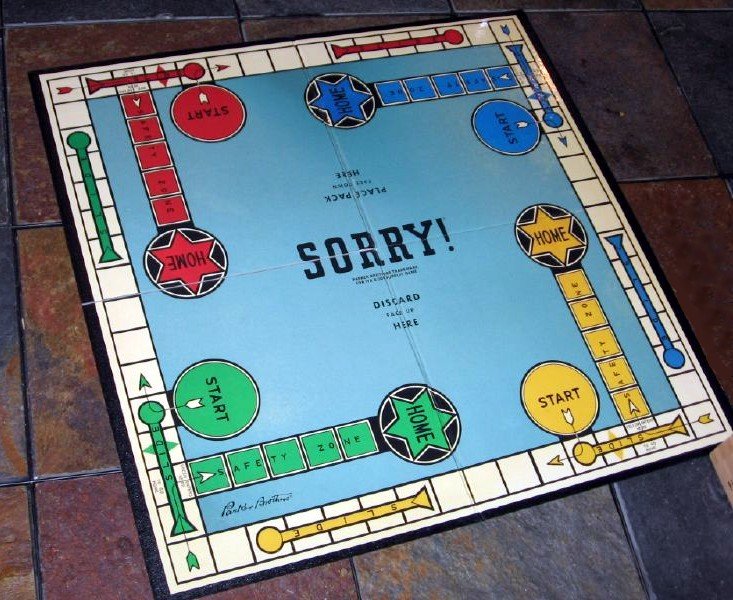
- The Board: Place the game board in the middle of the playing area so everyone can reach it. Make sure the board is right-side up for each player. The board consists of a track made up of colorful spaces and four ‘start’ zones connected by a large ‘safety zone’ in the middle of the board.
- The Pawns: Each player chooses a color and takes all four pawns of that color. Place these pawns on the start zone of your chosen color. Usually, colors include red, blue, yellow and green.
- The Deck of Cards: Shuffle the deck of ‘Sorry!’ cards and put it face down where everyone can reach it. This will be your draw pile.
That’s it! Now, you’re all set to start playing the game. But before we begin, it’s important to understand the board a little better. The game board is not like most board game tracks as it is a closed circular loop that connects all four players.
Understanding the Game Board
The game board is designed with some unique features that are very important to how you play. Here’s a breakdown:
- Start Zone: This is where each player starts their pawns. It’s the beginning of each player’s journey around the board.
- Safety Zone: The large space in the middle of the board is a “safe” area, where no pawns can be bumped by other players. This also connects the path of each player.
- Track: This is the colored circular path that players will move their pawns around. Each player’s track is the same length in total.
- Slides: Each of the four player-specific paths are connected via colored slides in the shape of a backward “L” shape. Each slide is designed to allow pawns to move forward a certain number of spaces.
The Objective: Winning the Game
The main aim of “Sorry!” is to be the first player to get all four of your pawns from your start zone, around the board, and safely into your home space. You will use a deck of numbered and special action cards to move your pawns. Seems easy, right? The tricky part is you will have to do this whilst avoiding being sent back by other players, and while trying to send them back. You should keep an eye on your opponent to stop them before they get to their home space. Remember, this is not just about you and that is why it is called ‘Sorry’.
Gameplay: How to Move and Act
Now that we’re set up, let’s get into how to play the game. Players will take turns drawing cards and using those cards to move their pawns around the board. The player who has won the last round, or if it’s a first game, randomly, will take the first turn. Play will then go clockwise. Here’s how to move and what each card means:
Taking Your Turn
On your turn, here’s what you do:
- Draw a card: Take the top card from the draw pile and keep it visible to other players.
- Move a pawn: Use the card’s instructions to move one of your pawns. You can choose whichever pawn you like as long as it is a legal move.
- Return the card: Discard the card face up into a discard pile.
Once you have taken all three actions it will be the next person’s turn. Simple right?
Understanding the Cards
The cards in the game are what makes it fun and exciting. Each card allows you to move in a certain way, and some cards even have special actions. Let’s break them down:
Number Cards (1-12)
- Cards 1, 2, 3, 4, 5, 6, 7, 8, 10, 11, or 12: These cards let you move one of your pawns forward the exact number of spaces shown on the card. For example, a ‘5’ card lets you move a pawn forward five spaces. The exceptions are cards 1, and 2. Card 1 is used as a start and it means you can move a single pawn one space forward or if a pawn is in start, you can move it out into the first space on your path. The ‘2’ card will allow you to draw another card and use it after you finish the move.
Special Action Cards
- Sorry! Card: This is the most iconic card in the deck. It allows you to take one of your pawns from your start zone and swap places with any opponent’s pawn on the board (except if it’s in their start zone or the safety zone). The opponent’s pawn goes back to their start zone. This card can be the most powerful in the game.
- Slide Cards (The Cards With Arrows): Slide cards let you move one pawn to the beginning of the slide (of the same color). If you land on a color slide that is not your color, you will just move one space and that turn ends. However, if you land on the slide of your own color, you must then continue on and move your pawn to the end of the colored slide. Any other pawns in the spaces of your slide are sent back to their starts.
Starting a Pawn
To get a pawn out of your start zone and onto the track, you need to draw either a 1 or a 2 card. Then place one of your pawns from the start zone onto the first space of the track. This is the space that matches your color and is just past your start zone. Remember, you can have more than one pawn on the start area. Remember that a ‘2’ card allows you to use a second card after you move, or start a pawn.
Moving Your Pawns
When moving pawns, make sure to move in a clockwise direction. You can only move a pawn the exact number of spaces indicated on the card. Pawns can’t jump over other pawns on the track. When your pawn is on a slide of the same color, you will slide to the end of that slide, kicking back any other pawn that may be in the way.
Bumping Other Pawns
If you land on a space occupied by another player’s pawn (except in the start and safety zones), that pawn goes back to its start zone. This is called ‘bumping’ and is a big part of the game. Remember that you can not bump your own pawns, unless of course it is with a slide, where any pawns on the slide are sent home by any pawn using that slide.
Getting Home
To move your pawn into your home space, you must move it exactly from the space at the end of the track for your color. You must have the correct number of spaces available. For example, if your pawn is two spaces away from your home space, and you draw a 2, then your pawn goes home. If your pawn was two spaces away and you draw a 3, you can’t use that card with that pawn. When all your pawns are in the home area you win the game. Pawns do not move when they are in the home zone.
Special Rules: Adding More Fun
To keep the game engaging, there are some special rules to keep in mind:
Card Draw Decks
The draw pile can be depleted at some point in the game, and to continue you will need to shuffle the discard pile and place this face down as a new draw pile, continuing as before.
Two Card Rule
When drawing a ‘2’ card, you are entitled to draw another card after the first movement. This means that you can move twice in a single turn if you draw a ‘2’ card. This includes all movements and actions allowed by the card. You can use the second card in any way, including choosing to not start a pawn even if you have a pawn at the start. Be careful, as this card is very strong.
Moving Backward
In the standard game of Sorry! there is no option for backward movement. This option is only present in some advanced versions of the game.
Blocking and Strategies
Players can block or form a barricade on a track, by having more than one pawn in the same spot. This can help you avoid other players from moving quickly. The other player needs to land on that space to remove the block, which can slow them down.
Variations in Play
Sometimes, people like to mix things up with house rules. You can do things like letting a pawn jump over another pawn, or even allow backward movement. This is up to you but ensure all players agree on the changes before beginning.
Important Tips to Remember
Here are some tips to keep in mind when playing Sorry!:
- Plan Your Moves: Think carefully before moving your pawns. Sometimes it’s better to wait for the right card.
- Watch Your Opponents: Keep an eye on where everyone else’s pawns are. This way, you can use your cards strategically to send them back and avoid being sent back yourself.
- Safety First: Remember that the safety zone is your friend. Try and get your pawns into the safety zone before moving them onto the home zone.
- Don’t Give Up: Even if you get sent back a lot, you can always come back. The game can change quickly, and you could win at the last minute!
With these tips in mind, you’re ready to play a great game of Sorry! Remember to have fun, be a good sport, and enjoy the challenge.
So, that’s it! You now know all the rules of Sorry! Time to gather your friends and family, grab your board, shuffle the cards, and get playing. Whether you’re a strategic player or just love a bit of playful chaos, Sorry! has something for everyone. Remember to keep this guide handy if you ever need a refresher and most importantly have fun! You can play the game with any amount of players between 2 and 4, which makes it an ideal game for both small and large groups.
How to Play Sorry!
Final Thoughts
To quickly recap, movement in Sorry! uses cards to dictate how far a player’s pawn advances. A player can bump opponents back to start, and the objective must always be to get all their pawns to ‘home’ first.
‘what are the rules for the game sorry’ include drawing cards, following their directions, and navigating the board strategically. The ‘Sorry!’ card enables a pawn swap must be used wisely.
The game requires careful planning and a little luck with the draw. Understanding these simple rules helps everyone enjoy this popular board game.

