
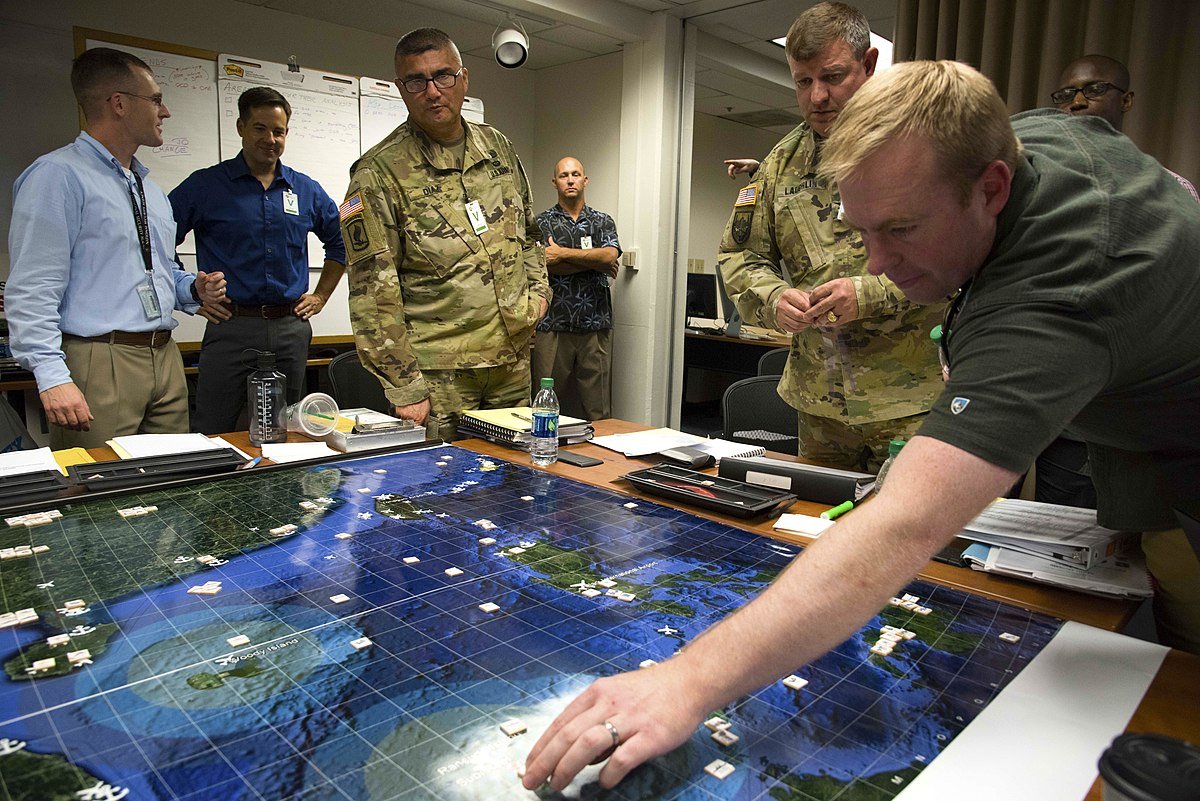
War games in military are simulations or exercises used by military forces to practice strategies, tactics, and logistics in a controlled environment.
Ever wondered what goes on behind the scenes to prepare for real-world conflicts? The answer often involves something called war games. But what are war games in military, exactly? They are more than just simulations, these practice runs allow military personnel to refine their plans without real-world risks.
These exercises can range from simple tabletop map scenarios to complex computer-based simulations. They play a vital role in testing different approaches and identifying potential weaknesses, ultimately enhancing combat readiness.

What are War Games in the Military?
Okay, let’s dive into the exciting world of military war games! It’s not about playing checkers or video games, though some might look a little like them. In the military, war games are serious business. They’re a way for soldiers, sailors, airmen, and other military personnel to practice for real-life situations without actually being in a real battle. Think of it like a really intense practice session for a sports team, but instead of a ball, they’re dealing with complex scenarios and strategies.
The Core Idea Behind Military War Games
At its heart, a military war game is a simulation. This simulation takes many forms, from simple tabletop exercises using maps and miniatures to complicated computer programs that mimic actual warfare. The purpose is always the same: to teach, to plan, and to find ways to win. These simulated battles allow military leaders to:
- Test new strategies and tactics.
- Identify weaknesses in their plans.
- Train soldiers and commanders in decision-making under pressure.
- Figure out the best way to use different weapons and technologies.
- Learn from mistakes without real-world consequences.
These games are not just about winning or losing. They are about learning. They help the military prepare for a variety of possibilities. They ensure that when they must respond to a crisis or conflict, they do so as effectively as possible.
Types of Military War Games
Military war games come in many shapes and sizes, each designed to achieve a particular goal. Let’s explore some of the major types:
Tabletop Exercises
These are often the simplest form of war game, using a map, models, and sometimes even dice to simulate military operations. Players move pieces representing troops and vehicles around the map, considering their capabilities, terrain, and enemy actions. Tabletop exercises are great for testing basic strategies, exploring different tactical options, and allowing for easy modification of situations.
These types of games are often used to teach basic principles of warfare, to think tactically, and to understand the importance of logistics and planning. A leader might, for example, use it to understand how a particular battle plan might play out or see how well a new defensive tactic works. Tabletop war games help with planning and decision making without the need for large technological systems.
Computer-Based Simulations
With advancements in technology, many war games have become digital. These computer-based simulations are incredibly detailed and can incorporate real-world data such as weather patterns, the capabilities of specific weapons systems, and even the psychological factors that might influence a soldier’s behavior. They may use virtual reality, augmented reality, or large screens displaying complex scenarios.
These advanced simulations allow for incredibly realistic scenarios that help assess the effectiveness of complex plans, train staff in the operation of new technologies, and test the impact of novel weapon systems. They often include AI-controlled elements that can simulate enemy forces with varying skill levels, offering military personnel a chance to practice against a constantly adapting and challenging opponent.
Live Exercises
Live exercises are the closest thing to real combat without real bullets. They involve actual troops, vehicles, and weapons. During these exercises, troops move across training areas, practice specific maneuvers, and respond to different simulated situations. Live exercises test the military’s ability to execute complex plans, maintain communication, and coordinate actions across different units.
These types of games are often done with partner nations, which also provides interoperability training for the military. This means that military personnel from different countries can practice how to work together, which is often critical in international operations. Live exercises are great for uncovering problems that might not be noticeable in simpler simulations.
Wargaming for Strategic Thinking
Beyond tactics and operations, some war games focus on the bigger picture. These are designed to test strategic plans, assess the long-term implications of decisions, and evaluate overall military posture. These are high-level games that help military leadership understand political, economic, and social factors that might influence a conflict. They often involve simulating the entire situation and help leaders to develop an understanding of how their decisions might impact the region or the world.
What Happens During a War Game?
While each war game is different, certain elements are common:
- Scenario Creation: A scenario, or situation is developed. This could be a fictional conflict or a simulation of a possible real-world event. The scenario outlines what forces are involved, the objective of each side, and the limitations they must operate within.
- Team Formation: Participants are often divided into teams, each representing a specific side or group in the simulation.
- Decision-Making: Teams plan their strategy, make decisions on how to deploy their forces, and execute their plans. They often work with advisors and analysts who help them to interpret the information they are given.
- Adjudication: A system is in place to determine the outcome of actions, usually based on the rules of the war game and the actions taken by the participants. Sometimes this is handled by a computer system or team of experts.
- Analysis: After the game is completed, the participants analyze what happened, discuss what worked and what didn’t, and look for ways to improve their future performance. They also identify areas where training may be needed and make recommendations for strategic changes.
The Benefits of Military War Games
So, why are war games so important for the military? Here are a few reasons:
Risk-Free Practice
One of the primary benefits of war games is the ability to practice combat scenarios without the dangers of real combat. Military members can make mistakes, experiment with different approaches, and learn from those experiences in a controlled environment where there are no casualties.
Improved Decision-Making
War games force military personnel to think critically and make important decisions under pressure, and they develop skills in decision-making, problem-solving, and critical thinking. They practice how to allocate resources, assess risk, and adapt to changing circumstances which better prepares them for the realities of conflict.
Testing New Technologies
Military technology is constantly evolving. War games offer a safe environment to test new weapons systems, communication tools, and other technologies. They can assess their effectiveness, identify any flaws, and make needed improvements before those technologies are used in real-world scenarios.
Development of Strategies and Tactics
War games help the military develop new strategies and tactics. By testing various approaches, the military can find the most effective ways to deal with potential threats. It helps military leaders understand the impacts of different choices and how to best employ the assets they have in a dynamic environment.
Teamwork and Coordination
Many military operations involve cooperation among different branches and units. War games help them to improve their teamwork, communication, and coordination so that each member of the team understands their role and they work together effectively. War games provide a setting where they must coordinate their actions and learn to work with other teams toward a common goal.
Understanding the Enemy
In many war games, players take on the roles of the enemy, trying to understand their strategies, capabilities, and potential actions. This allows them to better anticipate their potential moves and formulate effective countermeasures, helping the military better prepare for actual confrontations.
Identifying Gaps and Weaknesses
War games help the military identify gaps and weaknesses in their plans, equipment, or training. This allows them to address the problems before they become serious during actual operations. By spotting these problems early, the military can strengthen areas that are lacking and prevent potential failures during real-world situations.
Cost-Effective Training
Compared to real-world exercises involving moving large numbers of troops and equipment, war games are very cost-effective. Computer-based simulations and tabletop exercises cost a lot less and can provide very valuable training. The cost savings allow the military to practice more frequently and thoroughly.
The Evolution of Military War Games
Military war gaming is not a new concept. It has been practiced in different forms for centuries. Early forms might have used maps, sand tables, and simple models to mimic battlefields. Today, with the aid of sophisticated computer technology, the realism and complexity of these games has greatly increased. War games are constantly evolving to meet the changing requirements of modern military forces. This ensures that the military stays adaptable and well-prepared for whatever new challenges arise.
Examples of Famous Military War Games
Throughout history, many famous war games have influenced real-world military operations. Some were conducted in secret, but some have been reported more openly. Although specific details are often not released to the public, these exercises have shaped military thinking and strategy for many years.
For instance, during World War II, naval war games helped the US Navy refine its submarine warfare tactics. During the Cold War, military planners used war games to simulate potential conflicts between the US and the Soviet Union and develop different strategic responses. Some of the modern computer-based exercises have influenced thinking around cyber warfare and drone technology.
The Future of Military War Games
The future of military war games is likely to see an even greater emphasis on artificial intelligence (AI), virtual reality (VR), and augmented reality (AR). These technologies will offer even more realistic and immersive simulations. AI will be used to create more sophisticated opponent forces, while VR and AR will allow participants to immerse themselves in the simulated environment. The aim is to make the experience of war games as much like real combat as possible.
War games will continue to play a critical role in training military personnel, testing new technologies, and developing new strategies. They will continue to push the boundaries of what’s possible in military training and planning.
Military wargaming is a critical, ever-evolving part of military training and planning. It provides a risk-free way to explore different scenarios, improve decision-making, and develop new strategies. It is a practice that continues to develop and adapt to new technologies and global conditions ensuring that military organizations remain ready for future challenges.
DC group's wargame predicts how China vs US war would end
Final Thoughts
War games in military are simulations for strategic planning and training. They involve hypothetical scenarios to evaluate tactics and resource allocation. These exercises improve decision making and readiness of forces.
These planned simulations identify vulnerabilities and improve coordination among different units. Military personnel practice responses to various threats. They use war games to refine their operational effectiveness.
What are war games in military? They provide a controlled environment to rehearse real-world conflicts, enhancing preparedness.

