
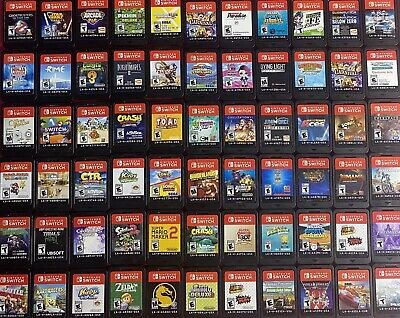
Nintendo Switch games exhibit a diverse range of visual styles, from detailed 3D worlds to charming pixel art, varying significantly depending on the specific title.
Ever wondered what do the nintendo switch games look like? It’s a valid question, given the console’s versatility and the huge library of games available. You might picture Mario’s vibrant adventures, or maybe Zelda’s breathtaking landscapes.
The reality is that the visuals vary massively. Some games sport detailed 3D graphics that compete with other consoles. Others opt for a retro feel with pixel-based art. It truly is a very diverse catalog of visual styles!

What Do Nintendo Switch Games Look Like?
Ever wondered what makes a Nintendo Switch game look so, well, Nintendo? It’s more than just Mario’s bright red hat or Zelda’s lush green landscapes. It’s a mix of art styles, clever tricks, and a design philosophy focused on fun above all else. This article will dive deep into the visual world of the Nintendo Switch, exploring everything from the types of graphics to the way games are designed to work both on your TV and in your hands. We’ll see how these visual elements come together to create those enjoyable gaming experiences we all love.
The Variety of Visual Styles
One of the most fascinating things about Nintendo Switch games is the sheer variety of art styles you’ll encounter. Unlike some other consoles that may lean heavily on photorealism, the Switch embraces a spectrum of looks. This makes each game feel unique and special. Let’s break down some of the main visual categories you’ll find:
Cartoony and Stylized Graphics
Many Switch games feature vibrant, cartoon-like visuals. Think of titles like Super Mario Odyssey, Animal Crossing: New Horizons, or Splatoon 3. These games often use bright colors, exaggerated character designs, and smooth lines. This style helps the games feel lighthearted and approachable. They don’t try to look realistic but instead focus on creating a charming and fun world. The art style often prioritizes readability, so you can easily spot enemies, items, and other important game elements even in the middle of the action. This can be very helpful for younger players too.
- Key characteristics: Bright colors, bold lines, exaggerated character designs, emphasis on fun and expressiveness.
- Examples: Super Mario Odyssey, Animal Crossing: New Horizons, Splatoon 3, Kirby and the Forgotten Land.
Pixel Art and Retro Aesthetics
The Switch also has a thriving collection of games that embrace retro pixel art styles. These games often mimic the look of older video games from the 8-bit and 16-bit eras. Games like Stardew Valley, Shovel Knight, and Hollow Knight use this style to evoke a sense of nostalgia and simplicity. It’s not just about old technology, though. Developers use pixel art to create some genuinely gorgeous and intricate visuals. This approach can be more efficient for development, which can allow smaller studios to create very deep and enjoyable gaming experiences.
- Key characteristics: Blocky pixels, limited color palettes, retro feel, often reminiscent of classic games.
- Examples: Stardew Valley, Shovel Knight, Hollow Knight, Celeste.
3D Graphics and Detailed Environments
While not always aiming for photo-realism, some Switch games have impressive 3D graphics and highly detailed environments. The Legend of Zelda: Breath of the Wild and The Legend of Zelda: Tears of the Kingdom show how the Switch can handle large open-world areas with beautifully rendered trees, landscapes, and structures. These titles are generally less about sharp detail on everything, and more about a particular art direction that fits the game, the art direction is still well-detailed and engaging. Even games with more realistic character models, like Fire Emblem: Three Houses, demonstrate the Switch’s ability to create immersive worlds, while still working within the hardware’s capabilities.
- Key characteristics: 3D models, detailed environments, focus on creating immersive worlds.
- Examples: The Legend of Zelda: Breath of the Wild, The Legend of Zelda: Tears of the Kingdom, Fire Emblem: Three Houses.
Hand-Drawn and Illustrated Styles
Certain Switch games use a beautiful hand-drawn or illustrated approach, almost like playing in a living painting. Games like Ori and the Blind Forest and Cuphead are fantastic examples of this. These visuals use a more artistic style which adds to the overall mood and tone of the game. Hand-drawn graphics can be very expressive and allow for creative character animation and engaging environments. This style gives a feeling of high quality and is very aesthetically pleasing.
- Key characteristics: Hand-drawn elements, painted look, artistic and expressive.
- Examples: Ori and the Blind Forest, Cuphead, Hades.
Understanding Resolution and Performance
When we talk about how games look, it’s not just about art style; it’s also about technical aspects like resolution and performance. Here’s how these things relate to the Nintendo Switch:
Resolution: What does it Mean?
Resolution refers to how many pixels are used to create an image on your screen. A higher resolution means more pixels, which leads to a sharper, more detailed picture. The Nintendo Switch has different resolutions depending on whether it’s docked (connected to your TV) or in handheld mode. When docked, it typically outputs at 1080p (1920 x 1080 pixels). In handheld mode, it uses a 720p (1280 x 720 pixels) screen. While 1080p is a higher resolution, the smaller screen of the Switch in handheld mode doesn’t make the lower resolution so bad as the pixel density is still good.
- Docked Mode: Usually 1080p (1920 x 1080 pixels).
- Handheld Mode: Usually 720p (1280 x 720 pixels).
Frame Rate: The Key to Smooth Gameplay
Frame rate is about how many images, or frames, are displayed per second. This is measured in frames per second (fps). A higher frame rate makes gameplay feel smoother and more responsive. Most games try to maintain a frame rate of 30fps or 60fps. 60fps generally provides a smoother experience, while 30fps can feel slightly less smooth but it’s still good enough for enjoyable gameplay, especially if it is consistently stable. Games that require fast reactions, like racing or action games, often prioritize a higher frame rate, whenever that is possible. Some games on the switch can have some frame rate issues if there is too much going on at the same time, but in general Nintendo tries to make the gaming experience as smooth as possible.
- Target frame rates: Often 30fps or 60fps.
- Higher fps = Smoother gameplay, better for fast-paced action.
Performance Differences: Docked vs Handheld
Due to the hardware limitations of a portable device, you might notice some minor visual differences when playing games in docked mode versus handheld mode. Sometimes the resolution can be lower in handheld mode to keep the game running smoothly or make the battery last longer. Occasionally there can be minor frame rate differences too. However, the developers are very clever at optimizing games so they look good and perform well in both modes. These differences are usually very slight, and shouldn’t take away too much from the experience.
Anti-Aliasing and Other Visual Tricks
Game developers on the Switch use other tricks to make games look as good as possible. One of these is called anti-aliasing. This helps to make edges look smoother and less jagged. When objects have a lot of sharp corners, you can start to see small, pixelated edges, called “jaggies”. Anti-aliasing is a method to smooth those out so that everything is a bit softer. Other techniques, like clever lighting and shadows, help to make the game world feel more alive and detailed. These methods all contribute to the overall look and feel of a game.
The Unique Nintendo Design Philosophy
Nintendo’s approach to game design focuses on playability and creativity above all else. This philosophy also has a strong impact on how the games look. It’s not just about achieving top-notch graphics; it’s about making games that are engaging, fun, and approachable for everyone.
Emphasis on Gameplay Over Graphics
While visuals are important, Nintendo puts gameplay first. This means that the game has to feel good to play. It also means that games have to be very creative and always interesting. Even if a game’s graphics aren’t the most realistic or detailed, it can still be a very enjoyable experience if the core gameplay is fantastic. This is why Nintendo often favors creative designs over realistic visuals. This is what they have always done. They want games to be enjoyable for the widest possible audience, regardless of the age group.
Visual Clarity and Readability
Nintendo games are often designed with clear visuals so the player can easily understand what is happening on the screen. This is very important for fast-paced action, platforming, or puzzle solving. Game characters, items, and important objects are usually bright and easy to recognize. This makes the game more accessible to players of all skill levels. Nintendo makes sure that you can always see what you need to see and understand what you need to understand.
Color Palettes and Character Design
Nintendo is known for using bright, cheerful colors in their games. These colors often contribute to the light-hearted and fun tone. The character designs are also very important. They are designed to be memorable and recognizable. This helps players build a connection to the game and its world. Think of characters like Mario, Link, or Pikachu. They are all very recognizable because of their designs and color schemes. This consistent approach to color and design helps to define the “Nintendo” look.
The Importance of “Feel”
Beyond the visuals, Nintendo puts a lot of work into the “feel” of their games. This includes not just the visual design but also how the game responds to player input. Games on the Switch often have a polished and fluid feel that contributes to the overall experience. This “feel” comes from a combination of different elements, such as the controls, the animations, the sounds, the music and the way all of the visual elements fit together to form a cohesive whole. Nintendo prioritizes making games that are a joy to play, from start to finish.
Examples of Visual Diversity
To truly see the different styles of the Nintendo Switch in action, let’s look at some specific games that showcase this variety:
The Legend of Zelda: Breath of the Wild
Breath of the Wild is a great example of an open-world game with beautiful visuals. It doesn’t try to be perfectly realistic, but uses a slightly stylized art style. The game has a huge open world with detailed environments, and it also has some very impressive character designs. The overall effect is a vast and immersive world with an artistic touch.
Super Mario Odyssey
Super Mario Odyssey demonstrates the power of cartoony visuals. The game has a bright, colorful, and lighthearted feel. The characters are expressive, and the different kingdoms are all designed with a unique theme and style. This mix of creative level design and vibrant art makes the game feel incredibly fun and engaging.
Stardew Valley
Stardew Valley uses a pixel art style, evoking the charm of older 16-bit video games. However, despite the retro aesthetic, the game has a lot of detail. The colors are vibrant, and all the locations and characters have their own unique look. This combination of retro charm and artistic detail gives the game a very special feel.
Hollow Knight
Hollow Knight is another excellent example of a game that uses pixel art very effectively. The world is dark and mysterious, and the characters are very expressive, even though they are made of pixels. This game shows how pixel art can be both beautiful and immersive, without having the highest quality graphics. It really comes down to the art style and the mood that the game creates.
Animal Crossing: New Horizons
Animal Crossing: New Horizons features a super cute and stylized art style. The game’s use of bright colors, rounded character designs, and a charming environment creates a very comforting and relaxing feel. The simple yet expressive design is a key element of its appeal.
Splatoon 3
Splatoon 3 demonstrates Nintendo’s creative use of color and character design. The game’s world and characters are bright, bold, and full of style. The use of ink splatters as a central part of the game’s visuals makes it very dynamic and engaging.
A Comparison Table
Let’s take a quick look at a table comparing the different visual styles across some games:
| Game Title | Art Style | Resolution (Typical) | Frame Rate (Target) |
|---|---|---|---|
| The Legend of Zelda: Breath of the Wild | 3D Stylized | Docked: 1080p, Handheld: 720p | 30 fps |
| Super Mario Odyssey | Cartoony | Docked: 900p (variable), Handheld: 720p | 60 fps |
| Stardew Valley | Pixel Art | Docked: 1080p, Handheld: 720p | 60 fps |
| Hollow Knight | Pixel Art | Docked: 1080p, Handheld: 720p | 60 fps |
| Animal Crossing: New Horizons | Cartoony/Stylized | Docked: 1080p, Handheld: 720p | 30 fps |
| Splatoon 3 | Cartoony/Stylized | Docked: 1080p, Handheld: 720p | 60 fps |
The Nintendo Switch’s approach to graphics isn’t about just having the highest possible resolution or graphical fidelity. Instead, it’s about creating games that are fun to play and visually interesting. The focus on creative art styles and optimized gameplay has helped to make the Nintendo Switch a very special console.
Which Nintendo Switch System Should You Buy?
Final Thoughts
Nintendo Switch games present a variety of visual styles. From pixel art to detailed 3D environments, the graphics adapt to different game genres. Many titles prioritize gameplay over photorealistic fidelity.
The handheld screen impacts the perceived level of graphical detail. Developers often optimize their art style for this smaller format. This optimization means what do the nintendo switch games look like can vary greatly.
Ultimately, the artistic direction and technical choices determine the games appearance. The console’s unique capability creates a very enjoyable visual experience. So the Switch maintains a unique balance, offering fun and playable games.

