
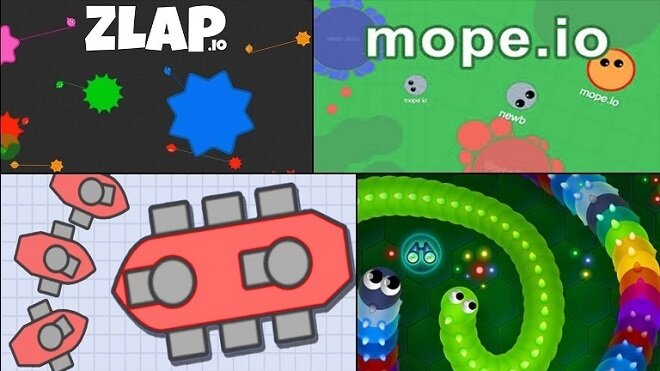
In the context of games, ‘io’ typically denotes a type of simple, often browser-based, multiplayer game characterized by minimalist graphics and quick gameplay.
Have you ever stumbled across a game with a seemingly odd name ending in “.io” and wondered what it meant? These games pop up everywhere, and understanding what does io mean in games can significantly improve your gaming experience. They represent a specific, popular category.
These games usually involve very basic mechanics, often focused on survival or simple competition. The simplicity allows for easy accessibility and wide appeal, which accounts for their popularity.

What Does .io Mean in Games?
Ever seen a game name ending in “.io” and wondered what it meant? You’re not alone! It’s a super common thing these days, especially with web-based games, but it can be a bit confusing if you’re new to it. Let’s dive in and find out exactly what that little “.io” signifies in the gaming world.
The .io Domain: A Brief History
First things first, “.io” is actually a country code top-level domain (ccTLD), just like “.us” for the United States or “.uk” for the United Kingdom. It belongs to the British Indian Ocean Territory, a small group of islands. You might be thinking, “Wait, islands? What do they have to do with my game?” Well, not much directly! The domain is not popular because of it’s location; it’s popular because of the word, which is short, catchy, and often associated with input/output in computer science. Over the years, developers have adopted it for another purpose, completely detached from the actual geographic location.
The connection between the ‘.io’ domain and games is fairly recent. It all started with the rise of simple, browser-based multiplayer games. These games needed a home on the internet, and the “.io” domain, with its short and memorable nature, quickly became a popular choice for game developers. It didn’t hurt that the name sounds like a computer term.
Why Did .io Become So Popular for Games?
Several factors played a key role in the .io domain’s rise in popularity within the gaming community:
- Short and Catchy: “.io” is just two letters, making it easy to remember and type. This is great for gamers wanting to quickly access a game.
- Techy Feel: In computer science, “I/O” often stands for input/output, referring to how data goes into and out of a computer system. This term is associated with technology and innovation, which aligns perfectly with online games.
- Availability: A lot of the common domain names (.com, .net) were already taken. The .io domain had more options for creative names, meaning game developers could secure a name that is easy to understand.
- Trendsetter: Once a few popular games began using the “.io” domain, it became a trend. Other developers followed, solidifying “.io” as a sign of online multiplayer games.
- Global Reach: Unlike some country-specific domains, “.io” doesn’t suggest a particular geographic location. This is beneficial for games aiming for a global player base.
Characteristics of .io Games
Now that you know what the “.io” domain is, let’s talk about the games themselves. What makes an “.io” game an “.io” game? While there isn’t a strict set of rules, certain characteristics often appear:
Simplicity is Key
Most .io games are designed to be easy to understand and pick up. You usually don’t need complex tutorials or lots of experience to start playing. The focus is on fast-paced gameplay that is fun immediately.
Multiplayer Focus
.io games are almost always multiplayer. You’ll play alongside or against other players in real time. This competitive aspect is a big part of the appeal.
Browser-Based
Many .io games are played right in your web browser. This means you don’t need to download or install anything. You can access them quickly and easily. But not all of them are limited to browsers anymore, some developers provide it on other platforms as well.
Free-to-Play
Most .io games are free to play, which makes them accessible to a large number of players. They sometimes include in-game purchases but are not necessary to enjoy the game.
Short Play Sessions
.io games are designed for short, engaging sessions. You can jump in for a quick game and leave without feeling like you’ve made a huge commitment.
Varied Gameplay
While simplicity is a common theme, the types of gameplay in .io games can vary a lot. You might find games where you:
- Grow bigger by eating smaller players or objects
- Compete in a battle royale style last-one-standing format
- Build and defend a base
- Work together as a team to achieve objectives
- Drive vehicles in an arena to fight others.
This variety is another element that keeps the “.io” gaming scene fresh.
Examples of Popular .io Games
To truly understand what we are talking about, let’s look at some well-known “.io” games. These examples demonstrate the diversity and popularity of this style of gaming:
Agar.io
Considered one of the pioneers of the .io game genre, Agar.io is a simple game where you control a cell. You grow by consuming smaller cells and avoid being eaten by bigger ones. It is easy to learn but difficult to dominate.
Slither.io
Inspired by the classic game Snake, Slither.io lets you control a snake that grows as it eats glowing pellets. The goal is to grow as long as you can, while avoiding hitting other snakes or your own body.
Diep.io
This game is about controlling a tank. You level up by shooting shapes and other tanks, allowing you to customize your tank with new abilities and upgrades.
Surviv.io
A 2D battle royale game where you loot weapons and gear, then try to survive against other players. It’s fast-paced and tactical.
MooMoo.io
This is a building and survival game where players gather resources, construct a base, and fight each other. It is like a miniature version of multiplayer base building.
Krunker.io
A first-person shooter with fast-paced action. It offers multiple game modes and lots of customization options.
Beyond the Basics: Deeper Dive into .io Games
Now that we’ve covered the basics, let’s explore some more nuanced aspects of the .io gaming world:
The Appeal of Competition
The competitive aspect is a big draw for many .io games. The live multiplayer environment creates a thrilling experience where every match has different challenges and outcomes. You can compete against friends or just other players around the world, which make it exciting to play anytime.
No Commitment Fun
Since .io games are generally free and quick to start, they provide a way to have fun without large commitments. You can play a single round during a break or get lost for hours. It’s totally up to you and is easy to manage.
Community Driven
Many .io games develop active communities of players. These communities share tips, strategies, and sometimes even create mods, which is an indication that the game is popular and is enjoyed by the players.
Learning Through Playing
Even though .io games are simple, they often require skill to play well. Players must learn tactics, strategies, and even game mechanics. This process of learning can be very satisfying to players.
.io Games and the Future
The “.io” game genre has come a long way and it continues to evolve. As technology develops, we’re likely to see more innovation and creativity in the kinds of .io games being developed. We may see these types of games that include better graphics and improved gameplay, but the core principles of simplicity and fun will most likely continue to stay.
The adoption of the “.io” domain for games has changed how we perceive web-based multiplayer gaming. This domain makes online gaming more accessible and is enjoyed by a huge audience, whether they are new or veteran to gaming. It is really very interesting how a simple domain name became so synonymous with a particular type of game.
So, next time you see a game with a “.io” at the end, you’ll know exactly what you’re getting: a simple, fast-paced, and often quite addictive online multiplayer experience. It’s a trend that has become a solid part of online gaming, and it seems here to stay!
Remember .io Games?
Final Thoughts
In game terminology, “io” signifies input/output. It describes how the game receives player actions and how it presents results. These actions include button presses or mouse movements. The game’s output displays visuals or audio back to the player.
Understanding what does io mean in games is crucial. Good input/output design makes a game feel responsive. This influences player experience significantly, directly impacting enjoyment. The game’s system must efficiently handle this.

