
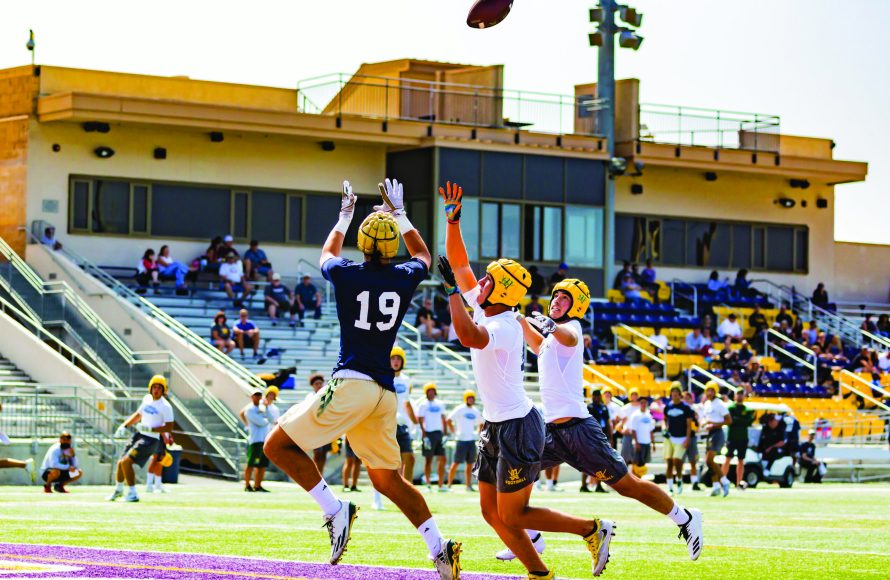
A 7 on 7 football game is a non-contact passing league format, played without linemen, where seven offensive players compete against seven defensive players.
Ever wondered about that fast-paced football variant you’ve seen? It’s not quite the full gridiron experience, but it’s definitely exciting. What is a 7 on 7 football game, you ask? It’s a unique version of the sport focusing heavily on passing skills.
This modified format eliminates the need for blocking, and line play, emphasizing agility and precision. Think of it as a showcase for quarterbacks, receivers, and defensive backs to develop their talents. These games are often used during the off-season for training.

What is a 7 on 7 Football Game?
Okay, so you’ve heard people talking about 7 on 7 football, and you’re wondering what it is all about. Well, it’s not exactly the same as the football you see on TV on Sundays. Think of it as a fun, fast-paced version of football, but without all the big hits and tackles. It’s a great way for players, especially quarterbacks and receivers, to practice their skills. Let’s dive in and explore what makes 7 on 7 so special.
The Basics of 7 on 7 Football
The name pretty much gives it away, right? In 7 on 7, there are seven players on the field for each team, instead of the usual eleven. This change in numbers makes a big difference in how the game is played. Since there’s no offensive or defensive line, 7 on 7 focuses much more on passing and catching, with limited running plays. Let’s break down what that looks like:
Offensive Setup
On offense, you’ll see a quarterback, usually one or two running backs (though they mainly act as receivers), and four or five wide receivers. The quarterback’s main job is to get the ball into the hands of those receivers. Because there is no line, the quarterback has to make quick decisions on the throw.
- Quarterback: The field general, calling the plays and throwing the ball.
- Running Backs (often receiver focused): Can catch passes or make short runs.
- Wide Receivers: These players run routes and catch passes down the field.
The goal is to advance the ball down the field by completing passes and scoring touchdowns.
Defensive Setup
On defense, you’ll have players whose main job is to cover the receivers and try to intercept the pass. Unlike regular football, there is no tackling. Instead of tackling, a play is ‘down’ when a defensive player touches an offensive player with one hand, between the shoulders and waist. Here’s a basic look at the defensive players:
- Defensive Backs (Cornerbacks, Safeties, Linebackers): They are responsible for covering the receivers and preventing catches.
Their main purpose is to stop the offense from scoring. Because there are no offensive linemen or defensive linemen, it’s a much more open game, with plenty of room for players to run.
Key Differences from Traditional Football
So, what makes 7 on 7 different from the regular football games you might see on TV? Let’s go through the big differences:
No Blocking
This might be the biggest change. In 7 on 7, there is no blocking. This means that there are no offensive or defensive lines. This is because there is no tackling allowed. This change focuses the game on speed, agility, and the ability to make throws and catches quickly.
No Tackling
Since there are no offensive or defensive lines, no tackling is needed. Instead of tackling, the defensive team “touches” the offensive player with one hand to end the play, between the shoulders and waist, and the play is considered dead. This keeps players safe and allows them to focus on refining their skills in passing and catching. This creates a safer environment for all the players involved.
Passing Focused
Because the goal of the offense is to complete a pass, and there is no blocking, the game is mostly all about throwing and catching the ball. This means that quarterbacks and receivers get lots of opportunities to work on their skills. While running plays can be part of the offense, passing is the main aspect.
Faster Pace
Without the need to get offensive and defensive linemen ready every down, the game moves at a much faster pace than standard football. This means more plays and more opportunities to make big throws and catches. Because the game is more about the athletes and their ability to get open or defend passes, the play is focused on speed and agility.
Limited Contact
Since there is no tackling and little contact, 7 on 7 is a safer way to play the game. It is an ideal way for young athletes to build football skills while limiting the risk of injury. By touching the player instead of tackling, risk of high-contact injuries can be reduced. Players still run, cut and jump which still can lead to injuries, but the risk is reduced overall.
Why Play 7 on 7 Football?
So, why would a football player participate in 7 on 7? Here are a few reasons:
Skill Development
7 on 7 is perfect for quarterbacks, wide receivers, and defensive backs to improve. Quarterbacks can focus on their throwing accuracy and decision-making, while receivers can hone their route running and catching abilities. Defensive backs can work on their coverage skills and catching interceptions. By playing 7 on 7, players can focus on what is most important about their position and elevate that skill.
Off-Season Training
It’s a great way for players to stay active and work on their skills when their regular football season isn’t happening. It’s an excellent way to keep players sharp and ready for the next season. During the off season, players can continue to play football in a less-contact way.
Team Building
7 on 7 games are often played by school teams or groups of friends. This is a way to encourage teamwork and build strong relationships between players. This is a great way to have a team come together and get better while enjoying playing football.
Fun and Engaging
Let’s face it, 7 on 7 is just plain fun! It’s a chance to play football in a fast-paced, exciting way without the intensity of full-contact games. It allows players to compete and enjoy a football environment, even during the off-season.
Where is 7 on 7 Played?
7 on 7 games can be played on regular football fields, though the field size is typically smaller, and the fields are sometimes even smaller. You’ll often see them happening in:
- Parks and Recreation Fields: Many local parks or community areas have fields where 7 on 7 is played. These locations are great for groups of players to meet and have fun.
- School Fields: High schools and middle schools may host 7 on 7 events on their football practice fields. School fields are often used because they are readily available.
- Indoor Facilities: In places with bad weather, you might find indoor facilities that have courts used for 7 on 7. If the weather is bad outside, indoor facilities are great places to play and practice.
- Tournaments and Leagues: There are also organized 7 on 7 tournaments and leagues held at various locations across the country. Organized leagues provide even more structure and competition.
Equipment Needed for 7 on 7
The equipment list for 7 on 7 is much shorter than full-contact football. Here’s what players usually need:
- Football: Of course, you need a football!
- Cleats: Players wear cleats for good traction on the field.
- Gloves (Optional): Some players use gloves to help with catching.
- Mouthguard: Even though there’s no tackling, a mouthguard is still important for safety.
- Uniform or Team Gear: Teams usually wear matching jerseys or t-shirts.
You don’t need helmets, pads, or the rest of the gear that comes with full-contact football, which makes it easier to get a game going.
Rules of 7 on 7 Football
While the rules of 7 on 7 are based on standard football rules, there are some important differences to be aware of. Here are some common rules you’ll find in most 7 on 7 leagues:
Touch Instead of Tackling
As mentioned earlier, instead of tackling, a defensive player simply touches an offensive player with one hand between the shoulders and waist to end a play. This touch is considered like the player is ‘down’.
Limited Running
Because there is no blocking or tackling, most 7 on 7 leagues tend to focus on passing. Some leagues might allow a limited number of runs each game. This encourages players to focus on throwing and catching.
Clock Stoppages
The clock usually stops after incomplete passes, scores, or penalties. This is similar to regular football, and the rules may vary slightly based on the league or tournament.
Field Size
While the dimensions will vary from league to league and location to location, the field is usually smaller than a traditional 100 yard field. The smaller field helps create a more condensed and fast paced game.
Scoring
The scoring is typically the same as standard football. A touchdown is worth 6 points, a point after touchdown is worth 1 point, and a field goal is usually not used in most 7 on 7 formats.
Interceptions
Like in regular football, if a defensive player intercepts a pass, the ball is turned over to their team.
Timeouts
Most 7 on 7 leagues and tournaments use timeouts. These timeouts can be used for play calls or to allow a player to rest.
Who Plays 7 on 7 Football?
7 on 7 is popular among different groups of players. Here are a few common groups you’ll find on the field:
High School Players
High school football players use 7 on 7 as a way to keep practicing and building chemistry during the off-season. They often form teams with their high school teammates or play with other local players. 7 on 7 allows these players to keep playing, even when school is not in session.
Middle School Players
Middle schoolers use 7 on 7 as a way to develop their skills and build their football ability. It is a great way to prepare for High School football in the future. It also helps young players learn the rules and strategies of football in a safer way.
Youth Leagues
Some youth leagues have 7 on 7 as part of their programs. This can be a good introduction to football for younger players. It can also be an alternative to tackle football.
College Players
College players might use 7 on 7 to stay active during the off-season or when they can’t be on the field with their team. It helps them hone their skills and work on the core mechanics of football.
Adult Leagues
There are also adult 7 on 7 leagues for people who love playing football but may not be able to participate in full-contact games. This can be a great recreational activity for many players.
Benefits of 7 on 7 Football for Young Athletes
7 on 7 is a great game for young athletes. Here are some specific benefits it offers:
Skill Development
Young athletes in 7 on 7 football improve their fundamental football skills like throwing, catching, running, and coverage skills. These can be applied to regular football. By playing, athletes can enhance these skills in a less stressful way.
Safer Than Tackle Football
Since there is no tackling, 7 on 7 is a much safer option for young players. It allows them to experience the game without the same risk of injury as tackle football. The focus is more on athleticism, rather than physical impact.
Game Understanding
Playing 7 on 7 helps young players understand the strategies of football. They learn about play calling, routes, and defensive strategies. The game provides a hands-on learning experience of football concepts and ideas.
Fun and Social
7 on 7 is a fun and social activity, which keeps young athletes engaged. It promotes teamwork, friendly competition, and an opportunity to make friends. The social aspect of the game helps promote a positive experience.
Physical Activity
Playing 7 on 7 is a great way for young athletes to stay active and healthy. Running, jumping, and cutting all contribute to physical fitness. The fast-paced game keeps athletes in shape and increases their overall fitness level.
So, that’s a good look at what 7 on 7 football is all about! It’s a fast, fun, and skill-focused version of the game that’s perfect for players who want to practice their skills and stay active. Whether you’re a quarterback trying to perfect your throws, a receiver working on your catching, or a defensive back looking to improve your coverage skills, 7 on 7 has something for everyone. It is a great way to experience the sport and keep improving!
How to Play 7-on-7 Football
Final Thoughts
7 on 7 football is a non-contact passing game. Teams of seven players compete, focusing on offensive passing skills and defensive pass coverage. There is no blocking or tackling involved, so it is focused on speed and agility.
This format allows athletes to develop their passing and receiving talents. It is a great way to prepare for regular football. Therefore, what is a 7 on 7 football game? It’s essentially a passing-focused version, crucial for skill development.

