
The main conflict from “The Most Dangerous Game” is a deadly hunt where Rainsford becomes prey for General Zaroff.
“The Most Dangerous Game” grips readers with its thrilling premise. The story places us in a precarious situation where the hunter becomes the hunted. So what is a conflict from “The Most Dangerous Game” you ask? It’s the terrifying reversal of roles, a survival game where Rainsford must outwit a skilled and sadistic man. This creates an intense, human versus human struggle for life itself. The psychological battle is just as fierce as the physical chase through the jungle.

What is a Conflict from The Most Dangerous Game?
Okay, let’s dive into the heart of Richard Connell’s thrilling short story, “The Most Dangerous Game.” When we talk about “conflict,” we’re talking about the struggle, the problem, or the challenge that drives the story forward. It’s what keeps us on the edge of our seats, wondering what will happen next. In this story, the conflict isn’t just one big fight; it’s a complicated web of challenges that Rainsford, the main character, has to face. Understanding these different layers of conflict helps us appreciate just how exciting and thought-provoking “The Most Dangerous Game” really is.
The Main Conflict: Man vs. Man
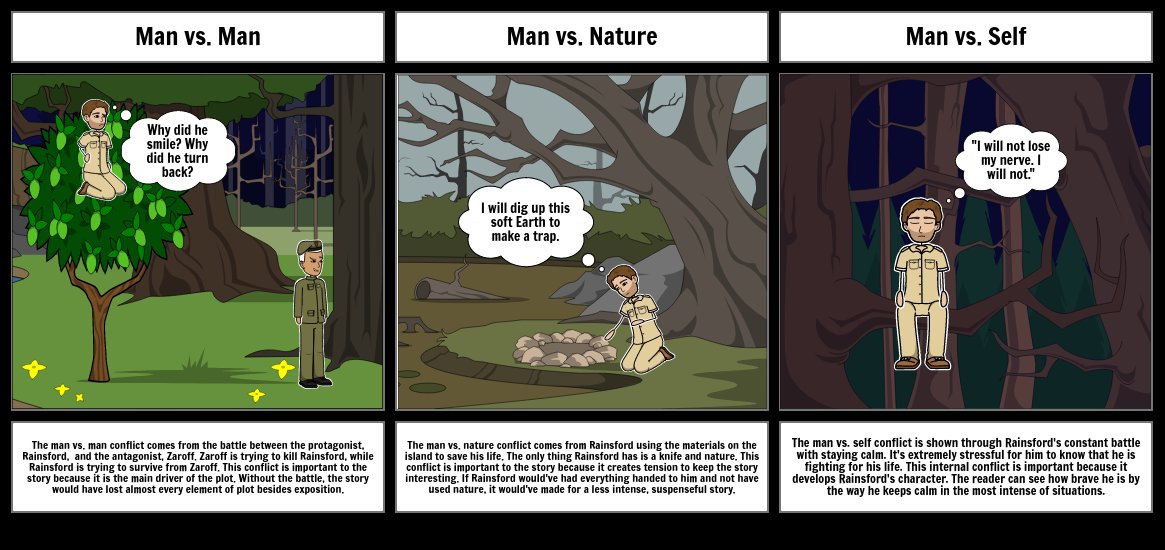
At its core, “The Most Dangerous Game” presents a classic man vs. man conflict. This is the most obvious and intense struggle in the story. It’s the battle of wits and physical skill between Rainsford, the hunter, and General Zaroff, the hunter-turned-human-hunter.
The Hunt as a Conflict
The central conflict is set in motion when Zaroff reveals his twisted game. He has grown bored with hunting animals because they lack intelligence and pose no real challenge. Zaroff seeks a more challenging prey, so he decides to hunt humans. This act establishes a direct and immediate conflict. Rainsford suddenly becomes the hunted instead of the hunter. The story turns into a tense game of survival as Rainsford must avoid capture and death at the hands of Zaroff. The hunt itself is the main manifestation of this conflict, with both characters using their knowledge of hunting tactics. Zaroff has the advantage, owning the island and knowing its terrain intimately. Rainsford has his wits and survival skills.
Here’s a breakdown of the main conflict:
- The Hunter Becomes the Hunted: Rainsford, who has always been the one in control, finds himself in the vulnerable position of prey.
- Survival: Rainsford’s primary goal becomes survival. He must use all his strength, cunning and knowledge to stay alive.
- The Power Imbalance: Zaroff has all the advantages – the island, his experience hunting humans, his weapons and his tracking skills, making this conflict an unfair fight from the start. This makes the tension of this conflict all the more potent and gripping.
Underlying Conflicts: Exploring the Deeper Issues
While the man-versus-man conflict is the main plot driver, several other types of conflicts enhance the story’s complexity and make us think about deeper themes. These include:
Man vs. Nature
The setting of “The Most Dangerous Game” plays a key part in the story’s overall conflicts. The island itself is a dangerous, unforgiving place. It’s a jungle filled with traps and natural obstacles, not all made by Zaroff. Rainsford must contend with the thick foliage, the treacherous terrain, and the unpredictable elements while he is on the run. The jungle setting creates an man vs. nature conflict, adding another layer of challenge for Rainsford. It’s not just Zaroff he’s battling but the environment itself.
Here’s how nature acts as a conflict in the story:
- The Jungle as an Obstacle: The dense jungle creates difficulties for Rainsford, making it harder to move and hide from Zaroff.
- Environmental Challenges: The weather, the darkness, and the unfamiliar environment make Rainsford’s struggle for survival more complicated.
- Traps and Terrain: Rainsford’s strategies include using nature against Zaroff, creating traps, and hiding in difficult terrain.
Man vs. Self
Another important conflict explored is man vs. self. Rainsford goes through a transformation in the story. He begins as an arrogant hunter with little respect for his prey. But as he becomes the hunted, he is forced to confront his own beliefs and morality.
Consider these points of inner conflict for Rainsford:
- Morality and Empathy: Rainsford’s experience forces him to confront his own lack of empathy for the animals he’s hunted. He understands the fear and desperation of the hunted for the first time. This leads him to question the morality of hunting, and his own moral character.
- Fear and Panic: Rainsford battles his own fear and desperation as he struggles to stay alive, and tries to maintain control and composure when faced with deadly situations.
- Will to Survive: Rainsford has to dig deep inside himself to find the will and strength to survive, pushing beyond his previous limits.
Man vs. Society
While less explicit, there’s an element of man vs. society conflict in “The Most Dangerous Game”. Zaroff’s actions challenge the civilized norms of society. He operates outside the established rules of law and morality. His belief that the strong have the right to prey on the weak is a disturbing commentary on unchecked power and disregard for human life. Although the story doesn’t feature a full-fledged societal clash, Zaroff’s values represent a perversion of societal norms, creating an undercurrent of this kind of conflict.
Here’s what highlights the man vs. society theme:
- Challenging Ethics: Zaroff’s actions challenge the basic ethical and moral rules of society. He believes he is above the law and above all human compassion.
- Disturbing Ideals: His views regarding hunting humans showcase a terrifying example of how someone might justify cruel actions by twisting societal expectations.
- Isolation and Power: The fact that Zaroff’s activities happen on a remote island, away from civilization, highlights the danger of isolation and unchecked authority.
Analyzing Conflict Through Character Actions
Let’s take a moment to look at how the characters’ actions emphasize the conflicts at play:
- Zaroff’s Actions: Zaroff’s pursuit of humans as game is the main catalyst for the man vs. man conflict. His strategic planning, the use of his dogs, and his enjoyment of the hunt showcase his lack of empathy and his twisted morality. His planning of the hunt is a clear and direct challenge to Rainsford’s will to survive.
- Rainsford’s Actions: Rainsford’s actions demonstrate his changing perspective and his ability to learn. His initial focus is just survival, and he begins to use all the skills he has learned as a hunter, turning them to his advantage as the hunted. He’s constantly adapting to each challenge and setting traps which display his resourcefulness and strategic mind. His changing attitude shows his growth.
Examples of Conflict in Specific Scenes
Let’s look at some particular scenes that show the different kinds of conflicts.
- The First Hunt: The initial hunt, where Zaroff gives Rainsford a head start, is the embodiment of the man vs. man conflict. It shows the power imbalance, with Rainsford trying to outwit Zaroff. The tension in this scene comes from the audience seeing how Rainsford is using his knowledge against his hunter.
- The Malay Mancatcher: Rainsford builds the Malay Mancatcher. This action shows both man vs. nature (using the jungle) and man vs. man. It also marks a shift in Rainsford’s approach, from just trying to survive to now taking the offensive and creating traps.
- The Burmese Tiger Pit: The Burmese tiger pit shows Rainsford’s resourcefulness and also his use of nature against his adversary. It is a clever move to stop one of Zaroff’s dogs, but doesn’t stop the chase, showing how persistent and dangerous Zaroff is.
- The Final Confrontation: The last fight in Zaroff’s bedroom is the climax of the man vs. man conflict. This is when Rainsford chooses to confront Zaroff directly, turning the hunter into the hunted. This is also when Rainsford fully embraces his newfound attitude.
Why the Conflict Matters
The various types of conflict in “The Most Dangerous Game” are vital to the story’s success for several reasons. They:
- Create Suspense: The ongoing battles, particularly man vs. man, keep readers on edge. Readers feel the constant danger and anticipation that Rainsford goes through.
- Explore Themes: The conflicts reveal the deeper themes of the story. These themes include ethics, morality, the nature of hunting, and the power of empathy.
- Develop Characters: The challenges Rainsford faces change him, turning him from an arrogant hunter into a more empathetic and resourceful individual.
- Provide Entertainment: The conflicts engage readers through action and suspense. It makes the story more than just a simple adventure story.
The conflicts of “The Most Dangerous Game” are very well-developed. These elements create a story that is exciting and thought-provoking. The story presents a complex picture of the challenges of survival, the importance of morality, and the power of human change when faced with tough situations. It reminds us that conflicts are not just external. They can also be internal, shaping our views and changing our lives.
In conclusion, “The Most Dangerous Game” masterfully uses different kinds of conflict to tell its story. The intense man-vs-man battle between Rainsford and Zaroff makes the hunt thrilling, while the man-vs-nature and man-vs-self conflicts give it depth and makes the reader consider all the implications of the story’s main themes. These conflicts, together, make “The Most Dangerous Game” a classic example of a well-crafted, thought-provoking story that leaves a lasting impression on its readers.
The Most Dangerous Game by Richard Connell (Summary and Review) – Minute Book Report
Final Thoughts
The core conflict in “The Most Dangerous Game” is the ultimate hunt. Rainsford, a hunter, becomes the hunted by General Zaroff. This forms a man versus man struggle for survival.
Zaroff sees humans as the most challenging prey. Thus, the key conflict is between two hunters using their skills in a deadly game. What is a conflict from the most dangerous game? It’s the desperate fight for life against a superior opponent.

