
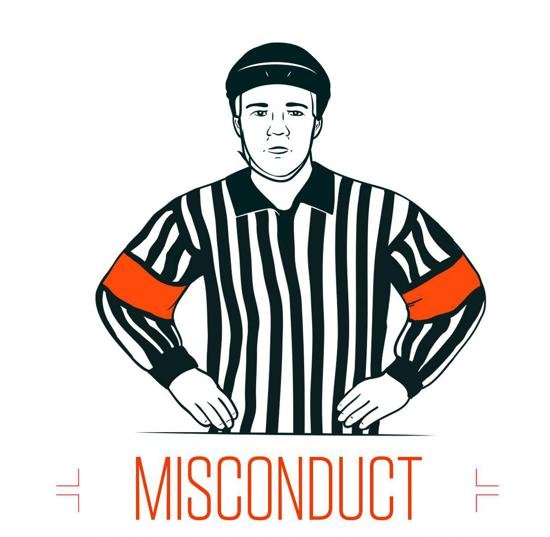
A game misconduct in hockey is a penalty that results in a player being ejected from the current game and sent to the dressing room; their team then plays shorthanded for a set duration, without that player.
Have you ever been engrossed in a thrilling hockey match, only to see a player suddenly banished from the ice? You might wonder, what is a game misconduct in hockey and why does it happen? It’s a penalty that carries a significant consequence for the offending player and their team.
It means more than just a two-minute penalty. The player must leave the game completely. Understanding this rule helps us appreciate the game’s disciplinary system and its impact on the flow of play.

What is a Game Misconduct in Hockey?
Okay, hockey fans! We all love the fast-paced action, the amazing goals, and the bone-jarring hits. But sometimes, players cross the line, and that’s when penalties come into play. One of the more serious penalties you’ll see in a hockey game is a “game misconduct.” It’s not as common as a minor penalty, like tripping or hooking, but it’s definitely something that can change the course of a game. So, what exactly is a game misconduct in hockey?
The Basics of a Game Misconduct
Imagine you’re playing a video game, and you do something so bad that the game kicks you out for the rest of the match. That’s kind of like a game misconduct in hockey! It’s a penalty that results in a player being removed from the rest of the current game. They have to go to the locker room, and they cannot return to the ice during that specific game. This penalty is more severe than a standard minor penalty because it affects not just the player’s time on the ice but their participation for the entire remainder of the game. It’s basically the hockey equivalent of being sent to the principal’s office – and not being allowed back to class.
Key Differences from Other Penalties
It’s important to understand how a game misconduct differs from other common penalties. Minor penalties, like tripping or holding, send a player to the penalty box for a short amount of time, usually two minutes. Major penalties, such as fighting, can get you five minutes in the box. However, a game misconduct is not a time-based penalty. It doesn’t matter if it’s the start of the period or a few seconds before the buzzer, the player is ejected from the rest of the game. The team will have a player down for the remainder of the game, and in addition they will have to serve the minor or major penalty associated with the infraction that caused the game misconduct. The player who committed game misconduct will still have to sit in the penalty box for the duration of the related penalty.
How It Impacts the Team
The game misconduct penalty is a massive problem for a team. Imagine one of your best players being sent to the locker room for the entire game. This is a huge loss, especially if it happens early in the game. Your team will be a man down for the rest of the game, and they are already short handed for the time of the associated penalty. This gives the other team a huge advantage, making it tougher for your team to score and defend. Also, it affects how they play. Now your team needs to adapt quickly.
Common Offenses That Lead to Game Misconducts
So, what kinds of actions can get a player a game misconduct penalty? While the specific rules can vary a bit from league to league (NHL vs. minor league), some common offenses frequently lead to this penalty. Here are some of the typical behaviors:
- Fighting: Dropping the gloves and engaging in a fistfight, especially if deemed excessive or after a referee has intervened, almost always results in a game misconduct penalty.
- Abuse of Officials: Swearing at, physically threatening, or making serious gestures towards a referee or any official. This is strictly prohibited.
- Intent to Injure: Any actions that the referee deems to have been taken to purposely injure another player can get you ejected from the game. This often includes actions such as spearing, checking from behind that leads to an injury or slew-footing.
- Leaving the Bench to Join a Fight: If a player who isn’t on the ice leaves the bench or the penalty box to join an altercation, they get a game misconduct. It’s important to leave it to the players on the ice, unless called to assist by referee.
- Persistent Rule Violations: Even if a player does not commit a major infraction, repeated infractions or repeated minor penalties of unsportsmanlike conduct can lead to a game misconduct penalty. The referee can give the game misconduct if the player does not take their penalty serious.
- Unsportsmanlike Conduct: A wide range of actions can be classified as unsportsmanlike conduct and can lead to a game misconduct, especially if there is no associated minor penalty.
- Third Man in a Fight: If two players are fighting, and a third player enters the altercation, they will receive a game misconduct penalty.
Examples of Game Misconducts
Let’s look at some specific situations to make things clearer. Imagine a player who gets a little too angry with a referee and starts shouting foul language at the referee. The referee will most likely give him game misconduct and he will have to watch the game from the locker room for the rest of the game. Let’s picture a player slew-footing an opposing player, causing him to fall awkwardly, possibly getting him hurt in the process. This type of move might lead to an “intent to injure” game misconduct. Lastly, if a fight broke out, and another player from the team that is not on the ice, but on the bench, jumps to engage in fight, he will get a game misconduct. This rule also covers a player that is coming out of a penalty box to join a fight.
The Role of Referees in Assessing Game Misconducts
Referees have a tough job. They need to keep the game safe and fair. They are the ones who decide when a player needs to be given a game misconduct. They have to watch the whole play and consider the actions carefully. They don’t just give a penalty out on a whim, they must decide if the action is within the confines of the rules and regulations. It is their job to protect the players. They must be impartial and fair to both teams involved. The referee must also be ready to communicate with the player to explain why the game misconduct penalty is issued. If the referee doesn’t make clear the penalty they will be asked by the players or the coaches, creating an unnecessary delay in the game.
The Process After a Game Misconduct
Once the referee calls a game misconduct, the player needs to immediately go to their locker room. They can’t stay on the bench or in the penalty box; they must leave the ice completely. The official scorer or game manager will record all details of the penalty in the game sheet. The coaches should be made aware of the game misconduct and explain to the player what they did wrong. There may be additional punishment from the league after the game, especially if a player frequently gets game misconducts. If a player is getting a lot of game misconducts, he might get suspended for the next few games or face other additional punishments. All players should play within the rules and be mindful of the fact, that they are hurting the team when they are removed from the ice.
Consequences Beyond the Game
A game misconduct isn’t always the end of the story. Sometimes, leagues and governing bodies can hand out additional punishments. This can include things like:
- Fines: Players might have to pay a fine. The amount will vary based on the infraction, and the league in question.
- Suspensions: A player might be suspended, meaning they can’t play for a certain amount of games. A suspension can be issued based on the severity of the game misconduct and the history of previous infractions by that player.
- Team Disciplinary Action: The team itself might impose extra consequences. They might sit the player for a game, or make them do extra training.
How Game Misconducts Impact Players
Getting a game misconduct affects a player in more ways than one. For starters, they don’t get to play for the rest of the game, which is bad for the player and team. Also, getting a game misconduct can hurt a player’s reputation. If players frequently get these penalties, they will get a reputation of being a dirty or reckless player. Coaches might also lose faith in such player. It can also affect the team’s chances of winning games. Players are more likely to be more cautious in the game when they receive a game misconduct, or they might get a reputation of being a liability to the team.
Game Misconducts and the Overall Hockey Experience
Game misconducts are an important part of hockey. While they are often exciting, they are there to protect the players. They remind us that the game is not just about speed and scoring, it’s also about sportsmanship and playing fair. They help ensure that players are respectful of the rules of the game, the referees, and each other. This helps make the game more enjoyable for everyone. Even though we all love exciting games with physical play, we also know that protecting the players and keeping the game fair is much more important.
Examples in Real Life
You can often see game misconduct penalties in professional hockey. Sometimes, in the heat of the game, players do things they shouldn’t. For example, if a player gets frustrated and takes a swing with their stick that hits another player in the face, they are likely to get a game misconduct. These instances highlight the importance of staying calm and in control during a game. When these kinds of actions happen, it gives other players a bad example, and it makes the game more dangerous for everyone involved.
The Importance of Sportsmanship
Ultimately, game misconducts teach us about sportsmanship. It’s important to be competitive, but it’s also essential to be respectful and play by the rules. When we follow the rules, we are creating better environment for the game, and also showing respect for each other and the game itself. Players who can play hard but also with sportsmanship are the best kind of players. It shows that you care about the rules and about the other players too. It is important to remember that game misconducts are not just a penalty, it’s a chance to reflect on how we play the game.
So, there you have it – a deep dive into what a game misconduct in hockey is all about. It’s a serious penalty with consequences, and it plays an important role in keeping the game safe and fair. Now, next time you’re watching a hockey game, you’ll know exactly what’s going on if a player is sent to the locker room with a game misconduct. You might also understand the magnitude of it, which may help you enjoy the game even more.
NHL: Game Misconducts
Final Thoughts
A game misconduct in hockey results in immediate ejection of a player from the current game. This penalty requires the penalized player to leave the ice and go to the dressing room. Their team plays shorthanded for the remainder of that game.
The player receiving a game misconduct penalty cannot participate further in the match. Often this penalty is awarded for excessive or egregious actions. Understanding what is a game misconduct in hockey is important for both players and fans.

