
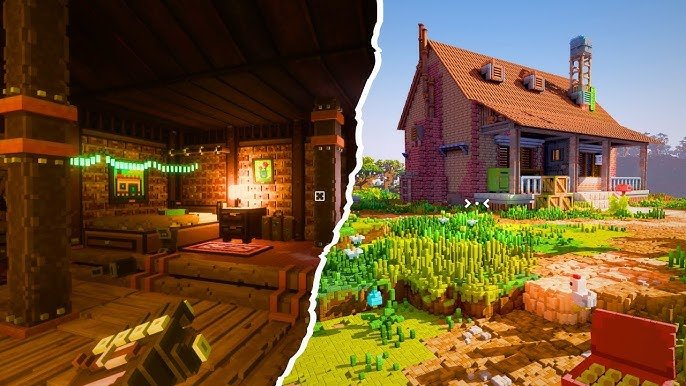
A voxel game uses three-dimensional pixels, called voxels, to construct its game world instead of polygons.
Ever wondered about those blocky, often charming game worlds? You’re likely thinking about what is a voxel game. These games forgo traditional polygons and instead build environments and characters with tiny cubes. This approach creates a distinct aesthetic.
Think of it like digital LEGOs – each voxel contributes to the larger picture. They allow for more detailed and destructible environments than traditional methods. This gives a specific and unique feel for gamers who love that.

What is a Voxel Game?
Okay, so you’ve heard the term “voxel game” floating around, maybe seen some blocky-looking gameplay videos, and you’re wondering what all the fuss is about? Don’t worry, it’s not as complicated as it might sound! Let’s break it down and see what makes voxel games so special. Imagine LEGOs, but in a video game – that’s a good starting point. Instead of using flat images (like in most 2D and even some 3D games), voxel games use tiny 3D cubes, called voxels, to build everything you see. These voxels are like the pixels of the 3D world. Think of it like this: a pixel is a tiny square of light on your screen; a voxel is a tiny cube of stuff in a game world. This approach gives voxel games a very unique, often blocky, but also super flexible and fun feel.
Understanding Voxels: The Building Blocks
Let’s dive a little deeper into what exactly these voxels are. The word “voxel” is a combination of “volumetric” and “pixel.” Basically, instead of using flat pixels to create images on your screen, voxels create the illusion of 3D objects by arranging these tiny cubes in a virtual space. It’s similar to how you build with toy blocks or LEGO bricks, but instead of plastic, these are virtual. Each voxel holds information. That information might be about its color, texture, or even what kind of material it is – like wood, stone, or water. Because each voxel is an individual block, it means you can interact with each one individually, allowing for some pretty cool gameplay possibilities. This is where the magic of voxel games truly comes alive!
How Voxels Differ from Polygons
Now, you might be thinking, “Okay, but what’s the difference between voxels and those triangles I see in other 3D games?” Those triangles you are referring to are called polygons. Most 3D games use polygons to create their characters, environments, and objects. Think of polygons like the flat pieces of a puzzle. They can be connected to create more complex shapes, but they don’t have any true “volume” like voxels do. Voxels, on the other hand, are actual cubes, having width, height, and depth, giving them inherent volume. Here’s a simple table to see the main differences:
| Feature | Voxels | Polygons |
|---|---|---|
| Shape | Cubes | Triangles (or other flat shapes) |
| Volume | Yes, they have volume | No, they are flat surfaces |
| Representation | Individual blocks | Connected surfaces |
| Modifiability | Individual voxel can be added or removed | Modifying the objects might require changing the connected surfaces |
| Visual Style | Often blocky, but can be smooth | Can create smooth or blocky style |
The main difference? Voxels have a volume and are more easily manipulated individually. Polygons are flat surfaces, that can be connected to create 3D looking shapes, but cannot be modified as easily on an individual level as voxels.
The Unique Appeal of Voxel Games
So, why are voxel games so popular? What makes them stand out? Well, a big part of it is the unique and flexible nature of the voxel system. Here are some key features that give voxel games their special charm:
Destructible and Modifiable Environments
One of the most appealing things about voxel games is the fact that you can often destroy or modify the environment around you. Because the world is made of tiny cubes, removing a few blocks is like taking away a few LEGOs. Want to dig a tunnel? You can do it. Want to build a house? You can! This ability to interact with the game world in such a direct way adds a completely different level of gameplay and creativity. You’re not just a player; you’re a builder, an explorer, and an architect of your own digital world.
Creative Freedom and Building
Voxel games are a playground for creativity. The building aspect is at the heart of many popular voxel games. It’s not just about following pre-set paths or completing levels; it’s about building your own. The ability to make your own structures, modify landscapes, and create entire worlds out of tiny blocks is incredibly appealing to many players. Some games even allow you to share your creations with friends and other players, fostering a community of builders and artists.
Nostalgic Visual Style
For some, the blocky look of voxel games is reminiscent of classic video games. This nostalgic feeling often leads to a sense of comfort and familiarity. The stylized graphics are also often less demanding on your computer compared to complex polygon-based games, allowing for a wide range of players to enjoy them. However, don’t be fooled; just because they’re blocky doesn’t mean they can’t look beautiful. The artistry within voxel games can be incredible, from stunning landscapes to intricate designs.
Gameplay Mechanics and Diversity
Voxel games offer a huge variety of gameplay experiences. Some are focused on building and creating, while others emphasize exploration, combat, or role-playing. Here are some common types of gameplay mechanics:
- Building and Crafting: Gathering resources and creating structures, tools, and other items.
- Exploration: Discovering new areas, uncovering secrets, and traversing diverse landscapes.
- Survival: Managing hunger, defending yourself from threats, and surviving harsh conditions.
- Combat: Engaging in battles with enemies, using various weapons and strategies.
- Adventure/RPG: Following a story, completing quests, and developing characters.
The flexibility of voxels allows developers to try different game mechanics and concepts, leading to a great diversity within the voxel gaming genre. You’re bound to find a voxel game that suits your specific tastes.
Popular Voxel Game Examples
Let’s look at some specific examples of popular voxel games to get a better understanding of how the voxel concept is used in various ways:
Minecraft: The Blocky Giant
Perhaps the most iconic example of a voxel game is Minecraft. This game has been instrumental in popularizing the voxel concept. It has achieved global success due to its open-world sandbox experience where players can build, explore, and survive. It’s known for its straightforward yet flexible gameplay, allowing players to dig, craft, and create their own structures in a blocky-world. Minecraft isn’t just a game; it’s also a platform for learning, creativity, and community building.
Roblox: Voxel Building Platform
Roblox is a very popular platform that also uses voxels in its world building. While it is a bit different than traditional voxel-based games, as it uses a mix of building systems, most of the in game environment is built by using block shaped voxels. Roblox gives its users tools for creating games. Players can use these tools to create their own voxel-based experiences. This flexibility has led to many unique and diverse games on the platform, ranging from simulators to battle arenas.
Teardown: Destruction Redefined
Teardown is a completely different type of voxel game, where the focus is on the destruction aspect. Using its high-fidelity voxel engine, the environment in Teardown can be destroyed completely realistically. Players can tear down buildings, create new paths using explosions, and modify everything around them, making it a super satisfying experience. It’s a great example of how the destructible nature of voxels can lead to interesting and unique gameplay.
Other Notable Voxel Games
Beyond these mainstream titles, there are a huge variety of other voxel games that showcase the versatility of the technology. Some are indie gems, some focus on specific genres, and all demonstrate how the core concept of the voxel world can lead to different styles of play. Here are just a few:
- Cube World: An action RPG with a focus on exploration and combat in a procedurally generated world.
- Eco: A survival game where the environment is affected by your actions.
- Space Engineers: A space exploration and engineering game where you build spaceships and stations.
- Vintage Story: A challenging survival game with a focus on realism and historical accuracy.
- 7 Days to Die: A survival horror game with building, crafting and base defense mechanics.
The Future of Voxel Games
Voxel games are definitely here to stay. The technology continues to develop, leading to even more creative and impressive games. The ability of voxel technology to offer freedom in designing and building, alongside the inherent flexibility of game-play styles, continues to draw the attention of both independent developers and bigger game studios. There are some interesting areas we’re likely to see further development in:
Improved Graphics and Detail
Even though the blocky style is part of the charm of voxel games, there’s a lot of room for improvement. Developers are constantly finding new ways to make voxel games look even more detailed and realistic, while still maintaining the voxel aesthetic. We might start seeing more complex lighting, realistic textures, and smoother transitions between voxels, which would lead to games that are both blocky and pretty at the same time.
Larger, More Complex Worlds
As computers get more powerful, it’s likely that voxel games will become able to support even bigger and more complex worlds. This would allow for even more expansive exploration, and allow more complicated interactions within the game world. It will be exciting to see what kind of worlds developers will be able to create with these bigger and more intricate spaces.
More Innovative Gameplay Mechanics
We can expect to see even more innovative gameplay mechanics that take advantage of the flexibility of voxels. Imagine voxel-based games that allow for even more complex building, dynamic destruction, or entirely new interaction mechanics that are only possible because of how voxels work. The future is looking very bright for unique and interesting voxel game experiences.
Voxel games offer a unique and engaging gaming experience. The ability to manipulate the game world, combined with the freedom to create, build, and explore, makes them a wonderful choice for players of all ages. From classic titles like Minecraft to new innovations in the genre, voxel games continue to be a driving force in the gaming industry. They aren’t just blocky and simple; they’re versatile, creative, and a whole lot of fun!
Hopefully, this deep dive into the world of voxel games has answered your question and given you a better understanding of the genre. Whether you enjoy building, exploring, or simply causing some blocky destruction, there is a voxel game for everyone!
What are Voxels and why are they so cool?
Final Thoughts
Voxel games use 3D pixels, called voxels, to build their worlds. Think of them like Minecraft’s building blocks but forming more complex shapes. This different approach creates a unique, often blocky aesthetic.
The core difference from polygon-based games lies in how environments are constructed. Voxel data allows for easy, real time, world modifications. What is a voxel game? It’s essentially a world built with tiny cubes, a concept which changes how we interact with virtual spaces.

