
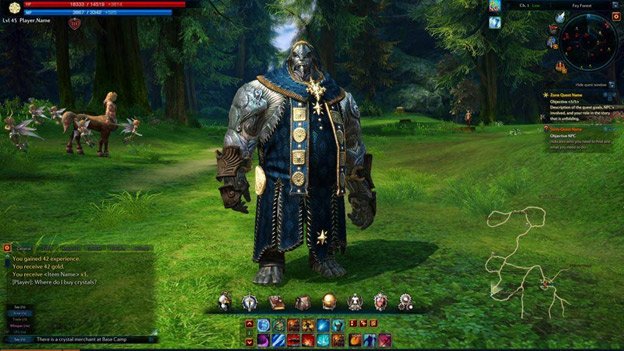
An MMO game is a video game where a large number of players interact within a persistent virtual world.
Have you ever wondered about massive online worlds teeming with players? The question, ‘what is an mmo game’, often pops up for those new to gaming. These games bring together a huge community, allowing you to adventure alongside many other real people.
Imagine exploring fantastical lands, participating in epic battles, or even building a virtual life, all with hundreds or thousands of fellow gamers simultaneously. This is the basic concept behind an MMO, offering shared experiences on a grand scale.

What is an MMO Game?
Have you ever dreamed of stepping into another world, making friends with people from all over, and going on amazing adventures? That’s what MMO games are all about! But what exactly is an MMO game? Let’s dive in and explore this exciting world together.
Defining the MMO: Massively Multiplayer Online
The acronym “MMO” stands for “Massively Multiplayer Online.” Let’s break that down. “Massively Multiplayer” means that a huge number of players can be in the same game world at the same time. Unlike a typical video game you might play by yourself or with just a few friends, MMOs can have hundreds, thousands, or even millions of players all sharing the same virtual space. “Online” means that the game is played over the internet, connecting players from different locations together.
So, putting it all together, an MMO game is a video game played over the internet by a large number of people at once. That’s the core idea. Think of it as a giant playground where lots of people can play together, explore, and create their own stories.
Key Characteristics of MMO Games
While the core idea of an MMO is simple, there are some key features that most MMO games share. These characteristics are what make them so unique and engaging.
Persistent World
One of the most important things about an MMO is its persistent world. This means that the game world keeps existing even when you’re not playing. If you build a house in a game, it stays there when you log off. If you chop down a tree, the tree is gone (until it might grow back). This persistent world creates a feeling of living in a real, ongoing place, and that your actions have consequences. If you make a big change, it affects the world for you and other players.
Interaction with Other Players
MMOs are designed to be social experiences. You’ll be interacting with other players constantly. You might team up with friends to take down a tough boss, trade items in a bustling town, or even compete against each other in various activities. This social interaction is a huge part of what makes MMOs fun and interesting.
- Cooperation: Team up with other players to achieve common goals.
- Competition: Challenge other players in contests and battles.
- Socializing: Make friends, chat, and build relationships within the game world.
Character Customization
In most MMOs, you can create your very own character. You get to decide what your character looks like, what their skills are, and what role they play in the game world. This character is your avatar, your representation in the virtual world. You can develop them, make them powerful, and make them uniquely yours.
- Physical appearance customization: Change hair, face, body, etc.
- Class or role selection: Choose a role like warrior, mage, or healer.
- Skill and ability development: Learn and upgrade skills as you play.
Story and Progression
MMOs usually have a main story that unfolds as you play, guiding your adventures. Besides the main story, there are also often many side quests and tasks you can do. This allows you to progress and make your character stronger as you play. It’s about growth and moving forward. You start as a beginner, and you become powerful through your hard work and your adventures.
- Main storyline: A central narrative driving the game’s events.
- Side quests: Optional tasks that offer additional rewards and story.
- Leveling up: Increasing your character’s power through experience.
Economic Systems
Many MMOs also include an economic system where players can trade items, buy and sell goods, and even become merchants. This creates a living, breathing economy where players’ actions influence the game world’s markets. It’s often more complicated than you might think, and mastering these systems can be a whole game in itself. You can become a skilled crafter, a smart trader, or a powerful merchant if you are good at economics of MMO.
- Trading: Exchanging goods with other players.
- Crafting: Creating items from resources.
- Marketplaces: Virtual places where players buy and sell items.
Types of MMO Games
Not all MMOs are the same. There are many different types, each with its own focus and gameplay style. Here are a few of the most popular genres:
MMORPGs: The Classic Adventure
The most common type of MMO is the MMORPG, or Massively Multiplayer Online Role-Playing Game. In an MMORPG, you create a character and go on adventures in a fantasy, science fiction, or other kind of world. You’ll complete quests, fight monsters, team up with other players, and become more powerful. Games like World of Warcraft, Final Fantasy XIV, and Elder Scrolls Online are great examples of MMORPGs. These games put you in the role of a hero, and you develop your character through these adventures.
MMOFPS: The Shooter Experience
MMOFPS stands for Massively Multiplayer Online First-Person Shooter. These games focus on fast-paced shooting action where you play from a first-person perspective. You’ll be in battles with other players using weapons and tactics. Games like PlanetSide 2 are great examples. Here, the focus is on skill and teamwork in battles, not the overall role-playing experience.
MMORTS: Strategy and Conquest
MMORTS stands for Massively Multiplayer Online Real-Time Strategy. In an MMORTS, you manage armies, build cities, and conquer your enemies. These games often involve a lot of planning and strategic thinking, and can be more focused on building a large empire. Games like EVE Online, while having more action now, still heavily focus on strategic management and economy aspects.
Other MMO Subgenres
There are many other types of MMOs, such as racing games, social worlds, and even puzzle games. These often blend elements from different genres to create a unique experience. The possibilities are truly endless in the world of MMO games.
- Social MMOs: Focus on social interaction and role-playing (e.g. Second Life).
- Racing MMOs: Participate in races with many other players (e.g., Need for Speed World).
- Puzzle MMOs: Work together to solve puzzles with other players.
How to Choose an MMO
With so many MMO games out there, it can be tough to know where to start. Here are some things to consider when choosing an MMO:
Genre Preference
Think about what kind of game you enjoy. Do you like fantasy adventures? Fast-paced shooting? Strategic gameplay? Choose an MMO that matches your preferred genre. If you enjoy fantasy books, a fantasy MMORPG will probably make you happy. If you like shooters, an MMOFPS is a better fit.
Game Theme and World
Consider the game’s setting and world. Do you like high fantasy, space exploration, or a modern world? Pick an MMO with a theme that interests you. The game’s world is where you will be spending a lot of your time, so make sure it’s enjoyable to you.
Player Base and Community
Look for games with active player bases and friendly communities. A good community will make the game much more enjoyable. Some games are known for having very positive player bases, while others may not be as welcoming, so it’s worth researching. You want to play with people that will make you feel comfortable and make the experience better.
Payment Model
MMOs use different payment models. Some are free-to-play, where you can play the game for free, but you may have the option to buy items or expansions. Some require a monthly subscription fee to play, while others might have a one time purchase model. Choose a payment model that fits your budget and preferences.
- Free-to-play (F2P): Free to start, with optional purchases.
- Subscription-based: Monthly fee for access.
- One-time purchase: Pay once to access the game.
Gameplay Style
Think about how you want to play. Do you prefer fast action, complex strategy, or social interaction? Some MMOs are more focused on combat, others on crafting and trading, and still others on role-playing. Choose the game that will match how you want to spend your time in that game.
System Requirements
Make sure your computer or console meets the minimum system requirements for the MMO you choose. Some MMOs need powerful hardware to run smoothly, so it’s good to make sure your system is compatible.
The Allure of MMOs
So, why are MMO games so popular? The answer is simple: they offer something unique and compelling. They offer you the chance to step into another world and experience adventure alongside friends. The social aspects can make you feel part of a community. The continuous progression keeps you engaged as you see your character getting stronger. These games give you a place to go and unwind, relax and make some friends. It can be a great way to escape and have some fun.
- Community: MMOs let you make friends from all over the world.
- Adventure: The large game worlds offer many adventures.
- Progression: You see your character getting stronger.
- Creative freedom: You get to decide how your character will look and act.
MMO games can bring together all kinds of players. The ability to play together and become friends with other people can be very beneficial to you and to many other players. You can spend endless hours in these games exploring the world, getting to know the other people and having fun.
Getting Started with an MMO
Ready to try an MMO game? Here are some quick tips to get you going:
- Research and choose: Select an MMO based on your preferences.
- Download and install: Follow the instructions to get the game on your device.
- Create your character: Customize your avatar to your liking.
- Join the game: Start playing and explore the virtual world.
- Interact with others: Don’t be afraid to chat and team up with other players.
- Have fun: Most importantly, enjoy your adventure!
The Future of MMOs
The world of MMO games is always changing and growing. New technologies like virtual reality (VR) and augmented reality (AR) are opening doors for more immersive and interactive experiences. We will probably continue to see new types of MMOs. As technology improves, we will get even more realistic and enjoyable game worlds. The future of MMOs looks very exciting.
MMO games offer a unique blend of social interaction, adventure, and progression. They are a portal to a virtual world where you can create your own story and connect with people from around the globe. It’s a space where you can be yourself, or be someone else, and explore endless possibilities. The world of MMOs is vast and exciting, and there’s definitely an MMO out there for you. So, why not jump in and start your own virtual adventure?
What even IS an MMORPG? [MMOPINION]
Final Thoughts
Massively multiplayer online (MMO) games create virtual worlds where thousands of players interact simultaneously. These games typically feature persistent environments that evolve based on player actions. Many include extensive character customization and complex social systems.
MMOs often offer a variety of activities such as quests, combat, and crafting. The defining characteristic of a MMO is its large-scale player base. So, what is an mmo game? It is a shared online space where many individuals participate in a single experience.

