
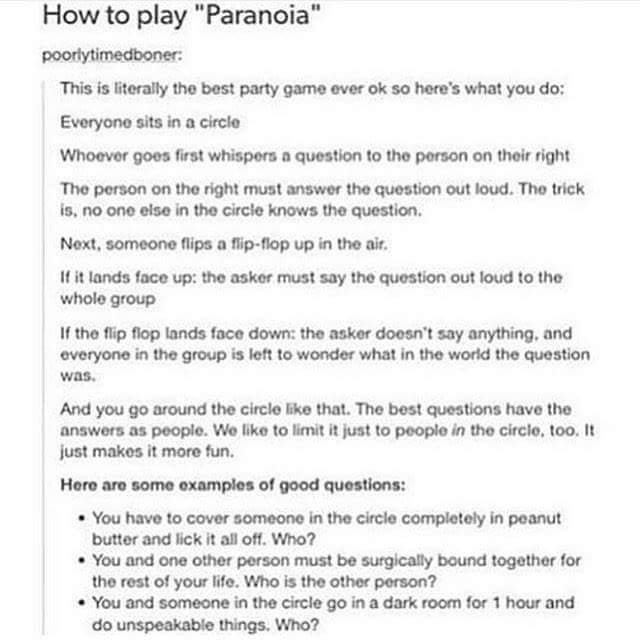
The paranoia game is a party game where one person asks a question about someone in the room, and the person they are looking at has to guess who they were thinking of.
Ever been in a group and felt like a secret was just bubbling under the surface? That’s the essence of what is paranoia game, a party activity designed to generate laughs and a little bit of suspicion. It’s surprisingly simple but can quickly turn into a hilarious way to learn more about your friends.
The game revolves around asking pointed questions like, “Who is most likely to…”, and then secretly pointing at someone. The suspense and the guessing process is what makes it enjoyable. It’s a good game for both close friends and newer acquaintances.

What is Paranoia Game?
Have you ever played a game that made you look over your shoulder? A game where you felt like everyone was hiding something? That, my friends, is the essence of a paranoia game. It’s not about monsters and jump scares, but about the tension that comes from not knowing who to trust. It’s a social game, sometimes played with cards, sometimes just with words, and it’s all about secrets, suspicion, and seeing who can keep a straight face.
The Core of Paranoia: Trust No One
The heart of any paranoia game is the idea that someone, or maybe even everyone, is hiding something. Think of it like this: you’re in a group, and you know that at least one person has a secret mission or a secret piece of information. Your job, along with everyone else’s, is to figure out who that person is, or what their secret might be. This creates a fun, often funny, and sometimes frustrating environment where you question every word and every action.
Key Elements of Paranoia Games
While there are many variations, most paranoia games share some common elements:
- Hidden Information: Someone always has information that others don’t. This could be a role (like a spy), a goal (like sabotaging the group), or even just a secret question they have to get someone to answer.
- Deduction and Deception: Players must try to figure out who has the secret while also trying to hide their own knowledge (if they have any). This involves paying close attention to other players and trying to read their body language and words.
- Social Interaction: Paranoia games rely on talking, questioning, and reacting to each other. This makes them great for groups who like to engage and interact.
- Accusations and Defenses: When suspicions arise, players will make accusations and defend themselves, adding to the tension and drama.
Types of Paranoia Games
Paranoia games come in many forms, and you may already know some of them. Here are a few examples:
Card-Based Paranoia Games
Some paranoia games use cards to assign roles or give secret objectives.
The Resistance (or Avalon)
In The Resistance, players are either members of the Resistance or spies trying to sabotage their missions. The challenge is that the spies are hiding among the resistance, and the players must try to figure out who to trust while carrying out missions to defeat a powerful government. Here’s how the game works:
- Roles: Each player is secretly given a role card at the beginning, either Resistance or Spy.
- Missions: The players go on missions and work together to make sure they succeed. But, the spy players will try to fail missions.
- Accusations: Players openly accuse each other of being the spy, and they must vote on whom to trust to go on the missions.
- Deduction: The players look for clues, such as body language, words, and who votes for which missions, in an effort to find the spies.
Avalon is a game similar to The Resistance, but it has different roles, including the powerful Merlin who is the only player who knows who the villains are, but they must try to give clues without revealing themselves.
Secret Hitler
This is another game in the same vein as The Resistance. In Secret Hitler, the players are members of the government, but some are liberals and some are fascists, and also hiding among them is Hitler, whom everyone is trying to find so that they can prevent him from being elected chancellor. Here’s how the game works:
- Roles: Like The Resistance, players get secret role cards, some liberals, some fascists, and then Hitler.
- Legislation: Players pass laws each turn. Liberals pass liberal policies and fascists pass fascist policies, and Hitler will always work toward passing fascist policies.
- Government: Every turn, players elect a chancellor and a president who will work together to pass laws, making it harder to spot those players who may have the role of a fascist or Hitler.
- Deduction: Players must try to figure out which players are fascist based on who votes for what laws and whom they nominate for president and chancellor.
Verbal Paranoia Games (No Cards Needed)
These games often don’t require any physical materials and can be played anywhere with a group of people. They rely on questions, answers, and a lot of creative thinking.
The Question Game
This classic game is simple, but it can become very intense. One person, the questioner, thinks of a question and keeps the answer in their head. The questioner must try to get other players to say a keyword to them without revealing the question and without anyone else knowing the keyword.
- Secret Question: The questioner chooses a secret question, for example, ‘what is your favorite flavor of ice cream?’
- Secret Keyword: They also choose a secret keyword, like “chocolate”.
- Asking Questions: The questioner then asks any question they want of the group. They may ask “What did you do yesterday?” or “What is the weather today?” But one question they will definitely ask is “What is your favorite flavor of ice cream?”
- The Goal: The questioner wants someone to say the keyword to them, for example, say ‘Chocolate’ when asked the question ‘What is your favorite flavor of ice cream?’ The keyword makes the questioner win.
- Deduction: Other players must figure out the question and keyword based on what questions they are being asked and what they may hear other people say.
Mafia/Werewolf
This game, also known as “Town of Salem”, assigns roles at the beginning of the game. The roles include townspeople, some of whom have extra powers, as well as the mafia who will try to eliminate all of the townspeople. Here’s how it plays out:
- Roles: Players are secretly given a role at the beginning of the game. There may be regular townspeople, the sheriff, the doctor, or other special roles, as well as the mafia.
- Night Phase: During the night phase, the mafia secretly chooses a person to eliminate.
- Day Phase: During the day phase, the players must vote to eliminate any player that they think is a mafia member.
- Deduction: The players try to figure out who is a mafia member based on who is voted for, who is eliminated, and what role they may have.
Digital Paranoia Games
The world of online gaming has embraced the paranoia genre too. Here are a couple examples:
Among Us
Among Us is a popular online game where a team of players must complete tasks on a spaceship while one or more hidden imposters try to sabotage their efforts and eliminate them. Here’s how the game works:
- Roles: Some players are crewmates who perform tasks, while others are the imposter who can kill other players without being seen.
- Tasks: The crewmates perform tasks around the ship, while the imposter can perform fake tasks.
- Emergency Meetings: When a body is discovered, or an emergency meeting is called, players can then vote on who they believe is the imposter.
- Deduction: Players must try to catch the imposter based on their actions and discussions.
Town of Salem
This online game is very similar to Mafia/Werewolf, where some players are trying to eliminate the town, and other players are trying to survive. Here’s how it works:
- Roles: Players are given roles such as town members, mafia, serial killers, and more.
- Night Phase: During the night phase, each role can perform actions, such as the mafia killing a player, the doctor healing a player, the sheriff checking a player, etc.
- Day Phase: The players then vote to eliminate any players who they suspect are not town members.
- Deduction: Players must try to figure out what roles are in the game and whom to trust.
Why are Paranoia Games so Popular?
Paranoia games have a special appeal that makes them a hit at parties and game nights. Here’s why they’re so popular:
- Social Interaction: They get people talking, laughing, and thinking together. They create a shared experience where everyone is involved.
- Psychological Engagement: These games play with our minds. The feelings of suspicion and the need to be clever are very engaging.
- Easy to Learn, Hard to Master: Most paranoia games have simple rules, but they require quick thinking, social skills, and a good poker face.
- Replayability: Because the roles and secrets are random, every game is different. This means you can play them over and over again without getting bored.
Tips for Playing Paranoia Games
Want to be the best at paranoia games? Here are some tips to keep in mind:
- Pay Attention: Watch everyone closely. Body language and tone can be a big giveaway.
- Ask Good Questions: The right question at the right time can reveal a lot.
- Don’t Give Too Much Away: If you have a secret, keep it hidden, and try not to be too obvious.
- Have Fun: Paranoia games are meant to be enjoyable, even if you get outed.
The Psychology Behind Paranoia Games
These games tap into some basic parts of our psychology. The feeling of paranoia comes from our brains trying to assess threats, and in these games, that feeling is just a form of fun. The games push us to think critically, and they create a thrilling situation where you never really know what might happen next.
Are There Any Downsides?
While paranoia games are usually a lot of fun, there are a few things to be aware of:
- Arguments: Sometimes, the intense atmosphere can lead to disagreements. It’s essential to remember that it’s just a game.
- Trust Issues: It is important to remember that the paranoia from the game is not supposed to spill over into real life. Remember that people are acting in the game, and they can be trusted in real life.
- Exclusion: Some players may feel left out if they are not good at deception or deduction. Be inclusive and make sure everyone feels like they are a part of the experience.
Paranoia games are more than just a way to pass the time, they are a test of strategy, social skills, and of our ability to handle suspicion with a smile. They are a reminder that sometimes, the most interesting games are the ones that play with our minds.
NORTHSTARBOYS PLAY PARANOIA (The game that destroys friendships)
Final Thoughts
Paranoia game involves creating suspicion and uncertainty among players. It’s a social deduction activity where trust erodes quickly. Players are often assigned secret roles with hidden agendas.
The core of ‘what is paranoia game’ is misdirection and deception. Participants must carefully analyze each others’ actions. This often leads to accusations and betrayal. The game explores the psychological effects of constant suspicion.

