
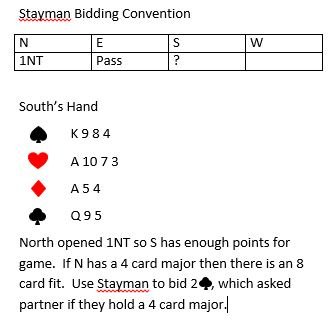
The Stayman convention in bridge is a bidding tool used after a partner opens 1NT, asking them to bid a four-card major suit if they hold one.
Ever felt lost after your partner opens 1NT? Wondering how to find a major suit fit? That’s where understanding ‘what is stayman in bridge game’ becomes crucial. It’s a simple yet powerful tool.
Stayman is a conventional bid, not a natural one. It acts like a question to your partner. It’s designed to find those often elusive 4-4 major suit fits. Knowing this convention significantly improves your bidding.

What is Stayman in Bridge Game?
Let’s dive into the world of bridge and explore a very helpful tool called the Stayman convention. If you’ve ever played bridge, you know communication between partners is key. The Stayman convention is a special way for your partner to ask if you have a four-card major suit (hearts or spades) after you’ve opened with a bid of 1 No Trump (1NT). Think of it as a secret code to help you find the best contract! This helps to get you to a major suit game more often.
Why Do We Need Stayman?
Imagine you and your partner are playing bridge. You have a balanced hand, maybe with some good high cards, but you don’t have a long suit to bid. You decide to open with 1NT. Your partner has a hand with a mix of points and might have four or more cards in either hearts or spades. Without a way to ask about that, you might miss the chance to play in a heart or spade contract that could be a better fit. The Stayman convention solves this problem. It gives your partner a chance to check if you have a major suit to play.
The Basics of a 1 No Trump Opening
Before we get into Stayman, let’s talk quickly about the 1NT opening bid. When a player opens with 1NT, they are saying a few things about their hand:
- They have a balanced hand – meaning they don’t have a long suit. They likely have no singletons or voids.
- They have about 15-17 high card points (HCP). These points are based on the value of aces, kings, queens, and jacks.
The 1NT opening is really helpful because it lets partner know a lot about your hand without you using more bids.
The Stayman Bid: What it Means
When your partner opens with 1NT, and you have a hand that might have a four-card major, you can use the Stayman bid. The Stayman bid is always a bid of 2 Clubs (2♣) over your partner’s 1NT opening. This bid doesn’t mean you have a lot of clubs. It is an artificial bid. It’s a special signal to your partner that you are trying to find out if they have a four-card major. Here’s a breakdown:
- The Bid: After your partner opens 1NT, you bid 2♣.
- Meaning: This 2♣ bid says, “Partner, I might have four cards in hearts or spades. Can you tell me if you do?”
- It’s not about Clubs: Remember, this 2♣ bid is NOT about your club suit. It’s a request for information.
How Does Partner Respond?
Now that you’ve used the Stayman bid, your partner has to answer. Their response tells you if they have a four-card major or not. Here are the possible responses:
Responding with a Four-Card Major
If your partner has a four-card major, they will bid that suit.
- If they have 4 hearts: They will bid 2 Hearts (2♥).
- If they have 4 spades: They will bid 2 Spades (2♠).
This tells you, “Yes, I have a four-card major in this suit!”
Responding with No Four-Card Major
If your partner does not have a four-card major, they will bid 2 Diamonds (2♦).
- 2 Diamonds (2♦):: Means they do not have a four-card major. It is sometimes called a “negative response”.
This tells you, “I don’t have a four-card major.”
Putting It All Together: An Example
Let’s walk through a complete example to make sure everything is clear:
Scenario:
You hold: ♠ K 7 6 2 ♥ A J 8 5 ♦ 9 3 ♣ 7 2 (10 HCP and a four card heart suit)
Your Partner opens: 1NT
Here’s what happens:
1. You (with the four-card heart suit) bid 2♣ (Stayman).
2. Your partner (opening bidder) looks at their hand. Let’s say they hold: ♠ A Q 4 ♥ K 9 3 ♦ J 10 2 ♣ A K 5 . They have 16 HCP and no four card major.
3. Your partner responds 2♦ (negative response).
4. Now you can decide what to do. Since you have a four-card heart suit, you could bid 2♥. Or, you could pass and play in 2♦ or 1NT.
Now let’s take another example and change up your partner’s hand.
Scenario:
You hold: ♠ K 7 6 2 ♥ A J 8 5 ♦ 9 3 ♣ 7 2 (10 HCP and a four card heart suit)
Your Partner opens: 1NT
Here’s what happens:
1. You (with the four-card heart suit) bid 2♣ (Stayman).
2. Your partner (opening bidder) looks at their hand. Let’s say they hold: ♠ Q 9 7 2 ♥ K J 4 5 ♦ A 3 ♣ K 10 7 . They have 15 HCP and a four card heart suit.
3. Your partner responds 2♥.
4. Now you know your partner has a four-card heart suit. This could be a great fit. If you want, you could raise the bid to 3♥ or 4♥, depending on your points.
What if You Have Both Four-Card Majors?
Sometimes, you might have four cards in both hearts and spades. When you use Stayman (2♣), and your partner replies 2♦ (no major), what do you do?
When you have both four-card majors and your partner denies a major suit in response to the Stayman, you need another way to find the best suit. You bid 2 hearts. Now, if your partner does not have a four card spade suit, they bid 2 No Trump. If they do have a four-card spade suit, they bid 2 spades. This allows you to play in the best major suit contract.
When NOT to Use Stayman
The Stayman bid is super handy, but it’s not always the right move. Here are some situations where you shouldn’t use it:
- When you have a long suit: If you have a six-card or longer suit of your own, you can bid that suit instead of using Stayman.
- When you have very weak hand: If your hand is really weak (less than 6 HCP), you won’t have the points to bid in a major suit. Just pass.
- When you have lots of points (and want to bid game): If you have a hand with lots of points (around 13+ points), you can bid game directly. This is called a jump shift or a Gerber bid.
Why Learn Stayman?
Using Stayman well can make a big difference in your bridge game:
- Find better contracts: It helps you find a heart or spade fit more often, leading to better scores.
- Communicate with your partner: It gives you a way to ask about major suits after a 1NT opening.
- Play more accurate bridge: It’s a step up from just playing randomly and bidding based on high cards only.
Advanced Stayman Techniques
As you get better at bridge, you’ll find there are more complex ways to use Stayman. Here are a few examples:
Garbage Stayman
Sometimes, a partner will use Stayman with a weak hand (less than 6 HCP) to try and find a major fit when they do not have any other good options. This is called a “Garbage Stayman”. It’s not a great way to play, but sometimes you might get a really lucky hand where it works.
Stayman With a Five-Card Major
Some players will use the Stayman convention when they have a five-card major (and not a four-card major). In this case, if the partner denies the major, then the responder bids the five-card major suit. This can be done with both weak and strong hands.
The Stayman convention is a foundational aspect of bridge bidding. By understanding and employing this method, players can significantly improve their communication and strategic advantage. This exploration of ‘what is Stayman in bridge game’ provides a comprehensive look at the convention, highlighting its rules, applications, and nuances for effective gameplay.
Learning bridge takes practice. Don’t worry if it feels complicated at first. Keep playing, and soon you’ll be using Stayman like a pro!
How To Play Stayman
Final Thoughts
Stayman is a conventional bidding method in bridge. It helps a partnership find a major suit fit after a 1NT opening. The responder uses a 2♣ bid to ask opener if they have a four-card major. This allows for more accurate bidding and better contract possibilities.
If the opener has a major, they show it. If they do not have it, they respond accordingly. Therefore, ‘what is stayman in bridge game’ is essentially a way to efficiently investigate major suit holdings. It is an important tool for successful bridge play.

