
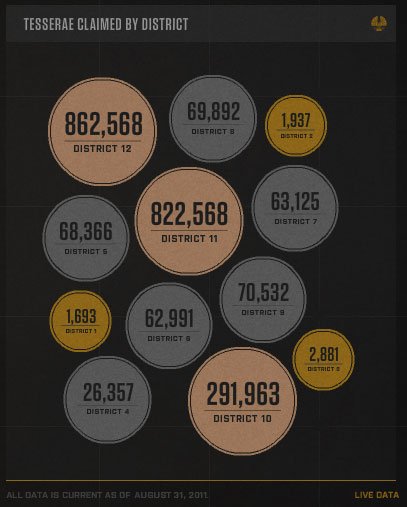
A tessera in the Hunger Games is a year’s worth of grain and oil for one person, obtained by adding one’s name to the reaping multiple times.
The Hunger Games presents a society sharply divided, where survival often means making impossible choices. One such choice revolves around the concept of a tessera. When we ask “what is tessera in the hunger games” we delve into the heart of the Capitol’s control over the districts.
It’s not just a simple ration; it’s a symbol of poverty and desperation. District citizens, struggling with insufficient food supplies, often opt to take tesserae in exchange for their children’s increased chances of being selected for the Games. This highlights a grim reality.

What is Tessera in The Hunger Games?
Have you ever wondered about that word “tessera” in The Hunger Games books and movies? It’s not a friendly word, is it? In the world of Panem, “tessera” is a sad deal offered by the Capitol, a deal that forces kids to risk their lives for a little bit of food. It’s a crucial part of why the Hunger Games are so unfair and why people in the districts suffer so much. Let’s dive deeper into what a tessera really means in this dystopian world, how it works, and why it’s such a cruel system.
The Basics of Tessera: A Deal with the Devil
Imagine you’re a kid, and you’re always hungry. Your family barely has enough to eat. That’s the reality for many families in the districts of Panem. The Capitol, in its warped generosity, offers a “solution”: the tessera. Here’s how it works:
- What is it? A tessera is a yearly deal. It’s an extra supply of grain and oil, enough to keep a person alive for about a year.
- Who can take it? Any person between the ages of 12 and 18 can choose to take a tessera.
- The Catch? The big, awful catch is this: every time a person takes a tessera, their name is entered into the Reaping an extra time. This increases their chance of being picked as a tribute for the Hunger Games.
So, it’s like the Capitol is saying, “We’ll help you not starve, but you’ll have a higher chance of dying.” It’s a brutal choice. Families face the terrible decision of risking their child’s life for a little bit of food to get by.
The Real Cost of Taking a Tessera
The idea of taking a tessera isn’t simply about food. It’s about survival in a very unbalanced world. When the Capitol provides for its own citizens but leaves the districts to struggle, families are put in impossible positions. Let’s think about what it means on a deeper level.
A System of Control
The tessera system is a cunning way the Capitol keeps the districts in line. By making people dependent on this small amount of extra food, they create a cycle of desperation and fear. Families are forced to choose between hunger today and a potential death in the Games later. This constant fear and need keeps people from thinking about rebellion.
A Symbol of Inequality
The use of tesserae highlights the vast difference in wealth between the Capitol and the districts. Citizens of the Capitol have plenty of food and resources, while people in the districts fight for every crumb. This inequality fuels resentment and anger, playing a significant role in the underlying tensions in the books and movies. The tessera is a symbol of the Capitol’s power and the districts’ vulnerability.
The Impact on Families
Consider how this affects families. Imagine a family with multiple children between the ages of 12 and 18. If each of these children takes tesserae, the number of times their names are entered into the Reaping multiplies rapidly. They might get food, but they also have a dramatically higher risk of being picked. This fear and the potential loss of a child can tear families apart and put an enormous emotional weight on each individual.
Why it Matters in the Hunger Games Narrative
The tessera isn’t just a minor detail; it’s a major part of the story’s core. It’s what drives many of the actions in the narrative and adds depth to characters like Katniss Everdeen.
Katniss’s Story
Katniss Everdeen, our main character, steps up as a volunteer tribute in the first book and movie, The Hunger Games, to protect her younger sister Primrose. But it is the history of the tessera that influences her. She’s been taking tesserae every year to help feed her family. This choice means she’s been much more likely to be picked for the Games. Her knowledge of the burden of the tesserae and the desperation it creates plays a big part in her decision to volunteer and her character’s arc through the series. Her actions, even before she’s a tribute, show the immense effect of the tessera system on the lives of those forced to rely on it.
A Catalyst for Rebellion
The unfairness of the tessera system is one of the many reasons for the growing anger in the districts. It fuels the desire to rebel against the Capitol’s power. The desperation created by this system shows the true nature of the Capitol’s control, and it’s this knowledge that pushes many to fight for change. The tessera is a constant reminder of the system’s cruelty and serves as a driving factor in the eventual rebellion.
How the Tessera Affects the Reaping
Let’s take a closer look at how the tessera system directly influences the Reaping.
The Reaping Process
The Reaping is the annual event where tributes are selected for the Hunger Games. In each district, the names of eligible children (ages 12-18) are placed into a large glass bowl. Every person who has taken tesserae has their name entered multiple times, once for each tessera taken.
The Mathematics of Risk
For example, if a 16-year-old has taken the tessera every year since they turned 12, their name would be in the Reaping bowl five times. Compared to a child who never took a tessera, the odds are dramatically stacked against them. The number of tesserae taken greatly increases an individual’s chances of being selected.
The Desperate Choice
This system forces a cruel equation on district families. They need the extra food to survive, but taking it puts their children at greater risk. This is not a choice driven by hope but a desperate gamble. It is a calculated way for the Capitol to control the districts through hunger and fear.
The Tessera in Perspective: Hunger Games as a Whole
To fully understand the importance of the tessera, we need to see its role in the bigger picture of the Hunger Games series.
Economic Deprivation
The tessera system is a symptom of the deep economic problems in the districts. The Capitol has complete control over the distribution of resources. This economic control is why families are pushed to take tesserae in the first place. They must make this choice to get enough to stay alive. The Capitol makes sure that the districts are always in need, cementing their power over the lives of people.
Social Commentary
The story also comments on real world inequalities. The Hunger Games uses the tessera to show how governments can use economic dependence to keep people in line. It reminds readers to think about how systems can be manipulated to keep power in the hands of a few, at the expense of others. The tessera represents a real-world struggle with poverty, and how it can be used as a tool for manipulation.
Beyond the Games
Even outside of the Hunger Games arena, the tessera has an impact on the lives of everyone in the districts. The strain it places on families, the fear it creates, and the constant reminder of their poverty all become part of the collective consciousness of the districts. These collective experiences fuel the growing desire for change and revolution, moving beyond just the Hunger Games and leading towards the larger rebellion in the series.
Understanding the Terms
Let’s clarify some of the important terms associated with the tessera system to make sure everything is clear:
- Tessera: A yearly portion of grain and oil offered by the Capitol in exchange for entering a person’s name into the Reaping an additional time.
- Reaping: The annual ceremony where names of potential tributes are drawn for the Hunger Games.
- Tribute: A child between the ages of 12 and 18 who is chosen to participate in the Hunger Games.
- District: One of the twelve areas in Panem that are controlled by the Capitol. These districts are responsible for producing goods needed by the Capitol.
- Panem: The dystopian country where the Hunger Games take place, ruled by the Capitol.
Tessera: A Summary Table
To help solidify your understanding, let’s look at a simple summary of the tessera using a table:
| Aspect | Details |
|---|---|
| What It Is | An additional yearly supply of grain and oil. |
| Who Can Take It? | Individuals between the ages of 12 and 18 in the districts. |
| The Cost | Each tessera taken adds one more entry into the Reaping. |
| Impact | Increases the chance of being selected as a tribute. |
| Purpose | A form of control and economic manipulation by the Capitol. |
The tessera is not just a simple transaction for food; it’s a fundamental mechanism of control used by the Capitol to maintain its power over the districts. It creates a cycle of need, fear, and inequality, which makes the suffering of the people in Panem so real and heart breaking.
The intricate design of the tessera system makes the Hunger Games much more than a simple competition. It is a carefully crafted system meant to keep the districts under control and make the people desperate and afraid. By using their own hunger against them, the Capitol solidifies its position of control. This system shows the lengths to which a ruling power can go to maintain order, even if it means hurting and exploiting those it governs. Therefore, understanding what a tessera is truly provides a critical view into the cruel realities of the world of The Hunger Games.
The Games of The Hunger Games Explained
Final Thoughts
Tessera in The Hunger Games is a system of food rationing within the districts. Poor families can take extra grain and oil for the year. However, each tessera taken adds a name to the reaping for that family member. This means a higher chance of being chosen.
Essentially, ‘what is tessera in the hunger games’ is a desperate gamble. It trades short-term food security for increased peril. It shows the oppressive nature of the Capitol.

