
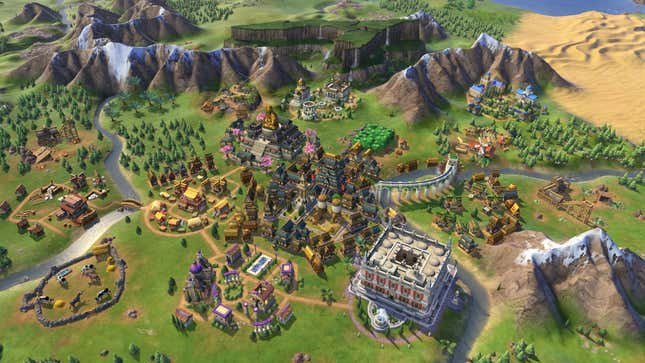
The best civilization game is subjective, often depending on preferred mechanics and historical periods, but many players consider Civilization VI a strong contender due to its strategic depth and engaging gameplay.
What is the best civilization game? This question has echoed through gaming communities for decades, sparking passionate debates and countless hours of gameplay. Every strategy fan has their favorite, pointing to different strengths and preferred styles. Each title offers a unique approach to guiding a society from its humble beginnings to world dominance.
The sheer variety in gameplay, from tech trees to diplomacy, makes a single “best” title a moving target. Factors like complexity, historical accuracy, and even replayability come into play when we consider the possibilities. This article will explore some of the top contenders and help you decide what might be the best choice for you.

What is the Best Civilization Game?
Choosing the best civilization game is like trying to pick your favorite candy – there are so many great options, and everyone has a different idea of what’s perfect! But don’t worry, we’re going to explore the world of civilization-building games together. We’ll look at what makes a game fun, what makes it challenging, and what might make one game a better fit for you than another. Get ready to embark on an exciting journey through history, strategy, and maybe a little bit of virtual world domination!
Understanding the Core of Civilization Games
At their heart, civilization games allow you to guide a small group of people from the very beginning to a thriving, powerful empire. You’ll be making important decisions about everything from where to build your first city to how to manage your resources, research new technologies, and even wage war. It’s like being the ultimate leader of your own little corner of the world, and it’s super exciting to watch your civilization grow and change over time.
Key Elements that Define a Civilization Game
Let’s break down what usually makes up a good civilization game:
- Exploration: This is like discovering new lands. You’ll send out scouts to uncover the map and find resources and maybe even other civilizations to be friends with or…well, not friends with.
- City Building: Creating and managing cities is a big part of these games. You’ll choose where to build, what buildings to add, and how to make your citizens happy.
- Resource Management: You have to gather different resources (like food, wood, and gold) to build things, train soldiers, and keep your civilization running smoothly. It’s like keeping a big pantry stocked!
- Technology Research: As you play, you’ll research new technologies, which help you build more advanced things, fight better wars, and become more powerful overall. It’s like going to school, but for a civilization!
- Diplomacy and Trade: Sometimes, you can make alliances with other civilizations, trade resources, and maybe even avoid going to war. Making friends is good!
- Warfare: If diplomacy fails, you might have to fight. You’ll train soldiers, build armies, and try to conquer your enemies. It’s a part of history, and it can be very exciting in the game.
- Victory Conditions: There are different ways to win. You might win by conquering everyone, by being the first to reach a certain technology, or by being the most culturally influential.
Popular Contenders in the Civilization Game Arena
Now, let’s look at some of the big names in the civilization game world. Each one has its own unique features and appeals to different types of players.
The Sid Meier’s Civilization Series
The Civilization series, created by Sid Meier, is often considered the grandfather of the genre. It’s been around for a long time and has many different versions, each one building on the last. Let’s look at some of the core parts of the Civilization games:
- Turn-based Gameplay: Players take turns moving their units, building cities, and making decisions. This gives you plenty of time to think about your next move.
- Multiple Eras: The game starts in ancient times and goes all the way to the future. You’ll see your civilization develop through different time periods.
- Different Civilizations: You can play as different civilizations from around the world, each with its own special abilities and unique units. It is like playing a new game with different powers each time.
- Deep Strategy: There are many different things you can do, from managing your citizens to fighting wars to exploring new lands. There’s always something to think about.
Civilization V
Civilization V is a favorite for many players because of its friendly interface and engaging gameplay. It was a big step forward in terms of how the game looked and how it was played, making it more user-friendly and easier to get into than past versions. The hex-based map was a big change from previous square based maps, making battles more interesting, the game mechanics are considered to be really refined and strategic and it offers a great balance of complexity and approachability. Many beginners and long time fans love this game.
Civilization VI
Civilization VI builds on the success of its predecessor, with improved graphics, new game mechanics like districts, and a stronger focus on individual leaders. The different leaders with different bonuses and agendas make every game feel different. Civ VI also brought about the concept of ‘unstacked’ cities. Each city now requires more planning and strategizing to ensure that the districts are positioned well. This has been a welcomed change for many, though it can be more challenging to get used to. This version is seen as a more complex and nuanced experience.
Humankind
Humankind is a newer game trying to do something different in the genre. It is often described as a direct rival to the Civilization series. Instead of picking one civilization for the entire game, in Humankind you start with a basic group and can choose different cultures as you move through the eras, making it possible to have a culture that is a mixture of multiple cultures from different times. This is a very unique mechanic and it changes the gameplay significantly.
- Culture Shifting: This is the big one. You can change your culture as you go through history, making your civilization a mix of different traits and abilities. This makes every playthrough very different.
- Fame-Based Victory: Instead of winning through conquest, technology, or culture like in the Civilization series, you win by accumulating the most “fame” throughout your game. Fame is gained from all aspects of the game, making it quite flexible.
- Tactical Battles: The battles in Humankind are more tactical and take place on the map, rather than as an automatic system like in many Civilization games. You’ll have more control over how you command your troops.
Age of Empires Series
While Age of Empires focuses more on real-time strategy, it also has a strong civilization-building component. Players must manage resources, develop their cities, and command armies, but all in real-time. It’s fast and requires quick thinking.
- Real-Time Gameplay: Unlike turn-based games, Age of Empires happens in real-time. This makes it faster paced and requires quick decisions.
- Historical Settings: The games are set in specific historical periods, which makes it feel like you are actually part of history.
- Military Focus: While you do build cities, a big focus of Age of Empires is on warfare and tactical battles. It’s perfect for those who like to fight.
Age of Empires II
Age of Empires II is often considered a classic in the real-time strategy world. It’s loved for its historical settings, engaging gameplay, and balanced civilizations. It is easy to learn, but hard to master, with complex strategies that can be used. The game’s art style and music are also considered to be very classic and well-liked.
Age of Empires IV
Age of Empires IV is the more recent addition to the series. It modernizes the series with updated graphics and some new mechanics while keeping the core gameplay that made the series so popular. It brought some changes in terms of balance and it is seen as a more streamlined version of the game.
Other Notable Games
The titles above are very popular and well liked in the world of civilization and strategy games, however, there are some honorable mentions that also deserve to be discussed.
- Endless Legend: A fantasy-themed 4X game with unique factions and asymmetric gameplay. It is very different compared to historical settings and very beautiful to look at.
- Stellaris: If you like space, Stellaris lets you build an interstellar empire. It has tons of customization options and a deep story. It’s like Civilization in space.
- Old World: Old World is a historical game which focuses on the lives of the leaders and families ruling the civilizations. This feature makes it very interesting to play.
What Makes a Game ‘The Best’?
So, how do you decide which game is the best? Well, it really depends on what you are looking for. Some people want complex strategy, while others want something more fast-paced and engaging. Let’s explore some factors.
Complexity vs. Approachability
Some games are easy to pick up and play, while others have a steeper learning curve. If you are new to the genre, you might want to start with something simpler. But if you are a seasoned strategy player, you will want something with more depth. Here is a general idea about difficulty, but it can vary for each individual:
| Game | Complexity | Approachability |
|---|---|---|
| Civilization V | Medium | High |
| Civilization VI | Medium-High | Medium |
| Humankind | Medium-High | Medium |
| Age of Empires II | Medium | Medium-High |
| Age of Empires IV | Medium | Medium-High |
| Endless Legend | High | Medium |
| Stellaris | High | Low |
| Old World | High | Low |
Gameplay Pace
Do you like to take your time and plan each move carefully, or do you prefer faster, more dynamic gameplay? Turn-based games allow for deeper strategic planning and tend to move at a slower pace, while real-time strategy games are very fast paced and require more reactions and tactical decision making.
Theme and Setting
The setting of the game can make a big difference. Some players like games set in historical times, while others prefer fantasy or science-fiction. Finding a theme you like can make the game more enjoyable. The historical settings make you feel like you are exploring and learning about history as you play, while fantastical settings can give you more freedom. The science-fiction settings often bring more complex mechanics with more advanced technology.
Replayability
A good civilization game will have a lot of replay value. This means it can be fun to play multiple times, exploring different civilizations, strategies, and difficulty levels. Variety is important for good replayability. Games with lots of different civilizations, starting positions, technology paths and winning conditions tend to have better replayability.
Community and Support
Many players find that a strong community and great developer support are important. A dedicated community means you’ll have people to play with and discuss strategy. Good support means bugs are fixed, and new features are added. It is good to look into if the game you are interested in is getting regular support and updates.
Finding the Best Game for You
Ultimately, the “best” civilization game is the one you enjoy playing the most. It’s all about personal preference. You can try out a demo for some of the games to see if it fits your taste. Experiment with different games and see which ones match your preferences. Don’t be afraid to look at other peoples reviews and suggestions.
Consider These Questions:
- Do I want a game that is easy to learn or one that requires more strategy and thinking?
- Do I prefer a slower paced turn-based game, or a fast paced real-time experience?
- Do I prefer historical settings, or something more fantasy or sci-fi?
- Do I like to play against other human players, or do I prefer single player?
- Is replayability an important aspect for me?
By thinking about these questions you’ll be able to narrow down your choices and find a civilization game that’s right for you. You may even find more than one game that you truly enjoy!
The world of civilization games is vast and exciting. Whether you prefer the strategic depth of Civilization, the culture-shifting gameplay of Humankind, or the real-time action of Age of Empires, there’s a game out there for you. The most important thing is to have fun and enjoy building your own virtual empire.
Ranking EVERY Sid Meier's Civilization Game!
Final Thoughts
Ultimately, the “best” civilization game depends on player preference. Some enjoy intricate micromanagement, while others favor faster gameplay. Different titles offer distinct historical periods and strategic depths.
Therefore, judging what is the best civilization game is subjective. It comes down to which game best aligns with individual tastes regarding complexity, pace, and historical settings. Every game has its own charm.

