
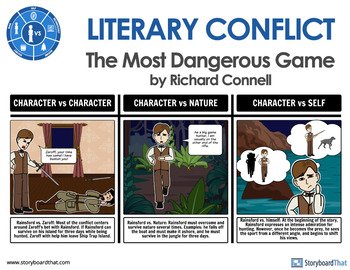
The conflict of the most dangerous game is man versus man, specifically Rainsford, a hunter, becoming the hunted by General Zaroff.
Have you ever considered the chilling implications of being prey, not predator? This is precisely the terrifying position Rainsford finds himself in, forcing us to confront what is the conflict of the most dangerous game. It’s a scenario that throws the conventional understanding of hunting into sharp, unsettling relief.
The story goes beyond a simple jungle chase; it’s a brutal battle for survival, where the roles reverse. The hunter becomes the hunted, facing a calculated, and morally bankrupt adversary. This makes it a truly terrifying conflict.

What is the Conflict of The Most Dangerous Game?
Okay, let’s talk about “The Most Dangerous Game,” that thrilling short story by Richard Connell. It’s a classic, and it’s got a conflict so big it practically jumps off the page. But what is that conflict, exactly? It’s not just one thing; it’s a whole bunch of challenges all wrapped up together. Think of it like a layer cake, with different kinds of yummy (and sometimes scary!) layers. At its heart, the story explores the difference between the hunter and the hunted, blurring the lines until you’re not sure who’s who anymore. It also dives deep into the nature of civilization versus savagery. Ready to dig in?
The Core Conflict: Man vs. Man
The main battle, the most obvious conflict, is between Rainsford, the celebrated big-game hunter, and General Zaroff, the sophisticated but twisted nobleman. They are both highly skilled hunters, but their beliefs about what constitutes a worthy quarry are worlds apart. Zaroff, bored with hunting animals, decides that humans offer the most challenging game. This sets up a terrifying power dynamic where Rainsford is forced to become the hunted. It’s not a fair fight, either. Rainsford has to survive while being pursued by someone who knows the island inside and out. He must use his skills and wits to try to avoid a horrifying and deadly end. The whole story revolves around this life-or-death pursuit.
The Hunt: A Deadly Game of Cat and Mouse
Think of a cat chasing a mouse, but with higher stakes and way more traps. The hunt itself is a major part of the conflict. Zaroff is the predator, using his hunting expertise, the island’s terrain, and even his pack of dogs, against Rainsford. Rainsford is the prey, desperate to survive. This creates a suspenseful chase with intense moments of near-capture and close calls. The tension is almost unbearable as Rainsford tries to outsmart Zaroff and his hunting methods. We watch him laying traps, using all his hunting experience in a desperate attempt to turn the tables on his pursuer. The hunter becomes the hunted, adding a layer of irony and moral complexity to the story. It challenges the reader to consider how we view power and predation. The chase scenes are the most important part of this battle, and it’s what keeps us hooked.
- The Jungle Environment: The dense jungle is both a friend and an enemy to Rainsford. It provides cover and hiding spots, but it’s also full of dangers and traps set by Zaroff.
- Zaroff’s Hunting Skills: He has a great understanding of the island, is a highly skilled hunter, and enjoys the process of hunting humans. His skills pose a deadly challenge for Rainsford.
- Rainsford’s Resourcefulness: He needs to use everything he knows about hunting to survive, making traps and trying his best to stay ahead of Zaroff.
The Internal Conflict: Rainsford’s Shifting Perspective
The conflict isn’t just about the physical chase; it’s also about the battle raging inside Rainsford. At the start, he’s a confident hunter, believing that animals have no feelings. He has a very specific view of the world where some creatures are meant to be hunted. But being hunted himself forces him to reconsider everything. He begins to see the world from the other side. This internal struggle is a huge part of the story. Being on the other end of the hunting process changes him.
From Hunter to Hunted
This change makes Rainsford question his previous beliefs. He learns what it feels like to be terrified, desperate, and fighting for survival. The hunt forces him to confront the suffering and fear of prey. He had never considered this before. It changes his understanding of what it means to be alive and what it means to hunt. He realizes the true horror of Zaroff’s game and sees that humans have value beyond being objects of a hunt.
- Empathy and Understanding: Rainsford develops a degree of empathy for the hunted, something he lacked initially.
- Moral Shift: He moves away from a purely objective view of hunting to a more moral one that acknowledges the value of life.
- Survival Instincts: His focus shifts from being a hunter to just wanting to stay alive, driving his actions during the hunt.
Man vs. Nature: The Savage Island
The island itself is almost a character in the story, presenting another conflict. It’s called “Ship-Trap Island” for a good reason. Its jagged rocks and confusing layout trap ships and their crews. The island represents the savage side of nature. It is a place where the rules of civilization are forgotten and where the law of the jungle takes over. This isolation and the danger of the island add an extra layer of fear and desperation to Rainsford’s situation. The island is a dangerous place even without Zaroff, making Rainsford’s survival even more unlikely.
The Island as a Catalyst
The wildness of the island encourages the savagery of Zaroff’s behavior. The island is not just a place where the action happens, it’s also a setting that helps bring out the darker aspects of human nature. It isolates the characters from the rules of society. On this island, there are no rules except the rule of survival. This isolation allows Zaroff to freely follow his twisted desires. He doesn’t have to worry about people stopping him from doing so. The island is more than just the backdrop for a hunt; it’s a place where the dark side of human nature comes to light.
- Dangerous Terrain: The island’s sharp rocks, thick jungles, and swamps provide many obstacles for both Rainsford and Zaroff.
- Isolation: Being far away from civilization allows Zaroff to act without any fear of consequence.
- Survival Environment: The island is an unforgiving place, where only the strongest can survive.
Man vs. Society: The Breakdown of Civilized Rules
One less obvious but essential part of the conflict is the idea of how society works and what it means to be civilized. Zaroff, on the surface, appears to be a cultured and refined man. He has beautiful things, eats fancy food, and lives in a big home. However, under this mask, he is a savage. He has lost all sense of right and wrong. He views humans as lesser beings, making him similar to the most extreme example of a predator. He’s not a normal person. This conflict is not a physical battle but a battle of ideas.
Civilization vs. Savagery
The story questions what it means to be “civilized.” Zaroff’s seemingly refined manner makes his acts of hunting humans all the more terrifying. It shows that outward appearances don’t mean that a person is kind or good. The story suggests that civilized rules can break down easily. This breakdown reveals the raw, animalistic side of humans. It’s as if the thin veneer of civilization can be easily stripped away when people are pushed to their limits. This conflict challenges us to consider what we truly mean when we say that a person is civilized and how easy it can be to slip into savagery.
- The Illusion of Civility: Zaroff represents how easily cultured people can become savage.
- Moral Boundaries: The story tests how far people will go when they have no consequences to worry about.
- The Dark Side of Human Nature: It explores the brutal things humans are capable of when they don’t follow any rules.
The Clash of Values: Hunting as a Sport
A subtle yet crucial conflict is the different way that Rainsford and Zaroff view hunting. Rainsford sees hunting as a sport with set rules. He hunts animals, but he considers it a fair contest. Zaroff, however, has gone way beyond that. He views hunting humans as the ultimate challenge. Zaroff’s view of hunting as a means of satisfying his boredom by playing with the lives of others is very troubling. Their different views about the sport itself create a strong conflict that highlights their differences in morals. Rainsford’s view of hunting as a sport clashes sharply with Zaroff’s sadistic game.
The Dehumanization of the Hunt
Zaroff’s attitude toward hunting and his choice to hunt humans highlight a dehumanization of his victims. He doesn’t see them as people, but merely as objects for his entertainment. He sees them as a way to challenge his own skills. This reduces them to targets. He does not consider their lives as valuable. This shows how dangerous it can be when people begin to see others as less than human. Rainsford, at the end of the story, does this in response to Zaroff’s cruelty, indicating he might have been changed by the experience.
- Respect for Life: Rainsford, at the beginning, may not totally value animal life, but he still believes in hunting with some kind of fairness.
- The Thrill of the Hunt: Zaroff sees the hunt as purely a game. He sees humans as prey.
- Moral Disconnect: The conflict is about where the boundaries of the hunt should be and the worth of life.
In the end, “The Most Dangerous Game” is so fascinating because of the way it makes us think about these many different kinds of conflicts. It’s about a hunter being hunted, a change in someone’s view of the world, the danger of nature, the breakdown of society’s rules, and differing opinions on hunting. All these conflicts together make this short story so intense and exciting. The story is not just an adventure, it is a study in the dark side of human nature, where we can see what is hiding beneath the surface of civility.
The Most Dangerous Game by Richard Connell (Summary and Review) – Minute Book Report
Final Thoughts
The central conflict pits Rainsford, the hunted, against General Zaroff, the hunter. Zaroff believes he has the right to hunt humans, while Rainsford fights for his survival. This creates a deadly game with a clear predator-prey dynamic.
The core question “what is the conflict of the most dangerous game” revolves around man versus man. This must be highlighted to grasp the story’s brutal nature. Their struggle showcases the depths of human cruelty and the instinct for survival. Rainsford’s fight against becoming a victim becomes the story’s main thrust.

