
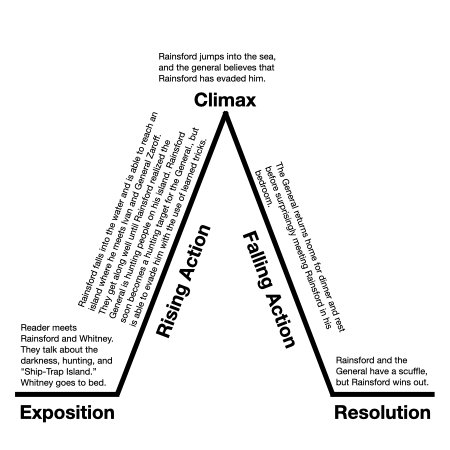
The falling action of The Most Dangerous Game is when Rainsford leaps from the cliff, evades Zaroff’s hounds, and confronts him in the bedroom.
Have you ever wondered about the intense moments after the climax in a story? It’s a place where tension starts to ease. Specifically, concerning Richard Connell’s short story, many are curious about what exactly follows the peak of the hunt. When we ask, ‘what is the falling action of the most dangerous game,’ we are digging into that part of the narrative.
This part of the story moves quickly. Rainsford is on the run and using all of his skills to survive. He makes a bold move that leads to his final encounter with Zaroff.

What is the Falling Action of “The Most Dangerous Game”?
Let’s dive into the exciting part of Richard Connell’s “The Most Dangerous Game” – the falling action! We’ve already seen the thrilling climb of the story, where Rainsford, our protagonist, goes from being a hunter to becoming the hunted. He’s trapped on Ship-Trap Island, forced to play a deadly game against the cunning General Zaroff. Now, the tension has reached its peak, and we’re moving toward the story’s conclusion. The falling action is like the rollercoaster slowing down after the big drop, but that doesn’t mean it’s any less important. It’s where the events directly resulting from the climax unfold and lead us to the final outcome.
The Immediate Aftermath of the Climax
The climax of “The Most Dangerous Game” occurs when Rainsford jumps from the cliff into the sea. This is the peak of suspense! It’s the moment when we’re not sure if Rainsford will survive, if Zaroff will win, or what exactly will happen next. The falling action begins right after this pivotal jump. It’s the portion of the story that details what happens as a result of Rainsford’s escape and sets the stage for the story’s final moments.
Rainsford’s Escape and Return
Rainsford’s plunge into the sea isn’t just a leap of faith; it’s a strategic move. He knows Zaroff thinks he’s won, that Rainsford is probably dead. But Rainsford is a resourceful hunter, and we soon learn that he’s successfully swum around the island and made his way back to Zaroff’s chateau. This is not a simple swim back to shore; it represents Rainsford’s cunning and determination to win the game he was forced into.
A Glimpse Inside Zaroff’s Confidence
Before Rainsford’s surprise return, Connell gives us a window into Zaroff’s mind. Zaroff, completely assured of his victory, is relaxed and self-satisfied. He believes he’s outsmarted Rainsford, and he’s enjoying a leisurely dinner and a pipe. This scene is crucial in showing how overconfident Zaroff has become, a key element in his upcoming downfall. His pride and belief in his superiority are his Achilles heel, setting the stage for Rainsford’s final act.
The Confrontation in Zaroff’s Bedroom
The most critical part of the falling action is Rainsford’s unexpected arrival in Zaroff’s bedroom. This isn’t some polite visit; Rainsford intends to finish the game they started. The atmosphere in the room is thick with tension. The hunter has become the hunted, and now the roles have shifted again. This is the final showdown, the last twist in their deadly competition.
Rainsford’s Challenge
Rainsford confronts Zaroff, declaring that he’s come to play the game again. But this time, the rules have changed. The playing field isn’t the jungle anymore; it’s the chateau itself, and Rainsford has the element of surprise on his side. This isn’t just a physical fight; it’s a battle of wits and wills. Rainsford’s boldness, standing in Zaroff’s luxurious bedroom, proves he won’t back down, and this challenge re-ignites the suspense. His transformation from prey to predator is complete.
Zaroff’s Acceptance
Zaroff, despite the shock of Rainsford’s return, doesn’t shy away from the challenge. He’s intrigued and somewhat amused that Rainsford has managed to survive and return for another round. Zaroff says that one of them will sleep in the bed tonight, and this sets up the final, fatal showdown. His acceptance shows that his passion for the hunt still dominates, even when he’s faced with an unexpected twist. He is more interested in the thrill of the hunt than in self-preservation.
The Duel and the Outcome
The final moments of the falling action are swift and decisive. While the story doesn’t give us all the bloody details, it makes it quite clear that Rainsford is the victor. The outcome is powerful in its simplicity. We understand that Rainsford has turned the tables on Zaroff, effectively becoming the hunter in his own game.
Implied Fight and Rainsford’s Victory
Connell uses very little dialogue here. Instead, he uses strong, suggestive language to convey the intensity of the final fight. The line “He had never slept in a better bed, Rainsford decided” is a testament to Rainsford’s victory. We are left to imagine the fight itself, and that adds to its power. This suggests that Rainsford not only won the physical battle but also triumphed over Zaroff’s twisted worldview. The story doesn’t explicitly say how Rainsford defeats Zaroff, leaving the reader to infer that Rainsford’s superior hunting skills and intelligence are key to his success. Rainsford’s sleep at the end is not just physical rest but also a symbol of his mental victory.
What Does the Ending Mean?
The conclusion of the falling action and of the story itself speaks to the theme of survival and the thin line between hunter and hunted. Rainsford started the story believing that the world is divided into two classes: the hunters and the huntees. After experiencing being hunted himself, he recognizes how barbaric Zaroff’s actions are. In the end, Rainsford proves that he has learned a lesson, and while he doesn’t become a man of peace, he learns the value of empathy. He takes a life to save his, and becomes a victor and not just a survivor.
Key Elements of the Falling Action
Let’s summarize the critical components of the falling action in “The Most Dangerous Game,” highlighting how they contribute to the resolution of the plot:
- Rainsford’s Return: His secret swim around the island and return to the chateau disrupts Zaroff’s confidence and sets the stage for the final confrontation.
- Zaroff’s Overconfidence: His relaxed attitude and belief in his invincibility make him vulnerable to Rainsford’s surprise attack.
- The Bedroom Confrontation: This is where Rainsford directly challenges Zaroff, changing the game’s rules and re-establishing him as an active player.
- The Implied Duel: Although not explicitly described, the suggestion of a fight and Rainsford’s subsequent victory conclude the game decisively.
- The Ambiguous Resolution: While we know Rainsford wins, we don’t see the details of the fight, which adds suspense and also allows the reader to consider the implications of Rainsford’s transformation.
Why the Falling Action Matters
The falling action isn’t just about wrapping things up; it’s an essential part of the story’s impact. It connects directly to the climax and shows the effects of the choices the characters make during the main conflict. Without a strong falling action, the story would feel incomplete, leaving many questions unanswered.
Resolution of the Conflict
The falling action directly resolves the central conflict of the story – the deadly game between Rainsford and Zaroff. Rainsford doesn’t just escape; he takes action and faces Zaroff on his own terms. This provides a satisfying sense of closure for the reader. The conclusion of the duel answers the key question: “Who will survive the game?” This element of a clear victor gives a sense of resolution to the story.
Reinforcement of Themes
The falling action reinforces the story’s main themes, such as the nature of hunting, the value of life, and the dangers of unchecked power. Rainsford’s actions at the end highlight his transformation and challenge the reader to rethink what it means to be a hunter or the hunted. The story’s conclusion emphasizes the idea that empathy, self-preservation, and a respect for life are important. The final outcome is not just about who wins the game; it’s about the moral questions raised throughout the narrative.
Emotional Release
After the intense suspense of the rising action and the climax, the falling action provides a sense of emotional release. The reader finally learns what happens to the characters and can begin to make sense of the events. While the ending isn’t completely happy, it is satisfying because it resolves the conflict. Readers feel a sense of justice or, at least, resolution. This cathartic release is an important part of the story’s emotional effect.
In Conclusion, the Importance of Understanding Falling Action
Understanding what is the falling action of “The Most Dangerous Game” is vital to comprehending the entire story. It’s not just about what happens after the climax, it’s how those events create the overall meaning and impact of the story. The falling action is a critical bridge, taking us from the peak of the conflict to the final resolution. Through Rainsford’s return, the confrontation, and the final duel, we come to understand the story’s complete message. By examining this part of the plot, we can appreciate how Connell craftily uses each element to create a lasting effect on the reader. In the end, “The Most Dangerous Game” is a testament to how important each part of the plot is, but how vital is the falling action to a powerful story.
The Most Dangerous Game Plot Chart
Final Thoughts
The falling action of “The Most Dangerous Game” begins after Rainsford leaps into the sea. He swims to Zaroff’s chateau, a must for his survival. Rainsford then confronts Zaroff in his bedroom, a surprising turn.
He successfully wins the final hunt. The story ends with Rainsford sleeping in Zaroff’s bed, implying he has killed Zaroff. What is the falling action of the most dangerous game concludes with Rainsford now the victor.

