
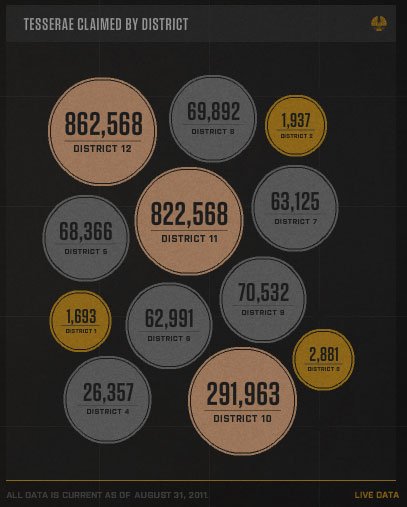
The tesserae in The Hunger Games are a year’s worth of grain and oil, offered by the Capitol in exchange for adding your name to the reaping an additional time.
Ever wondered what exactly drives some of the poorer districts to a seemingly endless cycle of suffering in the Hunger Games? It often comes down to a desperate choice regarding food. We often hear talk of the ‘reaping’ but what is the tesserae in the hunger games and how does it tie into the deadly event?
This system, seemingly designed to keep people dependent, works by manipulating their most basic need – the need to survive. Taking tesserae becomes a grim necessity, perpetuating the cycle of inequality and despair within Panem.

What is the Tesserae in the Hunger Games?
Let’s dive into the world of Panem and talk about something called tesserae. If you’ve watched “The Hunger Games” or read the books, you know that life in the districts isn’t easy. People are often hungry, and families struggle to get by. The tesserae is a system that the Capitol uses to control people, and it’s a really important part of the story. Basically, it’s a way for kids to get extra food, but it comes with a big, scary catch. Let’s explore this concept in detail and understand how it impacts the characters and the story.
The Basics of Tesserae
So, what exactly is a tesserae? Think of it like a lottery ticket, but instead of winning money, you’re trading your name into a much more dangerous game. In Panem, each year, a “reaping” takes place in every district. This is when the names of children between the ages of 12 and 18 are drawn to participate in the Hunger Games. Now, the Capitol knows that many families are starving. To make things a little less terrible, they offer tesserae. If a child signs up for a tesserae, the Capitol gives them a small amount of grain and oil to help their family survive. This food isn’t a huge amount, but it is often the difference between being very hungry and surviving.
But here’s the big catch: every time a child takes a tesserae, their name is entered an extra time into the reaping. So, if you take one tesserae, your name is in the reaping twice. Take three, your name is entered four times. As children take tesserae year after year, their chances of being chosen become much higher. The Capitol makes it seem like they’re helping, but they are really making the odds of that child being picked to participate in the Games much higher. It’s a way to manipulate the poor, forcing families to choose between hunger and a greater risk of death.
The Impact of Tesserae on District Life
The tesserae system has a huge impact on the lives of people in the districts. It creates a culture of desperation and fear. Families live with the knowledge that the more they struggle with food, the more danger they put their children in. Here are a few ways the system affects them:
- Increased Reaping Chances: The obvious impact of taking tesserae is the extra entries in the reaping. This means that children from poorer families who depend on tesserae are much more likely to be picked for the Games. It isn’t fair because it targets those who are already the most vulnerable.
- Perpetuating Poverty: The system makes it hard for families to break out of poverty. They are trapped by the need for extra food, which in turn increases the chances of their children being chosen for the Games. The cycle of poverty becomes a life sentence because of the constant fear of the Games.
- A Form of Control: The Capitol uses tesserae as a tool to control the districts. By offering a small amount of food, they manipulate people and keep them dependent on the system. It’s like they’re saying, “We’ll help you, but at a cost.” This control makes rebellion or resistance more difficult.
The Emotional Burden
Beyond the statistical odds, the tesserae system creates a deep emotional burden for families. Imagine a parent having to decide between feeding their child today and potentially sending them to certain death later. That is the reality for many families in the districts. This system isn’t just about food; it’s about love, survival, and impossible choices. The guilt that families carry over this situation is something that affects their day to day lives.
Tesserae and the Characters
Let’s see how tesserae affects specific characters in “The Hunger Games” series.
Katniss Everdeen
Katniss, the main character, is a great example. Her family, especially after her father’s death, is always struggling to survive. She has taken tesserae for years to help her mother and younger sister, Prim. Because of the tesserae she’s taken over the years, her name appears many times in the reaping. It’s her deep concern for family that drives her choices.
- Her Courageous Act: When Prim’s name is called at the reaping, Katniss volunteers as tribute, to save her sister. This act of courage highlights how much the tesserae and the Games threaten the families and how much they need each other.
- The Weight of Responsibility: We see Katniss’s burdens stemming from the system of tesserae because she feels responsible for taking care of her family and understands that every tesserae increases the odds of being selected.
Other District 12 Characters
Other characters in District 12 also grapple with the tesserae. We see families working hard to provide, always facing the threat of the reaping because of the system. Most characters in the district have taken out tesserae due to limited food, further demonstrating the hardships of poverty and the desperate measures taken to survive in Panem.
Why is the Tesserae System Unfair?
The tesserae system is fundamentally unfair for a couple of key reasons:
- Punishing Poverty: It targets the most vulnerable families. Those who need food the most are put at higher risk of losing a child to the Hunger Games. It’s a cruel cycle where poverty is punished.
- Manipulating the Poor: The Capitol uses the tesserae as a way to control and manipulate the people. They make them dependent on their system and take advantage of their desperation. This allows the Capitol to maintain power without actually helping people or considering the morality of the situation.
- Unequal Odds: The chances of getting picked in the reaping aren’t equal. Children from wealthier districts, who don’t need to take tesserae, have a much lower chance of being chosen. It’s a blatant form of injustice built right into the system.
A Tool of Oppression
The tesserae isn’t just about food and the Hunger Games; it’s a tool of oppression used by the Capitol to keep people in the districts in check. By forcing families to make impossible choices, they maintain their dominance and power. The system discourages any form of resistance because people are too busy trying to survive and provide for their families.
The Strategic Use of Tesserae by the Capitol
The Capitol didn’t create the tesserae system just to be cruel, although it is undoubtedly cruel. There are more strategic reasons behind it:
- Population Control: By increasing the likelihood of poorer children being selected for the Games, the Capitol indirectly controls the population of the districts. This is more effective than directly starting a war with the districts because the system forces people to fight amongst each other.
- Creating Division: The system creates a division between the wealthier districts, who don’t need tesserae, and the poorer ones, who depend on it. This keeps them from uniting against the Capitol, as they’re focused on their own survival.
- Maintaining Fear: The tesserae system keeps the fear of the Hunger Games fresh in the minds of the people in the districts. This fear keeps them compliant and prevents any rebellion. It’s a constant reminder of the Capitol’s power.
- Propaganda: The Capitol makes the tesserae system seem like a generous gesture. They portray it as help for the districts. This propaganda disguises their cruelty and keeps them in power by making it look like they have the district’s best interests in mind when the reality is that they’re causing suffering and loss.
Tesserae Compared to Other Forms of Oppression
The tesserae in “The Hunger Games” is a unique type of oppression, but it shares elements with other types of oppression seen in the real world. Here’s a comparison:
| Feature | Tesserae System | Real-World Examples |
|---|---|---|
| Target of Oppression | The poor and vulnerable in the districts | Marginalized groups based on race, class, religion, etc. |
| Method of Control | Manipulating the need for food and survival | Economic exploitation, political disenfranchisement, propaganda |
| Emotional Impact | Creates fear, desperation, and impossible choices for families | Trauma, mental health issues, lack of opportunities |
| Consequences | Increased chances of death through the Hunger Games | Poverty, discrimination, lack of social mobility |
| Perpetuation of System | Cyclical nature where poor families need tesserae, and children are exposed to the risk of the Games | Systematic barriers that create disadvantages for targeted groups. |
Just like in the real world, the tesserae system perpetuates cycles of poverty and inequality, making it incredibly difficult for the targeted population to break free. In “The Hunger Games,” it highlights how oppressive regimes maintain power by exploiting and controlling those without power.
Beyond the Games: The System’s Legacy
The impact of the tesserae system extends far beyond just the Hunger Games themselves. It symbolizes a larger issue of social inequality and exploitation. It’s a constant reminder that the Capitol controls every aspect of district life. Even after the events of the Games, the system’s impact remains etched in the hearts of the survivors and the families of those who lost loved ones. The unfairness of the system is a major driving force in Katniss and the rebellion, as it showed her first hand just how unfair and cruel the Capitol really was.
The tesserae system in “The Hunger Games” is a powerful illustration of how oppressive systems use subtle methods to control and manipulate people. It isn’t just a plot point but a mirror reflecting real-world issues, causing us to question the ways that power and inequality affect our society. It helps us realize that even seemingly small acts of injustice can have huge consequences on peoples lives.
The tesserae system is a clever literary device that helps highlight the themes of control, poverty, and resistance in Suzanne Collins’ “The Hunger Games” series. It makes us realize the importance of standing against injustice, even when the odds feel stacked against us. The story reminds us that even in the face of a cruel system, there is still the possibility of hope, courage, and rebellion. The Hunger Games, and particularly the tesserae system, are not just fictional tales; they are a reflection of real-world power imbalances and human struggles for survival and freedom.
Why do the career tributes not use tesserae?
Final Thoughts
Tesserae in the Hunger Games represent a desperate bargain. District residents can trade a year’s worth of grain for added entries into the reaping. This choice greatly increases their chance of being selected as a tribute.
‘What is the tesserae in the hunger games’ becomes tragically clear: it is a tool of oppression. The Capitol uses it to maintain control, preying on the desperation of the impoverished districts, forcing families to gamble with their children’s lives for meager survival.

