
‘Dance Aerobics’ on the Nintendo Power Pad is often cited as the first rhythm game.
Ever wondered about the origins of those addictive button-tapping experiences? We often take for granted games where music dictates our actions. But what was the first rhythm game? It’s a question that leads us back to a time of clunky peripherals and simpler game design.
Long before Guitar Hero and Dance Dance Revolution dominated arcades, there existed a game that pioneered the genre. This initial attempt offered a different kind of challenge, one relying on physical movement, not just fingers. This early title planted the seed for what we play today.

What Was the First Rhythm Game?
Figuring out what the absolute first rhythm game was is a bit like digging for treasure – there are lots of cool possibilities, but it depends on how you define “rhythm game”! Let’s dive in and explore some of the earliest contenders, looking at both electronic and non-electronic games. It’s a journey through time, where we’ll see how the simple idea of combining music and gameplay started and grew into the games we love today. We will explore some oldies that were the foundation for all modern rhythm games.
Pre-Electronic Rhythms: The Seeds of the Genre
Before computers and consoles, people still enjoyed games with a rhythmic element. These weren’t video games in the way we know them, but they were definitely playing with rhythm and timing. They paved the way for what would eventually become rhythm-based electronic games. Let’s look at these ancestors:
Traditional Musical Games
Think of clapping games, singing games, and dances that involved specific movements timed with music or chants. These aren’t games with a screen, but they are all about rhythm and coordination. Games like patty-cake, where you clap hands with a partner to a rhythm, were very common. These games developed a sense of rhythm and coordination, which are the base for rhythm games.
- Clapping Games: Many cultures have games where clapping patterns are memorized and performed.
- Jump Rope Rhymes: Kids have been jumping rope to rhymes for generations, demanding a sense of timing.
- Folk Dances: Traditional dances often involve specific steps and movements in time with music.
Early Mechanical Music Devices
While not games, music boxes and early player pianos used mechanical systems to recreate musical patterns. They helped establish how we could think about music as sequences of actions. These weren’t something you interacted with like a game, but they laid the foundation for the idea of sequenced music. They showed us how rhythms and melodies could be captured and replayed, which would become a key idea behind the rhythm games we know today.
- Music Boxes: Small, intricate machines that played melodies through a rotating cylinder with pins that plucked a comb.
- Player Pianos: A piano that “played itself” using a paper roll with holes that triggered the keys.
The Dawn of Electronic Rhythm Games
Now, let’s move into the era of electronics! This is where rhythm games started to resemble what we recognize today, with buttons, screens, and catchy tunes. Here, some very early games were the foundations.
Early Computer-Based Music Programs
Before dedicated games, people were playing with music on computers. Early music software allowed people to create and manipulate sounds. This paved the way for games that would use these technologies. People would put together sequences of notes and experiment with different rhythms. Although not games in the common sense, these programs are key to understanding the emergence of rhythm games.
Simon (1978): A Memory Game with Rhythmic Elements
While not purely a rhythm game, Simon is a crucial stepping stone. It was a handheld electronic game with four colored buttons that lit up in a sequence. You had to repeat the sequence, which got longer and faster as you played. The light and sound patterns made it feel rhythmic, even if the focus was memory. Simon showed us that people enjoyed patterns of light and sound, and it used this in a fun way. It really changed how people saw interactive electronic entertainment.
- The Gameplay: Players watched a sequence of colored lights and listened to the corresponding tones, then tried to reproduce the sequence correctly.
- Why it Matters:Simon demonstrated the appeal of pattern recognition and repetition, core features of rhythm games. It brought that sense of sequence and timing into the electronic game world.
Early Dedicated Rhythm Games: The First Real Steps
Here’s where the picture gets clearer. We start seeing games that are specifically designed to make you move in time with the music. These are the direct ancestors of the rhythm games we see today.
Dance Aerobics (1987): The Home Video Start
Before consoles were all that popular, home videos were an up and coming thing. Dance Aerobics, released for the Nintendo Entertainment System (NES), was a home video and game hybrid. It featured an exercise instructor on screen, and players were meant to mimic the instructor’s movements. While not based on music, the actions were often performed to a beat, and rhythm was at its core. This game was an early attempt to make fitness and rhythm interactive. It was one of the early forms of interactive dance based game, that would inspire many more.
- The Combination of Gameplay: It combined on-screen instructions with the player’s physical movement.
- The Rhythm Element: Even though it was based on exercise, the actions needed to be performed with a sense of timing and rhythm.
Dance Dance Revolution (1998): A Landmark Moment
Many consider the arcade game Dance Dance Revolution (DDR) the turning point for the modern rhythm game. DDR was the game that brought rhythm-based gaming into arcades and then home. In this game, players step on directional arrows on a large pad in sync with arrows on a screen. It was all about foot movement, timing, and music.
The combination of dance and gaming proved extremely popular, creating a social phenomenon that would influence many rhythm games to come. The simple idea of following the arrows was very intuitive and could be learned quickly by anyone, but the game also had enough challenge to be enjoyed for very long periods of time.
- Gameplay: Players stepped on a dance pad with directional arrows in time with the music and corresponding arrows on the screen.
- Why it’s Important: DDR made rhythm games into a public and social activity and popularized the idea of physical input being a core element of playing a rhythm-based video game.
- The Innovation: DDR used both visual and audio cues and a physical controller for a full-body rhythmic experience.
Early Rhythm Games on Consoles and Handhelds
The success of games like DDR inspired many more rhythm games to come to consoles and handheld devices.
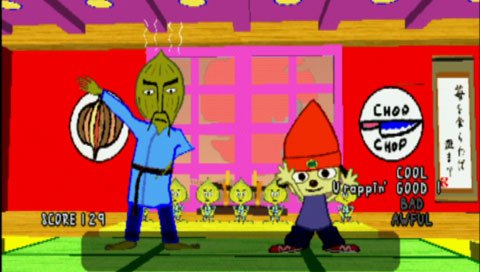
PaRappa the Rapper (1996): Quirky and Catchy
Released on the PlayStation, PaRappa the Rapper is another game that was very important in the development of rhythm games. In this game, you play as a rapping dog, and had to hit the controller buttons in time with the beat, rapping to get through each level. It had an interesting cartoon aesthetic, and each character and level was very unique. The game had a very silly story and an even more silly way of having you rap. It really introduced music as the center of gameplay and made it very interesting for many people.
- Gameplay: Players pressed buttons in time with the on-screen prompts to make their character rap.
- Why It Matters: PaRappa made rhythm gameplay accessible and fun, focusing more on the feeling of the music rather than just following the patterns.
Beatmania (1997): The DJ Experience
Another important game to appear on arcades was Beatmania, which was also from Konami. This game let players use a special controller that looked like a DJ setup, and gave players a unique rhythm experience. It had a variety of songs and each had a different beat. Beatmania showed the importance of different types of instruments and music, which would inspire future rhythm games.
- Gameplay: Players used a turntable and keys to create music in time with the song.
- Why It Matters: Beatmania offered a very distinct and unique gameplay compared to others and also showed the importance of various musical instrument based controller.
- Gameplay: Players used guitar-shaped controllers to hit notes in time with music on screen.
- Impact: Guitar Hero and Rock Band popularized the use of instrument-based controllers, and brought the rock star feeling home.
- Gameplay: Players use touch controls on the phone or tablet screen in time with the music.
- The Appeal: These mobile games bring very varied and unique music to the rhythm game genre, with many free and low-cost experiences.
The Evolution Continues: Where Rhythm Games are Now
From those early steps, the rhythm game has evolved a lot, branching into many subgenres, and there are many different types of rhythm games now. From dancing to playing instruments and singing, there is likely a rhythm game for you.
Guitar Hero and Rock Band
The guitar and band genres would not have existed without these earlier games, and brought with them a new wave of rhythm game success. These games used special instrument controllers and allowed players to feel like real rock stars. They brought rhythm games into the living room and made the genre popular again.
Modern Mobile Rhythm Games
Today, rhythm games are extremely popular on mobile devices. Games like Cytus and BanG Dream! offer a lot of fun and variety of music with touch screen controls. These games are more accessible than ever before and bring the rhythm game experience to phones and tablets.
Looking back, it’s clear that the first rhythm game wasn’t just one single game, but a journey of different games and ideas and also various games and genres that all have a little bit of rhythm to them. From clapping games to Simon to Dance Dance Revolution and beyond, we can see how rhythm games have grown and changed. Each step has brought us to where the genre is today and it’s still moving in many new and interesting directions. It is really amazing to see how we went from simple clapping games to complex video games with full-body and instrument controllers. The story of rhythm games is still being written, and the future looks full of new and creative ways to play with music.
The First Rhythm Game
Final Thoughts
The answer to what was the first rhythm game is complex. Several contenders exist, making a single definitive answer tricky. We explored early electromechanical games and those with music at their core.
Early arcade machines and even simple toys experimented with music and timing. These efforts laid the groundwork for later titles. Identifying the very first one is difficult.
Ultimately, understanding the history means acknowledging varied contributions. Each game helped define the genre we know today. Pinpointing what was the first rhythm game remains an ongoing discussion.

