
The primary conflict in The Hunger Games is the struggle of individuals, particularly Katniss, against the oppressive Capitol and its brutal practice of the annual Hunger Games.
Have you ever wondered, when engrossed in the thrilling world of Panem, exactly whats the conflict in hunger games? It’s more than just kids fighting to survive. The series centers on the systemic injustice and a fight for freedom.
The Capitol maintains absolute power, using the Games to control the districts. This forces children to participate in a deadly televised event, causing a major societal conflict.
Katniss Everdeen’s defiance further fuels this conflict, making her a symbol of rebellion.

What’s the Conflict in The Hunger Games?
The Hunger Games isn’t just a story about kids fighting in a deadly arena. It’s a complex tale with multiple layers of conflict, making it so much more than just a battle royale. At its heart, the series explores the brutal power dynamics between the wealthy Capitol and the impoverished districts of Panem. Let’s dive deep into the different kinds of conflicts that fuel this captivating story.
The Main Conflict: The Capitol vs. The Districts
The most obvious conflict is the one between the Capitol and the 12 districts. This is a clash of power, resources, and control. Let’s break it down:
The Capitol’s Oppression
The Capitol, the shiny and technologically advanced center of Panem, holds all the power. They live in luxury, enjoying endless feasts and entertainment, while the districts struggle for survival. The Capitol forces each district to provide resources and labor, keeping them in a state of poverty and dependence. The Hunger Games themselves are the ultimate symbol of the Capitol’s power – a yearly reminder that the districts are at their mercy. It’s a cruel and unusual punishment, designed to control and intimidate. They want to make sure no one forgets what happens if they step out of line.
District Resistance (or Lack Thereof)
For the most part, the districts are oppressed and scared. They’ve lived under Capitol rule for so long that many have lost the hope of ever being free. Fear of the Capitol and its Peacekeepers prevents them from openly rebelling. But, under this seemingly calm surface, anger and resentment are simmering. Small acts of defiance, like Katniss’s hunting outside the fence, are small signs of this brewing rebellion. We see districts with different resources and specializations like coal mining, lumber, farming, and they are all under the same oppression of the capitol.
Internal Conflicts: The Characters’ Struggles
Beyond the big conflict between the Capitol and the districts, there are many internal conflicts that the main characters face. These personal battles add depth to the story and make the characters relatable.
Katniss Everdeen’s Internal Struggles
Katniss, the protagonist, is a strong and resourceful character, but she’s also deeply conflicted. Let’s explore her personal struggles:
- Survival vs. Morality: Katniss constantly grapples with the need to survive versus her own morals. She makes difficult choices in the arena that she questions afterward. She isn’t a cold-blooded killer; she’s acting out of necessity to protect herself and her loved ones.
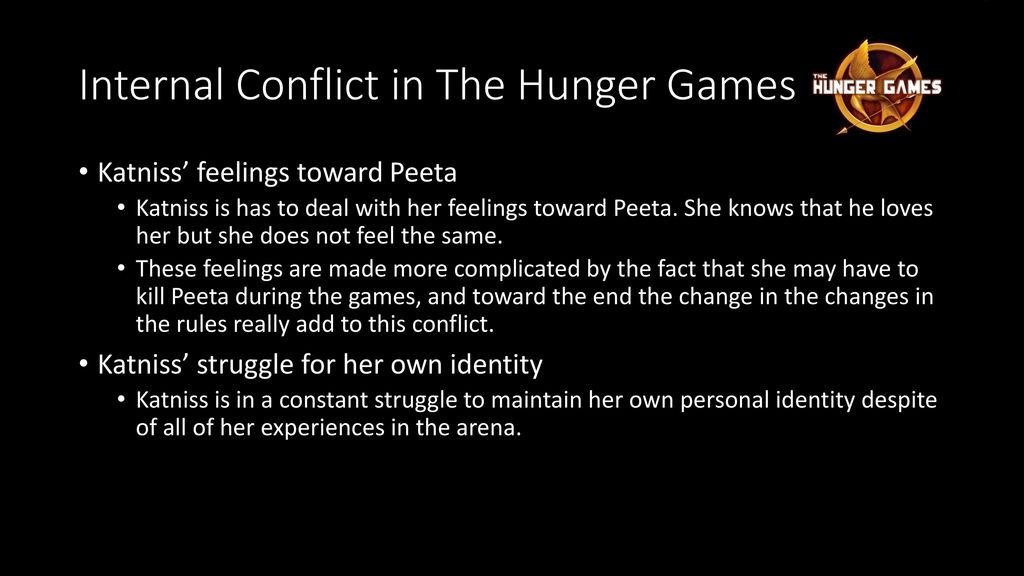
- Love and Protection: She loves her sister Prim and her mother and is fiercely protective of them. This protectiveness drives many of her actions, including volunteering as tribute in Prim’s place. She cares about Gale, too, and also feels conflicted about her budding relationship with Peeta. These feelings all clash and create a constant tug-of-war within her.
- Trust Issues: Katniss struggles to trust others, especially those from the Capitol. She questions everyone’s motives, often relying only on her instincts. This comes from the world she lives in, where betrayal and manipulation are common.
Peeta Mellark’s Internal Struggles
Peeta, the male tribute from District 12, also faces his own challenges:
- His Love for Katniss: Peeta’s genuine affection for Katniss is a big part of his internal conflict. His feelings are real, and he has to deal with this emotional vulnerability within the brutal environment of the Games. He tries to protect Katniss, even at his own expense.
- Maintaining his Identity: Peeta struggles to maintain his kindness and gentleness within the arena. He refuses to become the cold killer that the Capitol wants the tributes to be. He tries to be himself, even if it puts him at a disadvantage.
- Facing the Capitol’s Manipulation: Peeta knows the Capitol is using him and Katniss as pawns in their game. He must play along, often feeling powerless as he sees how he is controlled by the Capitol.
Other Character’s Personal Conflicts
Many other characters have their internal struggles too that contributes to the overall story, like:
- Haymitch Abernathy’s Past: The victor of the 50th Hunger Games, Haymitch is burdened by his past, dealing with trauma and alcoholism. His internal conflict is a result of the horrors he has experienced and the guilt of being a victor. He is an essential character in Katniss and Peeta’s story and plays an important role as a mentor.
- Gale Hawthorne’s Rage: Gale’s growing anger against the Capitol fuels his desire for rebellion. His internal struggle is about choosing violence and action against his desire for safety.
- President Snow’s Calculated Evil: President Snow, the main antagonist, also has an internal conflict. His motivations are complex and not as simple as just being a cruel dictator. He seems to have an internal conflict between his control over Panem and the fear of losing it.
Thematic Conflicts: What the Story Represents
The Hunger Games isn’t just about fighting and survival; it also explores larger, thematic conflicts that are important to our world. These conflicts give the story more layers and make us think deeply about society and humanity.
The Abuse of Power and Control
The Capitol’s control over the districts is a clear example of the abuse of power. The Capitol uses fear and intimidation to maintain its grip on power. This power dynamic shows how an elite group can take advantage of the majority and treat them like they have no value. The Hunger Games serves as a reminder of what happens when a group holds too much authority and how such imbalance can result in injustice and oppression.
Social Inequality
The extreme wealth of the Capitol compared to the poverty of the districts highlights the problem of social inequality. It shows the imbalance and unfairness that can happen when a small group has all the resources while others have very little. This conflict raises questions about fairness and justice in society. The differences in life between a citizen of the Capitol and a district citizen are a big part of what makes the story important.
Manipulation and Propaganda
The Capitol uses the media and propaganda to control the narrative and manipulate the people of Panem. They twist the truth to make themselves look good and to keep the districts in line. This highlights the dangers of misinformation and shows how governments or organizations can use propaganda to control the population. The way the Capitol portrays the Hunger Games is a great example of this, as they make it seem like a celebration, when it’s truly an act of violence and domination.
The Cost of War
The Hunger Games explores the physical and emotional damage caused by war. It shows the toll that violence and conflict take on people and societies. The arena is a microcosm of the larger conflict and shows how war dehumanizes people. The story shows that there are no winners in war, only victims. The consequences of violence are evident throughout the books, affecting many characters with severe trauma.
The Struggle for Identity
Many of the characters in the Hunger Games, especially Katniss and Peeta, struggle to maintain their identity within a system that wants to control them. They must make tough choices between staying true to themselves and doing what they need to survive. It shows how systems of power and control can try to take people’s sense of self and force them to conform. This conflict is essential in understanding the story’s themes about the importance of personal freedom and resistance against oppressive systems.
Conflict in Each Book
Let’s look at how the conflict changes throughout the series:
The Hunger Games
In the first book, the primary conflict is Katniss’s fight for survival in the arena. She must battle the other tributes while also trying to navigate the Capitol’s games. She must make allies and enemies, and she must make big decisions about who she wants to be in this awful arena. The main conflicts include the external struggle for survival in the arena and the internal conflict of her own morality in killing other children and the feeling of love and compassion for Peeta.
Catching Fire
The focus shifts from the arena to the growing rebellion. The main conflict here is Katniss’s struggle to deal with the aftermath of the Hunger Games and the rising tensions between the Capitol and the districts. She’s thrust into the Quarter Quell, another deadly game, but she also begins to see the bigger picture. The external conflicts include the games and the Capitol’s manipulation, and the internal conflicts include her growing feelings for Peeta and her growing responsibility to the districts who begin to look to her as a symbol of the rebellion.
Mockingjay
In the final book, the story is full of war and revolution. The conflict becomes about the districts and their fight to overthrow the Capitol. Katniss is now the symbol of rebellion, and she must figure out how to navigate war and her own personal struggles. She deals with the moral questions of war, and the consequences of rebellion. The external conflict is focused on the war, and the internal conflict of whether or not the sacrifice of so many lives is worth the freedom of Panem.
In each book, the core conflict – the Capitol vs. the districts – remains, but the focus and scale changes, making the story compelling and engaging throughout the entire series. These different kinds of conflicts all play important roles in this popular series and teach us important lessons about power, control, and the human spirit.
Understanding the various layers of conflict in The Hunger Games makes it more than just an action-packed adventure. It’s a thought-provoking story that explores big ideas about society, power, and what it means to be human. The constant clashes between the Capitol and the districts, along with the characters’ internal battles, create a truly unforgettable and meaningful tale that stays with you long after you finish reading the last page.
The Entire Hunger Games Timeline Explained
Final Thoughts
The main conflict in The Hunger Games centers on the oppressive Capitol and the districts’ struggle for survival. Katniss Everdeen’s participation in the Games ignites a rebellion. This conflict is a fight against systemic injustice and the Capitol’s brutal control.
Ultimately, whats the conflict in hunger games is about the fight for freedom and a better future. The must-win scenario for the districts is overthrowing the Capitol’s power. This is a struggle for basic human rights and dignity.

