
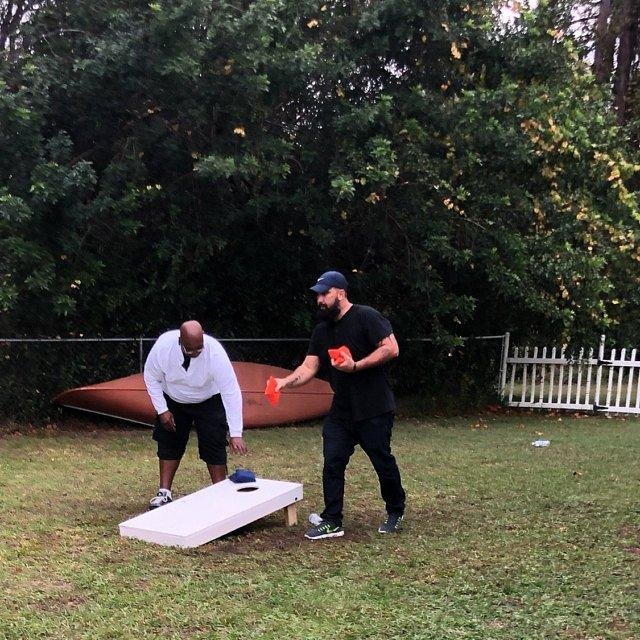
The game cornhole likely originated in rural Germany in the 14th century, later evolving in the American Midwest.
Ever wondered about the origins of that backyard beanbag tossing game? The question of ‘where did the game cornhole originate’ often pops up at summer cookouts. It’s a fun pastime many enjoy, but few know its history.
This simple game, now popular across America, has roots reaching back further than most imagine. So, let’s explore the path of cornhole and its somewhat surprising beginnings.

Where Did the Game Cornhole Originate?
Figuring out exactly where cornhole began is like trying to find the first raindrop in a storm – it’s tricky! We don’t have a single “aha!” moment, but rather a collection of stories and theories that paint a picture of how this beloved backyard game came to be. It’s like a historical puzzle with missing pieces, but that’s part of what makes the game so interesting. Let’s explore the different ideas about cornhole’s past.
The German Roots Theory
One of the most popular ideas about cornhole’s start points to Germany. The story says a cabinet maker named Matthias Kuepermann created a game similar to cornhole in the 1800s. He supposedly wanted to make a fun game for kids to play using whatever wood scraps he had left over. According to this tale, he built a slightly angled platform with a hole and used bean bags instead of corn-filled bags.
This game, it is said, made its way over to the United States with German immigrants. It could have slowly changed from its original form to the version we know today, with corn-filled bags. It’s a great story that adds a bit of Old World charm to the game we love playing at cookouts.
Why this theory might be true:
It has a historical link to German craftsmanship.
The concept of using readily available materials like wood and beans makes sense for that time.
Migration patterns could easily have brought the game to America.
Why this theory might be difficult to prove:
Finding written proof from that time period is tough.
Games often change as they move around, making it harder to trace them back to a single creator.
It’s mainly an oral history, passed down through stories instead of documents.
The Kentucky Connection
Another strong contender in the cornhole origin story takes us to Kentucky. This version is a bit different and suggests the game we recognize today evolved in the rural areas of this state. Some believe that in the early 1900s, farmers or rural communities created cornhole. They would toss sacks of corn kernels at angled platforms simply for fun and competition. They could have used the game to pass the time after long work days or during casual social gatherings. The game then grew in popularity within this region before spreading out to the rest of the country.
Key elements of the Kentucky theory:
It focuses on practical, rural origins using corn from farms.
The game’s setup aligns with readily available farm materials like wood and sacks.
It explains why corn became the filling for the bags.
Many current players and enthusiasts consider Kentucky a cornhole hotspot.
How this could have happened:
Simple beginnings like farmers having fun games while at work.
Local tournaments and friendly competitions made the game more popular.
Travel and migration could have easily helped spread it to other states from Kentucky.
The Midwestern Spread
As cornhole’s popularity grew, it seemed to find a sweet spot in the Midwest. States like Ohio, Indiana, and Illinois really grabbed onto the game. Perhaps the Midwest’s large farming communities found it easy to adopt the rural aspect of the game. It is also probable that the family gatherings and local festivals within these areas allowed cornhole to take root and flourish. In these states, the game slowly became a classic backyard pastime, growing from casual play to organized tournaments.
How the Midwest played a big part:
The region’s strong sense of community made it easy for the game to gain popularity.
Local events and festivals provided opportunities for people to gather and enjoy playing.
The growth of cornhole in the Midwest helped spread it to other parts of the USA.
The Modern-Day Boom of Cornhole
While cornhole has been around for many years, the game saw a huge popularity surge in the past couple of decades. This happened for a number of reasons, which include increased television coverage and the creation of organized cornhole associations.
Factors in cornhole’s modern growth:
Television Coverage: Sports networks like ESPN started broadcasting cornhole tournaments. This helped expose the game to a very large audience.
Organized Associations: Groups like the American Cornhole Association (ACA) and the American Cornhole League (ACL) started to set up official rules, leagues, and tournaments. This added a level of structure and legitimacy to the game.
Accessibility: Cornhole is easy to set up and play. You don’t need a lot of gear, and people of all ages and skills can play.
Social Aspect: It is a perfect game to play at picnics, parties, and tailgates, making it a very enjoyable social event.
How formalization helped the game:
Standardized rules made tournaments fair and helped to create consistent gameplay.
Leagues provided a competitive element, boosting interest in playing more often.
National competitions brought in even more players and viewers.
Cornhole Variations Around the World
Even though cornhole is mainly popular in the United States, similar games exist in other countries. These variations show that the idea of tossing objects into holes for fun is universal. While these games might have different names and slightly different rules, the basic idea is the same.
Examples of Similar Games:
Bean Bag Toss (Various countries): This is a general name for any game using bean bags and a target. Many cultures have their versions of it.
Washer Toss (United States): Although played with washers instead of bags, the concept of throwing objects at a target is similar.
Holes (Various countries): This is a broad group of games where you throw things to reach a target.
Molkky (Finland): While this game is different, the idea of tossing objects at a target is similar in the aim of knocking down numbered pins.
The Material of Cornhole Boards
Cornhole boards are typically constructed from plywood. The standard size for a cornhole board is 2 feet wide by 4 feet long, and the hole is 6 inches in diameter, placed 9 inches from the top and centered horizontally. The frames around the boards are typically made from 2×4 lumber. The materials are inexpensive and readily available, which helps make cornhole accessible to more people. People often personalize their boards with paint, decals, or custom wood.
The dimensions of the Cornhole board:
| Feature | Measurement |
|—————–|——————–|
| Board Width | 2 feet |
| Board Length | 4 feet |
| Hole Diameter | 6 inches |
| Hole Placement | 9 inches from top, centered |
The Cornhole Bags
Traditionally, the cornhole bags are filled with dried corn kernels. This is how the game gets its name. These days, many players are opting for bags filled with resin or other synthetic materials, especially in areas where humidity or insects might be a problem. These materials tend to be more durable and less likely to decompose. The typical size of a cornhole bag is 6 inches square. The official weight of a bag is 16 ounces. Bags can be made with a variety of materials such as duck cloth or suede.
Key features of cornhole bags:
Traditionally filled with corn, now often with resin or plastic pellets.
Standard size is about 6 inches square.
Official weight is 16 ounces.
Made with durable materials like duck cloth.
Cornhole: More Than Just a Game
Cornhole has evolved from a simple pastime to a serious competitive sport. What started as tossing bags at a board in backyards, has turned into leagues, tournaments, and even television broadcasts. More than the competition aspect, cornhole brings people together. It is an easy game to learn and play, making it ideal for people of all ages. It doesn’t require a large area to play, which is another reason why so many people can play and love it. This is why cornhole continues to be a popular and enduring part of our outdoor culture.
It is a testament to how simple games, when built on community and the fun of playing, can grow to be more than just entertainment. The exact location where cornhole began may remain a mystery, but its growth and popularity is not! Whether you attribute its beginning to German cabinet makers, Kentucky farmers, or a combination of both, one thing is clear: cornhole is here to stay, and everyone can enjoy it.
The journey of cornhole from its mysterious origins to its modern popularity shows how a simple concept can bring joy and create memorable moments for people all over the world. Whether it’s a backyard barbeque or a national championship, the spirit of fun and friendly competition remains at the heart of this classic game.
Cornhole 101: The ‘Hole' Story of a Backyard Game That's Now a Professional Sport
Final Thoughts
The origins of cornhole remain somewhat murky, with various theories. Some believe it began in 14th-century Germany. Others credit 19th-century farmers in the Midwest.
Regardless of its exact birth, this simple game grew in popularity. The question, ‘where did the game cornhole originate’, still lacks a definitive answer. What we do know is that the game is very fun.

