
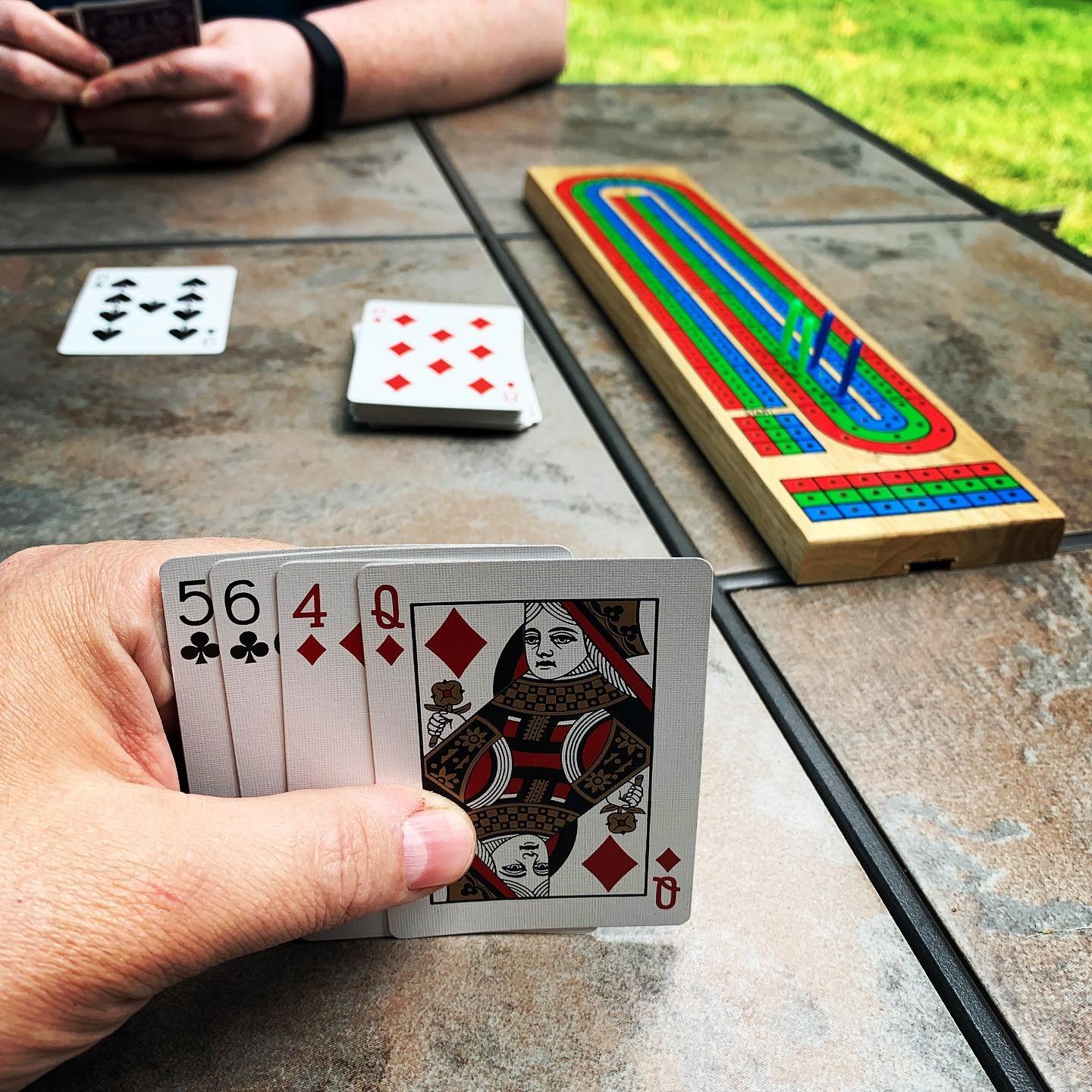
The game cribbage originated in England.
Ever wondered about the history of that peg-scoring card game? Many find themselves asking, where did the game cribbage originate? It’s a question with a fairly straightforward answer.
Cribbage actually came about in the early 17th century. It is believed that Sir John Suckling, an English poet, is the inventor of the popular game.

Where Did the Game Cribbage Originate?
Cribbage, that fun card game with the little wooden board and pegs, has been a favorite for families and friends for hundreds of years. But where did this beloved game actually come from? Let’s take a trip back in time and find out the fascinating story of cribbage’s origins!
The Mind Behind Cribbage: Sir John Suckling
Our story begins in 17th century England, with a poet named Sir John Suckling. Yes, that’s right – a poet! Sir John wasn’t just a master of words; he also had a knack for creating games. He’s credited with inventing cribbage around 1630. Now, think about that for a moment. That’s nearly 400 years ago! Imagine the people playing cribbage back then, with their fancy clothes and candlelight. It was a different world.
Suckling’s Life and Influences
To really get why Sir John Suckling made cribbage, we have to peek at his life. He was a very interesting character! He was a well-known courtier, which meant he was involved with the royal court of England. He was known to be clever and witty, a real charmer. But he wasn’t just charming; he was a gambler, too. He enjoyed playing cards and was always up for a bit of competition. These passions – poetry, cleverness, and cards – probably played a big role in the creation of Cribbage. It’s like he mixed his love of strategy, his intelligence, and his interest in games to make something unique.
How Cribbage Developed: The Evolution of a Game
So, how did Sir John Suckling actually create cribbage? While we don’t have a video recording of the moment (sadly!), it’s believed that cribbage was a modification of an earlier game called “Noddy”. Noddy, a game that has roots in earlier card games, had scoring systems and card combinations, that probably gave Suckling the ideas to develop and streamline the rules, and to design a unique scoring method.
Here’s what we think happened:
- Simplification: Suckling likely took the basic idea of Noddy and made it simpler and more streamlined. He wanted a game that was easy to pick up, but also had enough strategy to keep people interested.
- The Crib: A key innovation of cribbage was the introduction of “the crib” itself – an extra hand of cards that helped with scoring. This innovative component of the game made Cribbage more strategic and engaging, changing how players thought about building their hands and scoring points.
- The Pegging Board: Another feature that makes cribbage special is the scoring board with pegs. This probably came out of the need to keep track of scores in a clear and organized way. Before, people might have used pencil and paper, but the board with pegs made it much easier to follow along. It also added a kind of visual element to the game.
Early Versions and Variations
Over the years, Cribbage saw some small changes and variations. Even though the core game that Sir John Suckling created was quite unique, like any game that gets played a lot, some minor rule variations developed in different regions. These were never significant enough to change the actual style or core mechanic of the game. It is common with games that travel from one community to another. Some players might play that the “Go” value should be 2, instead of 1. These kinds of regional changes can add flavor to the game, but in general, the rule set is largely consistent to that originally written.
Cribbage Spreads: From England to the World
From its beginnings in England, Cribbage slowly but surely spread to other parts of the world. It became especially popular in English-speaking countries, like Canada, and the United States. It likely travelled with early colonial settlers. Soldiers, sailors, and travelers also helped spread the game as they went to new places.
Cribbage in the United States
Once it arrived in the United States, Cribbage really took off. It became a common game in homes, pubs, and clubs. It’s easy to see why, because Cribbage is a game that can be played with just two people, which made it a perfect game for couples, families, and friends.
Cribbage in Canada
Cribbage also became particularly popular in Canada. It is such a common game in Canada, that some believe it should be called “Canada’s National Game”. You might find cribbage tournaments and leagues all across Canada, highlighting the love of the game in that country.
The enduring Appeal of Cribbage: Why we Still Play
Even with so many new games around these days, cribbage continues to be popular. It has stood the test of time. There are a few reasons why, that have made it a favourite for so many years:
- Simplicity and Strategy: Cribbage’s rules are simple, making it easy to learn and play, but it still requires a lot of thought and strategy. A combination of luck and planning keeps the game interesting, and allows for skill development. This is one of the big reasons why people don’t get bored of the game.
- The Social Aspect: Cribbage is a great game to play with friends and family. It’s a game that lets you chat and laugh while still having a friendly competition. It’s a social pastime that can bring people closer together.
- The Traditional Board: There’s something special about the wooden board and pegs that feels classic and old-fashioned. It brings back memories, or creates new ones, giving a strong sense of tradition, that people enjoy.
- Versatility: You can play a quick hand of cribbage during a short break, or settle in for a longer match. This adaptability makes it a great game for any occasion.
Cribbage Today: Still Going Strong
Cribbage is still played all over the world, and in so many homes today. It has transitioned into the modern era as well. You can now find cribbage being played online, on apps, and even in video games! It has adapted well to the digital era, and still is enjoyed by countless people. While technology changes and new games emerge, the core of cribbage is still a part of so many households. Its origins with Sir John Suckling might be centuries in the past, but its future is still very bright.
Key Elements of Cribbage: A Recap
Let’s recap some of the major elements that help us understand more about the game and where it came from:
- The Peg Board: The distinctive peg board is key to keeping score. Two sets of pegs are used to track a player’s score, and it’s a signature element of the game.
- The Scoring System: Cribbage involves scoring points based on combinations of cards that you hold in your hand and in your crib, with special emphasis placed on pairs, runs, and sets. Learning to count cards efficiently is a vital aspect of the game.
- The Crib: The special “crib” hand, which belongs to the dealer, is an important source of points. Being able to strategize for the crib is important.
- The Deal: In cribbage, dealing out a hand to each player and the strategic aspect of using discards to create “The Crib” is something unique to the game.
Why Sir John Suckling is Remembered
Sir John Suckling’s life was more than just poetry and gambling. His invention of Cribbage has guaranteed his place in history. He created something that has brought joy and challenge to countless people for almost 400 years! What a legacy!
Even though he may be most famous for his poem “Ballad Upon a Wedding,” it’s safe to say that his creation of cribbage has affected far more people. It is a tangible legacy that has spread throughout generations. It’s a reminder that great things can come from different and unexpected passions. Maybe a creative hobby that you have can change the world someday too!
The journey of cribbage from its early development in 17th Century England to its current popularity around the world is a testament to the games ingenuity and lasting appeal. From the clever mind of Sir John Suckling, Cribbage has become a much loved family game, and a game to be played around the world. It’s a game that mixes strategy, luck, and socializing, and is a timeless classic. It is clear that cribbage is more than just a game, it is a part of cultural history that will probably continue to be enjoyed for many years to come.
So the next time you play cribbage with your friends or family, remember the story of its beginnings. Remember Sir John Suckling, the poet-gambler who brought this fantastic game into the world. And that is “where did the game cribbage originate”, a fascinating story spanning centuries, and reaching across the globe. What a fun game to play!
The game has evolved over centuries from a simple card game to a worldwide loved form of entertainment. The history of Cribbage is very rich and engaging. The story of its development is as interesting as the game itself, highlighting the influence of a single individual and the power of social connectivity across generations. The game has maintained its appeal due to its blend of strategy and luck which can be enjoyed by young and old. The origins of the game of cribbage are an interesting tale that contributes to the overall enjoyment of the game. So, here’s to many more rounds of cribbage!
The History of Cribbage Card Game
Final Thoughts
Cribbage emerged in early 17th century England. The game’s invention is credited to Sir John Suckling. He was a poet and courtier. Suckling created cribbage by adapting an earlier game called Noddy.
This game spread quickly. It became popular within the English speaking world. The question “where did the game cribbage originate” is answered definitively by Suckling’s invention. He adapted the earlier game to the cribbage we enjoy.

