
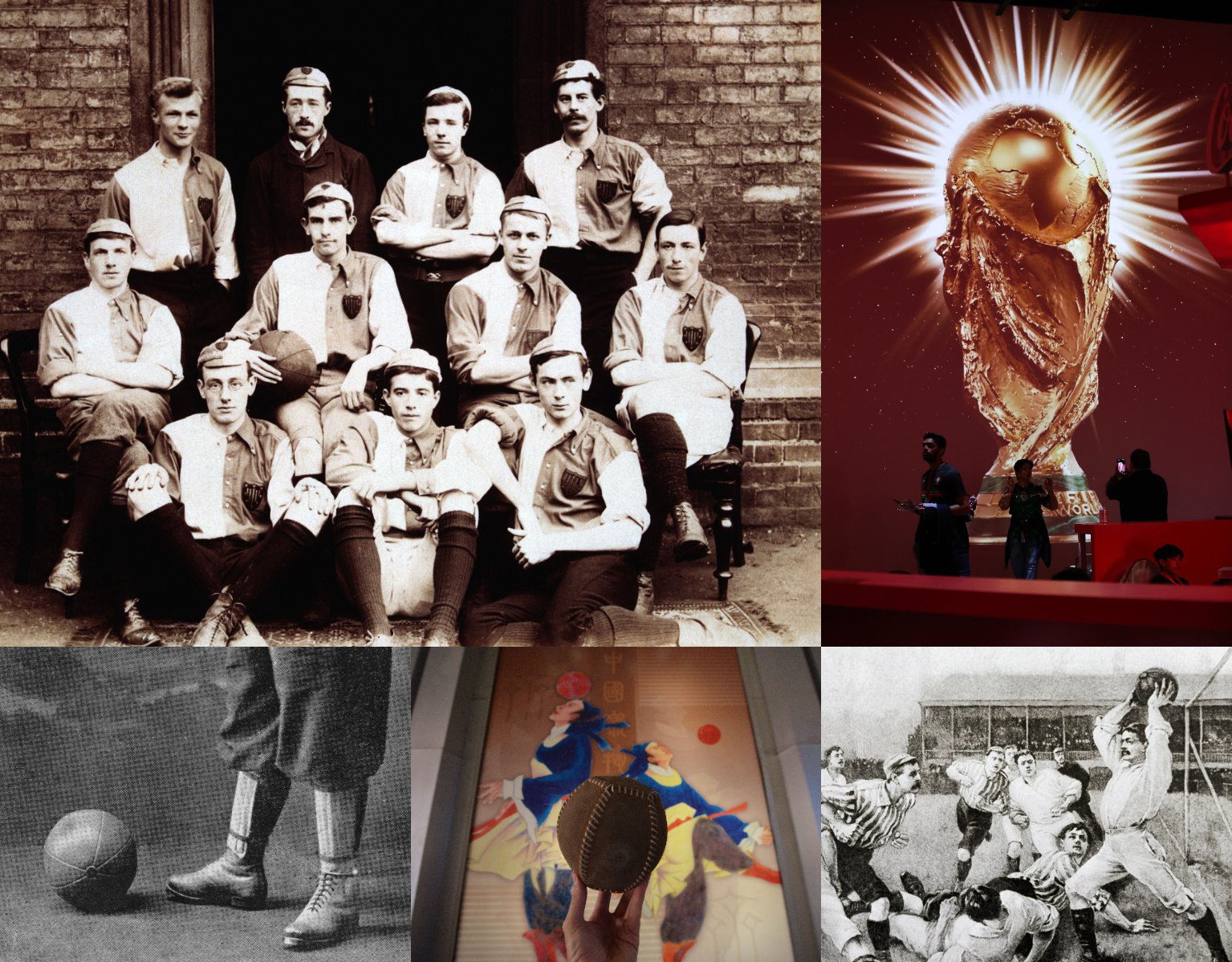
The modern game of soccer, as we know it, does not have a single creator; its development evolved from various forms of football over centuries, with the Football Association in England codifying its rules in 1863.
Have you ever wondered about the origins of the world’s most popular sport? We often get caught up in the excitement of the game, but rarely consider the question: who created the game of soccer? Its story is less about a single inventor and more about a long journey.
Many different ball games existed throughout history, each contributing to soccer’s development. The standardization of rules by the Football Association was a key turning point. This eventually led to the game we all enjoy today.

Who Created the Game of Soccer?
That’s a fantastic question! When we think about soccer, or football as many people call it around the world, we often picture big stadiums, amazing goals, and passionate fans. But have you ever wondered where this amazing sport actually came from? It’s not as simple as one person waking up one day and saying, “Let’s play soccer!” Instead, the story of soccer is like a big, interesting puzzle with lots of different pieces.
Ancient Games That Looked a Bit Like Soccer
The truth is, people have been kicking balls around for a very long time! Way before we had today’s soccer, there were games that used a ball and involved kicking, running, and trying to score. Let’s explore some of these early games that are like ancestors of modern soccer.
Ancient China and Cuju
One of the earliest examples comes from China, during the Han Dynasty. They played a game called Cuju, which roughly means “kick ball.” Imagine a leather ball stuffed with feathers and hair! Players would kick it through an opening in a net stretched between two poles. It wasn’t exactly like modern soccer; there were rules about using your hands, but it’s like a very early version of the game. Cuju was also used for military training. That is super cool!
Ancient Greece and Episkyros
Next, we can travel to Ancient Greece. They had a game called Episkyros. This game also involved a ball, and two teams would try to move it across a line by using their hands and feet. It sounds more like a mix of soccer and rugby, right? They didn’t have the same rules that we know of for soccer today, but it played an important role in the history of soccer, it is believed that the Roman game of Harpastum has its roots in this ancient Greek sport.
Ancient Rome and Harpastum
The Roman version was called Harpastum. This was a much more rough and tumble affair than other ancient games we discussed earlier. Imagine a chaotic free-for-all with two teams wrestling for control of a small ball. This game was much more physical and less about skilled footwork and had more of the feel of rugby than modern soccer. Harpastum was played for fun but was also used for military practice. This Roman sport demonstrates that the kicking and chasing of the ball has been an important element of many cultures across the history.
The Evolution of Soccer in Britain
While many cultures played ball games, modern soccer really started to take shape in Britain. Things were a bit messy for a long time, however! The rules were not set, and each town or school often had their own way of playing the game. Imagine that! It would be like every time you played with your friends, the rules were a little different.
Early Forms of Football
In medieval England, there were various types of “mob football,” or folk football, games, sometimes played between whole villages. There were very few rules, and games could get very intense. These games were a long way from the more organized sport that we know today.
- These games often involved dozens, sometimes hundreds of people, running around the streets.
- The goal might be a spot in the town or a landmark.
- They were often chaotic, boisterous, and even sometimes violent.
It was clear that something more structured was needed!
The Birth of Organized Rules
During the 19th century, schools and clubs in England began to develop their own rules for playing football. This was when the different branches of football began to take shape. Some schools favored using hands a lot more, that resulted in rugby. Other schools were more in favor of keeping the game mostly kicking with their feet, this led to the modern version of soccer.
The Football Association and the Cambridge Rules
In 1863, a very important thing happened. Several football clubs gathered in London and formed The Football Association (FA). The FA was formed to create a single set of rules for the game. This helped ensure that everyone was playing the same version of football. It’s like agreeing on the rules for a board game before you start playing!
Earlier in 1848, at Cambridge University, some rules were created which was a precursor to the FA formation and development of official rulebook. These rules became known as “Cambridge Rules.”
So, we can say that The Football Association became the official rule-maker for soccer. This led to the development of many of the rules of the game that we are all familiar with today.
- It set a clear standard for what was acceptable and what was not.
- It allowed teams from different parts of the country to compete fairly.
- This is one of the most important steps towards the game of soccer we know today.
Key Milestones in Soccer’s Development
Now that we understand how soccer started in the distant past, let’s take a look at some key events that shaped the game into what we know today.
The Codification of Rules
The rules created by the Football Association in 1863 were crucial, and it set the base for all the soccer rules, and they got further developed as time passed by. It was a long process, but it was necessary. Without a proper set of rules, we wouldn’t have a organized sport like we know today.
- The rules determined the size of the field, number of players, the start and end of the match and even defined the ball size and its material.
- They defined a specific time for the game, which had two 45-minute periods and a break in between.
- The rules also defined how a player should get penalized in the game.
The Formation of FIFA
As soccer became more popular in other countries, there was a need for a global organization to oversee the game. That is when FIFA (Fédération Internationale de Football Association), came into the picture in 1904. FIFA is the global governing body of football and it is responsible for organizing world tournaments like the World Cup.
FIFA helped to make sure that the game was played consistently across different countries and cultures.
The Growth of Professional Soccer
In the late 1800s, soccer was initially not a job. People played for fun, for local teams, schools, or even just for their community. With time it became popular, and players became so good that people started paying to watch them. That is when we saw clubs forming that had players who were paid for their work.
Today, professional soccer is a huge industry, with teams, leagues, and tournaments taking place all around the world!
So, Who is the “Creator” of Soccer?
After hearing this all, it is important to understand that no single person can be called the “creator” of soccer. The game of soccer developed through a long history, it involved different cultures, and many important people and organizations. It evolved from ancient ball games played in different cultures to the more structured sport that we love today. We can think of it as a big team effort, where each culture and organization played a part.
Here’s a recap of some important elements that contributed to the creation of modern soccer:
- Ancient Games: Games like Cuju in China, Episkyros in Greece, and Harpastum in Rome, show that ball games have been an important part of cultures for thousands of years.
- British Evolution: The development of football in Britain, with early forms of “mob football” and the establishment of formalized rules.
- The Football Association: The establishment of the FA in 1863 was most important for the creation of the modern soccer rules, which paved the way to the game we are all familiar with.
- FIFA: The Formation of FIFA, ensured that all over the world soccer is played and organized with the same rules.
Why Does Soccer Have Different Names?
You may have heard the sport called “football” in many countries, but it is commonly known as “soccer” in the United States and a few other places. Why is this the case? This is a super interesting historical piece of information, lets talk about this. Back in Britain, in the 19th century, people who played rugby were called “rugger” and people who played association football (which evolved into soccer) was called “soccer.” So, the term “soccer” is an old British nickname, which was just the short version of “association football.”
So, while most of the world uses “football” to describe the sport, countries like the U.S. use “soccer” to prevent confusion with other types of football, like American football. It is kind of an interesting way of history being remembered within language!
The Enduring Legacy of Soccer
No matter how you name it, soccer is without a doubt the most popular sport around the world. It brings people of different backgrounds together, it unites people with a common passion and love for the game. The game has evolved from very simple ball kicking activities to a hugely popular sport. Today, soccer games are played and enjoyed all over the world, by players and fans of all ages. The game has become a global language and brings people together.
Football: when and who invented football?
Final Thoughts
The beautiful game’s origins are complex. Many ancient forms of ball games existed. However, modern association football, or soccer, developed in England.
The Football Association codified the rules in 1863. This standardization led to the version we know today. We must remember that many people contributed to this evolution.
So, it’s inaccurate to say one person created it. Therefore, the answer to “who created the game of soccer” is that it was a gradual process.

