
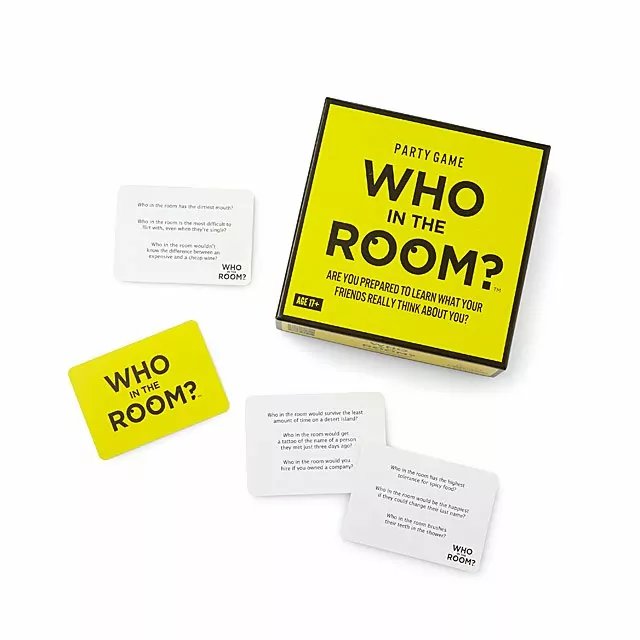
‘Who in the room game questions’ are designed to spark laughter and reveal fun facts about the people playing, often by prompting participants to identify individuals based on quirky characteristics.
Have you ever been at a gathering and wanted a fun way to get to know everyone a bit better? Then, you’ve probably heard of “who in the room game questions.” These questions are fantastic for breaking the ice and learning surprising details about your friends, family, or even coworkers.
The beauty of the ‘who in the room game questions’ lies in their simplicity, they don’t require any props or special setups, just a group of people willing to laugh and share. Prepare for some unexpected answers and perhaps a few new inside jokes.

Who in the Room Game Questions: The Ultimate Guide
What are “Who in the Room” Questions?
Have you ever played a game where you point at someone in a circle and say something like, “Who in the room is most likely to become a famous singer?” That’s the basic idea behind “Who in the Room” questions! These aren’t your everyday questions; they are fun prompts designed to spark laughter, get conversations going, and help you see your friends and family in a new light. Instead of asking direct questions about feelings or thoughts, you ask about behaviors or potential actions. This allows for lighthearted judgment and funny situations. These questions aren’t meant to be serious; they’re about having fun and making connections. We use them at birthday parties, sleepovers, family gatherings, or even just when you’re hanging out with friends. They are awesome icebreakers and conversation starters. Basically, “Who in the Room” is all about playful guessing and seeing how well you and others know each other!
Why Are These Questions So Much Fun?
There are many reasons why “Who in the Room” questions have become such a popular party activity. For starters, they are incredibly easy to understand and play. Anyone can jump in, regardless of their age or how well they know the group. This creates a very inclusive and welcoming feeling for everyone. Plus, you do not need any special equipment or materials. It is a very easy game to set up! Here are some other reasons we love playing this game:
- They spark funny discussions: The answers are never as simple as you might think. People often give unexpected answers, which leads to hilarious explanations and stories. Imagine someone being chosen as “most likely to accidentally set off a fire alarm.” That’s a story waiting to be told!
- They help you learn more about each other: While the questions are silly, they can actually show you how other people see each other. You might be surprised by who thinks who is the most creative or the biggest foodie in the group. It helps build connections.
- They are great icebreakers: If you’re with people you don’t know well, “Who in the Room” questions are perfect for getting past awkward silences. They’re way less intimidating than regular questions. It’s much easier to laugh with a new person over “Who’s most likely to forget their own birthday” than ask about their life history!
- Everyone gets to participate: There are no right or wrong answers, so everyone can get involved without feeling pressured. It’s a non-competitive game where everyone’s opinion is valid. Everyone gets a chance to be picked and to pick!
- They are adaptable: You can tailor “Who in the Room” questions to any situation. If you have a group of adventurous friends, ask who’s most likely to go skydiving. If you’re with book lovers, ask who’s most likely to become an author. This keeps the game fresh and relevant for different groups.
Different Categories of “Who in the Room” Questions
To really get the party going, it helps to vary the kind of questions you ask. Here are some categories you can use as inspiration:
Funny & Silly Questions
These are the go-to questions for maximum laughter. They are not meant to be taken seriously and are simply for amusement and entertainment. They focus on funny or unlikely scenarios. For instance:
- Who in the room is most likely to trip on a perfectly flat surface?
- Who in the room is most likely to accidentally dye their hair a weird color?
- Who in the room is most likely to talk to animals?
- Who in the room is most likely to get lost in their own house?
- Who in the room is most likely to wear mismatched socks?
Creative & Imaginative Questions
These questions encourage thinking about unique talents, artistic aspirations, and future goals. They are designed to let you and your friends showcase hidden talents or dreams.
- Who in the room is most likely to write a bestseller?
- Who in the room is most likely to paint a masterpiece?
- Who in the room is most likely to invent something amazing?
- Who in the room is most likely to become a famous movie director?
- Who in the room is most likely to build a robot?
Social & Outgoing Questions
These questions focus on how people interact with others and their comfort level with social situations. They can reveal who is the life of the party or who is a bit more reserved.
- Who in the room is most likely to start a dance party?
- Who in the room is most likely to make a new friend in a grocery store?
- Who in the room is most likely to volunteer to speak in front of a crowd?
- Who in the room is most likely to sing karaoke with no shame?
- Who in the room is most likely to host the best party?
Practical & Everyday Questions
These questions look at how people handle everyday tasks and challenges. These can lead to some relatable and funny scenarios. They might touch on daily habits or practical skills.
- Who in the room is most likely to forget where they put their keys?
- Who in the room is most likely to be late for an important event?
- Who in the room is most likely to lose their phone?
- Who in the room is most likely to eat the last slice of pizza?
- Who in the room is most likely to survive a zombie apocalypse?
Foodie Questions
Let’s dive into the world of food! These questions are all about food preferences, cooking skills and eating habits.
- Who in the room is most likely to eat all the leftovers?
- Who in the room is most likely to become a famous chef?
- Who in the room is most likely to try the weirdest food combination?
- Who in the room is most likely to order all the appetizers at a restaurant?
- Who in the room is most likely to always be snacking?
How to Play “Who in the Room”
Playing “Who in the Room” is super easy! Here are some simple steps:
- Gather your group: Get everyone together in a circle or another casual setting where everyone can see each other.
- Choose someone to start: Anyone can begin! You can pick the first person randomly, or someone can volunteer.
- Ask a question: The starting person reads or makes up a “Who in the Room” question. For instance, “Who in the room is most likely to laugh at their own jokes?”
- Point and Vote: Everyone in the group (including the person who asked the question) silently thinks about who they would choose for that question and points at them.
- Count the votes and announce the “winner”: Count how many people pointed at each person. Whoever has the most votes “wins” that question. There might be multiple “winners”, and that’s okay!
- Discuss the answers: This is where the fun really begins. The person picked can explain why they think they were chosen, or others can share their reasoning.
- Rotate and repeat: The next person takes their turn asking a question and the game continues! Keep going as long as everyone’s still having fun!
Tips for a Super Fun Game
Here are some ideas to make your game of “Who in the Room” even more exciting:
- Mix up the questions: Don’t stick to just one category. Try to include a good mix of funny, creative, practical, and silly questions to keep the game interesting.
- Tailor the questions: Think about who you’re playing with. If you’re playing with kids, keep the questions appropriate. If you have a group of close friends, you can go for some more silly, inside-joke style questions.
- Don’t be afraid to get creative: Feel free to come up with your own unique questions on the spot! The most hilarious questions often come from spontaneous ideas.
- Encourage explanations: Ask players to explain why they chose a certain person. The conversations around these choices are always funny and can be insightful.
- Keep it lighthearted: The main goal is to have fun. Don’t let the game turn into something too serious or critical. These questions are only for fun.
- Play with a timer: To add extra excitement, use a timer for each round. For instance, give each person 30 seconds to think of a question and 15 seconds for each person to decide and point!
- Use physical actions: Instead of just pointing, have people stand up, clap, or do a fun action when they think of their answer.
- Play with theme: Try theme based questions for different types of the game.
Examples of “Who in the Room” Questions to Get You Started
Here are some examples to get you thinking. You can use these directly or use them as inspiration for your own questions:
- Who in the room is most likely to forget their own birthday?
- Who in the room is most likely to become a superhero?
- Who in the room is most likely to win a dance competition?
- Who in the room is most likely to be caught singing in the shower?
- Who in the room is most likely to accidentally send a message to the wrong person?
- Who in the room is most likely to go on an unplanned road trip?
- Who in the room is most likely to survive a horror movie?
- Who in the room is most likely to always have a funny story to tell?
- Who in the room is most likely to sleep in late on the weekend?
- Who in the room is most likely to become famous on social media?
How “Who in the Room” Can Help With Team Building
Believe it or not, “Who in the Room” isn’t just fun; it’s also a fantastic way to build connections among groups. In team settings, it’s great for icebreakers and bringing teams together. Here’s how it helps:
- Promotes Communication: The game encourages people to talk about their observations of their colleagues. This creates open communication channels.
- Enhances Understanding: It helps you to understand how people perceive each other. You might be surprised by the opinions that your colleagues have about each other!
- Builds Relationships: By having fun, the game can help bring team members together. It breaks down barriers and helps teams form connections in a playful way.
- Improves Team Morale: When team members laugh together and engage in a game like “Who in the Room,” it creates a positive atmosphere. It improves overall morale and positive work attitude.
- Encourages Lightheartedness: It reminds everyone that it’s okay to be silly and relax. This kind of relaxed environment can lead to more creative brainstorming in work settings.
You can use questions like, “Who in the room is most likely to come up with an innovative idea?” or “Who in the room is most likely to help a coworker with their work?” This can promote team spirit and help team members see each other in a different light.
In summary, “Who in the Room” questions are a simple, adaptable, and incredibly fun way to bond with people. They’re perfect for all kinds of situations. So grab your friends and family, gather around, and get ready for some laughter!
Hygge Games Who in The Room Party Game 300 Unexpected, and Personal Questions Review
Final Thoughts
In conclusion, great fun comes from playing the ‘who in the room game questions’. These questions make any gathering more interactive and memorable. They help you learn interesting tidbits about your friends.
This easy game requires no materials and creates shared laughter. You must try this at your next party. Have a great time using these types of questions!

