
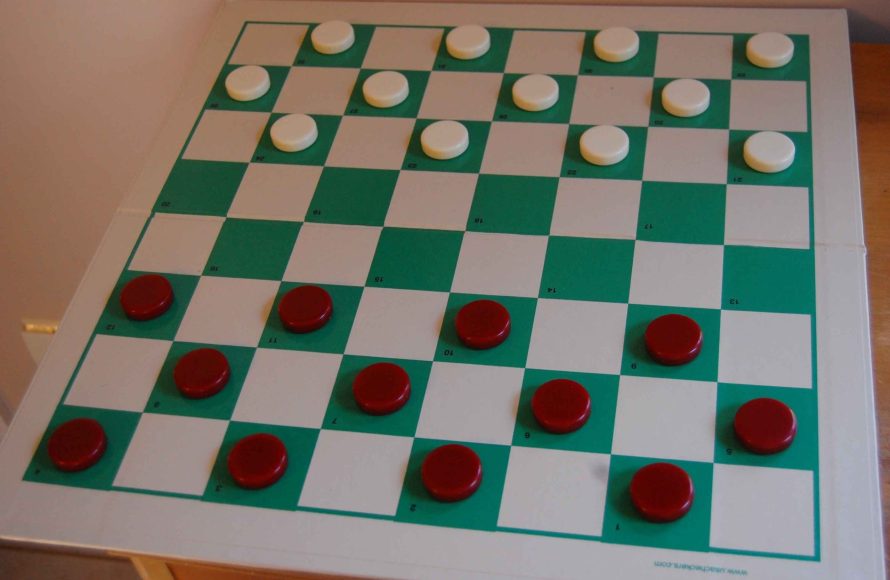
The exact origins of who invented the game of checkers remain unclear, as it evolved from ancient games.
Ever pondered the simple yet strategic board game, checkers? It’s a classic pastime enjoyed by many. But have you ever stopped to wonder who invented the game of checkers?
Tracing its roots back, we find it isn’t a single inventor, but an evolution of similar games throughout history. Ancient cultures played versions of what we now know as checkers, making pinpointing a single creator quite difficult. The game developed over time into what it is today.

Who Invented the Game of Checkers?
The game of checkers, also known as draughts in many parts of the world, is a classic board game that has entertained people for centuries. You might be surprised to learn that pinpointing one single inventor is tricky, like trying to find the very first raindrop. Instead of a single ‘aha!’ moment, checkers evolved over a long time, with different versions appearing in various places. This journey through time makes the story of checkers’ origins quite fascinating.
Ancient Roots of Checkers
The origins of checkers are not crystal clear, but we can trace its ancestry back thousands of years. It didn’t suddenly appear as the game we know today; instead, it slowly developed from even older games. The earliest versions don’t look quite like the checkers we play now, but they contain the seeds of the game we enjoy today.
Alquerque: A Forerunner to Checkers
One of the most important games in the checkers’ family tree is called Alquerque. This ancient board game is believed to have originated in the Middle East, possibly as far back as 3000 BC! Imagine people playing this game thousands of years ago! Alquerque involved pieces moving along a grid, trying to capture the opponent’s pieces. It’s not quite checkers, but it is a huge influence. Here are some key features of Alquerque that show it’s the parent of checkers:
- Grid Board: Alquerque used a grid, just like checkers. Although the exact shape of the grid varied, the basic principle of moving pieces across intersections was key.
- Capture by Jumping: One of the core rules of checkers, capturing an opponent’s piece by jumping over it, was also a part of Alquerque.
- Strategic Movement: Even in this early game, players needed to think strategically about how to move their pieces to capture the opponent’s pieces.
Alquerque spread throughout the Middle East and into the Mediterranean, influencing games in different regions. This is how the seeds of our beloved checkers game began to spread.
The Spread of Alquerque and its Evolution
As Alquerque traveled, it changed. Different cultures adapted it, making slightly different versions of the game. It’s like how a story changes a little each time it’s retold. For example, in some parts of the world, they used a different board size, or the number of pieces changed. These tweaks helped to give birth to several other games that eventually led to checkers. One game is often mentioned as a direct descendant of Alquerque.
Emergence of a Recognizable Checkers Game
While Alquerque is the ancestor of checkers, the form of checkers that we know and love today appeared later. The crucial step was the evolution of Alquerque into a game with diagonal moves and a standardized checkerboard.
Fierges: A Key Step in Checkers’ Development
In the 12th century, a variation of Alquerque called “Fierges” gained popularity in France. It’s believed that Fierges is the direct parent of checkers. Fierges retained many of Alquerque’s rules, but it also added an essential element – diagonal moves.
- Diagonal Movement: In Fierges, pieces could move diagonally, making the game much more dynamic and strategic. This is exactly how we move pieces in checkers today.
- Capturing: The jump-capture rule remained central to the game. You still captured pieces by jumping over them
This addition of diagonal movement was a very big change and led to the development of checkers. Over the next few centuries, variations of Fierges were played all over Europe. The game became popular as a pastime, much like how people play chess, cards, or even video games today.
Standardization of Modern Checkers
While Fierges was a major development, it was still not quite the checkers game we know and play today. The game needed a few more tweaks and a little standardization to become the game we are familiar with today.
The Checkerboard and Rules
The checkerboard, with its 8×8 grid of alternating colored squares, became the standard layout for checkers, and this did not happen all at once. Over time, people came to play the game with 12 pieces each, and the rules for capturing and becoming “kings” became widely accepted. This standardization helped make it easier for people in different places to play together, which led to even more popularity.
- Standard Board: The 8×8 board provided enough space for strategic moves without being too overwhelming.
- Pieces: Each player having 12 pieces allowed for interesting tactical possibilities.
- Kings: The rule that pieces that reach the opposite side of the board become “kings” added another dimension to the game, increasing the strategy and tactics.
By the 16th century, the basic rules of modern checkers were fairly well-established, though minor variations still existed. Different countries and regions still used slightly different rules, but the core elements were the same.
No Single Inventor, but a Collective Evolution
So, who invented checkers? The answer is no single person. Checkers is the result of a long process of evolution. Games like Alquerque laid the foundations, and then Fierges added the diagonal movement, and then over time, the board and rules were standardized. It’s like if you asked who invented the car; it wasn’t just one person, but many who contributed.
Contributions From Various Cultures
It’s amazing to see how different cultures played a role in the journey of checkers. The roots of the game lie in the Middle East, it then developed in Europe with Fierges, and then the game spread more widely, eventually arriving in other parts of the world. It’s this shared history that makes checkers such an interesting game.
- Middle East: Gave us Alquerque, the game that laid the basis for checkers.
- Europe: Europe brought in crucial changes with diagonal movement and the standardized game we play now.
- Global Adaptations: Many regions added their own variations to the game throughout history, enriching its legacy.
The enduring appeal of Checkers
Even though there’s no single inventor of checkers, its history is still something that we should remember, because checkers became a very popular game, and continues to be even today. Here are some reasons why checkers remains a classic game:
- Simple Rules, Deep Strategy: Checkers is easy to learn, but it requires a lot of strategic thinking to become good at it. This makes it fun for both new players and experienced ones.
- Accessible to All: All you need to play checkers is a board and some pieces. No technology or expensive equipment is needed, which makes it a very accessible game.
- A Game for all Ages: Checkers is enjoyed by young and old people, making it a great game to play with your family and friends.
- Universal Appeal: Checkers can be found in almost every corner of the world, as it has become a favorite in diverse places around the world.
The lack of a single inventor shouldn’t diminish the importance of the game. Checkers’ journey through history tells us about the evolution of games, and how people change and adopt games over time. It teaches us about history, culture, and how even simple things can have complex origins. It’s a shared heritage, enjoyed by millions and passed from generation to generation, and this legacy will probably continue for the years to come. And that is the beauty of this game.
In conclusion, the game of checkers doesn’t have a single inventor we can name. Instead, it is the result of a long and fascinating journey of evolution, with its roots going back to ancient games like Alquerque. The game developed through different cultures and over many centuries to become the game we know and enjoy today. This shared history makes checkers a really interesting game.
Checkers is older than you think #history #educational #boardgames
Final Thoughts
The exact origin of checkers remains a mystery. Historians suggest ancient games similar to checkers existed. These early games evolved over time, leading to the modern game.
Many variations existed. People played early forms across various cultures. The current rules we know became standardized later. This makes pinpointing a single inventor for the game quite difficult.
Therefore, it’s not accurate to say a single person invented the game. The game evolved through various cultural contributions. Thus, when considering who invented the game of checkers, there isn’t a singular, identifiable creator.

