
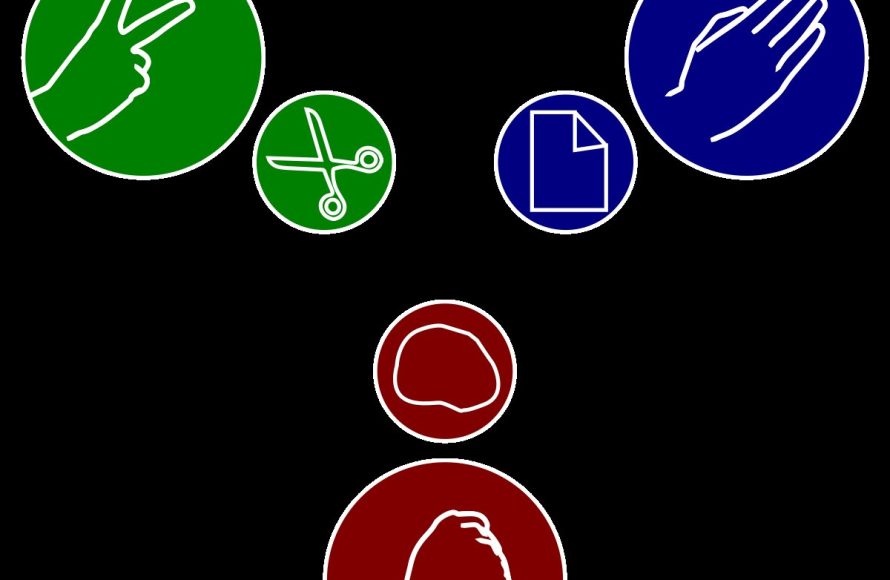
The exact inventor of the game rock paper scissors is unknown, but historians trace its origins to the late Ming dynasty in China.
Have you ever wondered about the simple yet engaging game we all know and love? That’s right, I’m talking about rock paper scissors! Many people play it, but do you know who invented the game rock paper scissors?
While pinpointing one specific individual is impossible, evidence suggests that the game emerged from China during the late Ming dynasty. It then spread across Asia, eventually making its way to the West.

Who Invented the Game Rock Paper Scissors?
Figuring out who exactly invented rock paper scissors is a bit like trying to catch a shadow – it’s tricky! Unlike some inventions with a clear inventor and date, rock paper scissors evolved over a long time. It wasn’t like one person woke up one day and said, “Hey, I’ve invented a new hand game!” Instead, it’s a story that stretches back centuries and across different cultures.
The Ancient Roots of Hand Games
Before we talk about rock paper scissors specifically, let’s talk about its ancestors: hand games. People all around the world have been playing games with their hands for a very, very long time. These weren’t always the rock, paper, scissors we know today, but they paved the way. Think of them as the great-great-grandparents of our favorite hand game.
Early Chinese Games: The Finger Guessing Connection
Many historians believe that the game we know as rock paper scissors comes from ancient Chinese finger-guessing games. These games were popular as far back as the Han Dynasty (206 BC – 220 AD). Imagine people using their fingers not just to count, but also to play games! One early game was called shoushiling. This game involved two players making different hand gestures to win. These gestures weren’t exactly rock, paper, scissors, but the core idea of using hand signals to determine a winner was there. It’s like how a tiny seed grows into a big tree—shoushiling and similar games were the seeds that eventually grew into rock paper scissors. They helped build the foundations of these types of games.
- Shoushiling: An ancient Chinese finger game, considered an early predecessor.
- Han Dynasty: The period when finger-guessing games first began to be widely popular.
The Spread to Japan
Over the centuries, the game traveled from China to other parts of East Asia, notably Japan. In Japan, the game took on a new form, evolving into what’s called sansukumi-ken. This translates roughly to “three-way deadlock fist.” In sansukumi-ken, players used hand gestures that represented different animals: a frog (representing a slug), a snake, and a slug. These symbols did not directly correlate to the rock, paper, and scissors we know, but the core principle of a three-element game remained. It still created a circular relationship where one animal was stronger than the next, which again was stronger than the third which was stronger than first. In this game, the slug wins over the snake, the snake wins over the frog, and the frog wins over the slug. That idea of a circular game was very important to the development of rock paper scissors.
- Sansukumi-ken: Japanese version of hand game with slug, frog, and snake gestures.
- Three-way deadlock: The core principle where each element is strong against another, but weak against the third element.
The Emergence of Rock, Paper, Scissors
While the early games like shoushiling and sansukumi-ken laid the groundwork, the rock, paper, and scissors we know today didn’t emerge all at once. It was a gradual evolution. Different versions of hand games were spreading, making their way across different regions and being played with varying rules, and various symbols. The shift towards what we now call rock, paper, scissors likely happened over a long period, with a number of transitions along the way. It wasn’t that someone officially sat down and decided on the names of the hand gestures, it happened as time went on.
The Rise of “Jan-ken” in Japan
Around the late 19th and early 20th centuries, the sansukumi-ken game started to shift in Japan. It evolved into jan-ken, which is much closer to what we know as rock paper scissors. In jan-ken, the gestures became a fist (representing a rock), an open palm (representing paper), and scissors (represented by the index and middle finger in a scissor shape). The rules also shifted to match those we know now: rock crushes scissors, scissors cut paper, and paper covers rock. This is considered a critical point in the game’s evolution. From then on the core three-gesture style of the game was established, and it was set to spread to other parts of the world.
- Jan-ken: Japanese version with rock, paper, and scissors gestures.
- Late 19th – Early 20th Century: Time period when Jan-ken became popular.
The Spread to the West
How did jan-ken make its way from Japan to the Western world? This happened through contact and trade. As the world became more connected, Japanese culture, including popular games, spread to Europe and North America. It’s like a seed being carried by the wind, eventually landing in new soil and growing. The game, now under the name rock paper scissors, started to gain popularity. It became a common way to settle small disputes or choose who goes first in a game. It was simple, requiring no special equipment, just your hands and a little strategy.
No Single Inventor, But a Story of Evolution
So, after all that, can we say exactly who invented rock paper scissors? The truth is, there is no one person we can point to. It was the result of a long, gradual process. It wasn’t a light bulb moment, but a slow change over many centuries. Instead of one inventor, it is more a story of many people, from different times and places, all playing with hand games that eventually led to rock paper scissors. It’s a bit like a river, starting with small streams and growing into a mighty flow. Each culture and each version of the game contributed to the final version we all know and enjoy today.
Key Factors in its Development
While there is no single inventor, there are some key factors that we know played a role in shaping the game. Here are some of them that helped the evolution of the game:
- Cultural Exchange: The movement of the game from China to Japan, and then to the West.
- Adaptation and Change: The way different cultures modified the game to fit their customs and preferences.
- Simple Game Play: The easy-to-understand rules and the basic way of playing that made the game easy to adapt and popular.
The Modern Popularity of Rock Paper Scissors
Today, rock paper scissors is more popular than ever! It’s not just a game that kids play. It’s used in all sorts of situations around the world. People use it to decide who gets the last slice of pizza, which team gets to go first in a board game, or even in more serious settings like resolving work disagreements in a friendly manner. The simplicity of the game combined with the element of chance and strategy makes it enduringly popular. You can play it anywhere with anyone, and that’s part of its appeal.
Rock Paper Scissors in Competitions and Beyond
Believe it or not, there are even competitive rock paper scissors events! People take this game very seriously, developing complex strategies to outwit their opponents. It shows how much people have come to love this simple game. You can find rock paper scissors tournaments, championships, and even world records for the most consecutive wins. Beyond competitions, the game is a staple in many cultures around the world, demonstrating its truly universal appeal.
Also, many computer scientists and mathematicians have studied rock, paper, scissors. This game is a good example of decision-making under conditions of uncertainty. It’s also a useful tool in teaching concepts in game theory, psychology, and even artificial intelligence.
So, while we can’t point to one person and say, “That’s the inventor of rock paper scissors!” we can certainly appreciate the rich and fascinating story of how this beloved hand game came to be. It’s a story of cultural exchange, adaptation, and enduring appeal. It’s a game that’s simple but holds a timeless charm and is still being played worldwide.
How Was "Rock, Paper, Scissors" Invented? | COLOSSAL INVENTIONS
Final Thoughts
Ultimately, pinpointing the exact inventor of rock paper scissors remains impossible. Historical records suggest the game’s origins lie in China. The game evolved across various cultures and names before reaching its modern form.
While we cannot identify a single individual, it is clear that the game developed over time. Many cultures played similar hand games, and the core concept evolved. Therefore, definitively answering ‘who invented the game rock paper scissors’ is quite challenging.

