
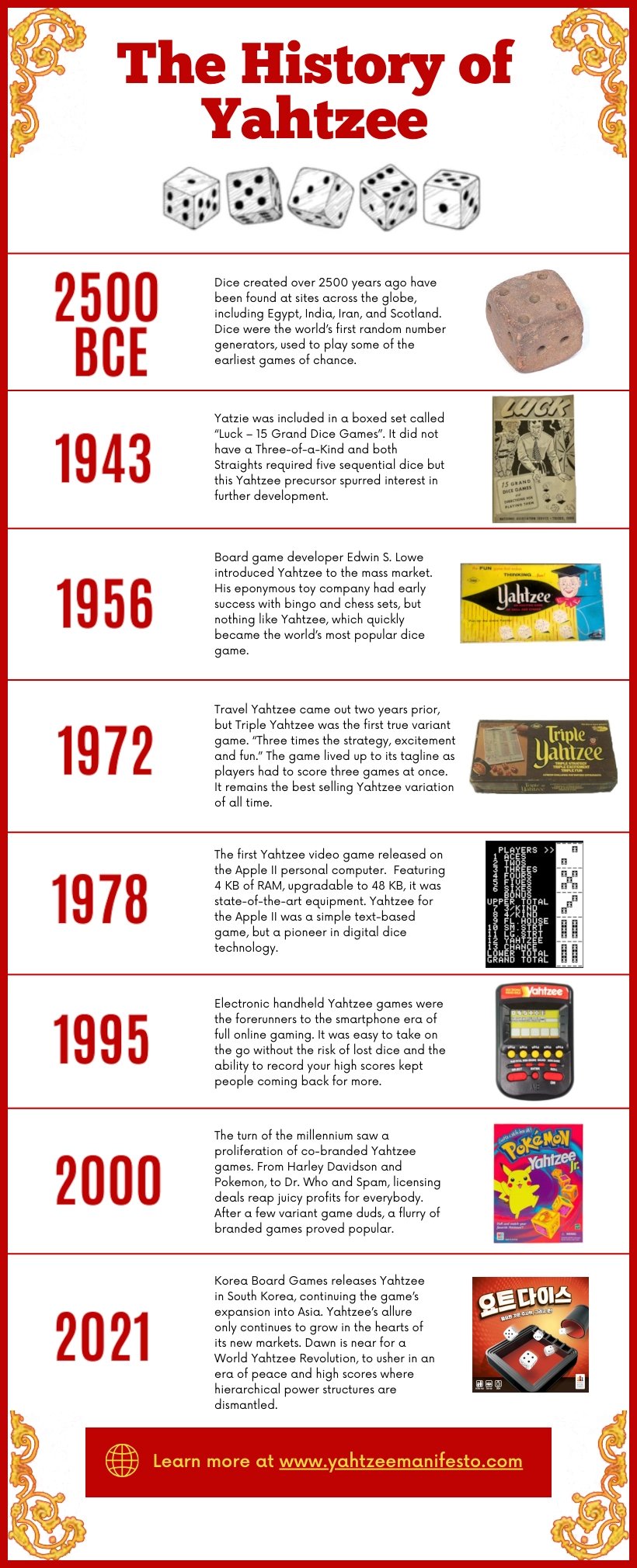
The game of Yahtzee was invented by Edwin S. Lowe.
Ever wondered about the origins of that classic dice game, the one often accompanied by shouts of joy or groans of disappointment? The question of who invented Yahtzee game often arises when families gather for game night. It’s a name that’s been around for decades, a household staple in many homes.
The story goes that Edwin S. Lowe, a toy and game entrepreneur, didn’t technically invent the game from scratch, but he certainly popularized it and cemented its current form. He acquired the rights to a similar dice game and refined it, leading to the Yahtzee we all enjoy today.

Who Invented Yahtzee Game?
The story of Yahtzee, the beloved dice game, is not as straightforward as one might think. It involves a journey through different variations and a cast of characters who each played a role in shaping the game we know and love today. While the name “Yahtzee” is most closely associated with a specific company and game version, the core concept of rolling dice for scoring combinations has a much older history. Let’s explore the exciting details of who invented Yahtzee and its interesting journey.
The Precursors to Yahtzee
Before the name “Yahtzee” existed, there were many similar dice games being played. These games, often played in homes and communities, laid the groundwork for the modern game we recognize. Understanding these precursors helps us understand where the heart of Yahtzee actually comes from.
Early Dice Games: A History of Chance
Dice have been used for games of chance for thousands of years. Ancient civilizations in Egypt and Rome enjoyed dice games. These games often had very simple rules. People would throw the dice, and certain combinations would mean a win. These old games didn’t have the complicated scoring system that Yahtzee has, but they helped pave the way for more complex dice games.
- Ancient Egypt: Archeological finds reveal dice made from bone and other materials were used in games of chance.
- Roman Empire: Romans enjoyed games with dice. These often involved bets and different combinations of dice faces.
Generala: A Key Influence
One significant precursor to Yahtzee is a game called Generala. This game was popular in different parts of the world. It shares the most similarities to Yahtzee. Generala features many of the same scoring combinations, such as “full house” and “four of a kind” as seen in Yahtzee. Generala provided a solid base for what would become Yahtzee. The structure and scoring strategies of Generala clearly influenced the development of the game.
Generala is still played by some people and comes in different variations. Some play it with five dice, and some with six. You’ll notice that even if the rules are not exactly same, the core idea of scoring combinations of dice rolls is quite similar.
The Arrival of Yahtzee
Now, let’s take a closer look at how the game we know as Yahtzee came to be. This involves a few key people and companies. Each of them left their mark on the game’s development.
The Invention by the Lowe Family
The most commonly accepted story credits Edwin S. Lowe and his family with creating Yahtzee. Lowe, the owner of the successful game company E.S. Lowe Co., was a big fan of games. In the 1940s, the Lowe family, were on a yacht trip, and they played a dice game which was similar to the game we know as Generala. This family game was very close to what we know now as Yahtzee. They called their game “The Yacht Game.” It was also known as “Yacht.” The game was popular among their friends.
Later, Edwin Lowe realized that this game could be popular for everyone. He decided to buy the rights to the game. After a while, Lowe came up with a clever name that is now very popular: Yahtzee! This name is easier to say and remember. The first commercial version of Yahtzee came out in 1956.
The Role of E.S. Lowe Company
E.S. Lowe Company played a big part in making Yahtzee a household name. Lowe’s company packaged and sold the game. They also made a few important changes. These changes made the game more fun and appealing for more people. The E.S. Lowe Company made sure the game was easily available in toy stores, making Yahtzee accessible to the general public.
The game came with a specific cup for rolling the dice, score cards, and pencils. The packaging made the game more appealing. The rules were explained in a clear and straightforward way. This made it easy for families and friends to start playing right away.
- Branding and Packaging: E.S. Lowe created a recognizable brand identity for Yahtzee.
- Commercialization: The company was crucial in making the game available in stores.
Parker Brothers and the Growth of Yahtzee
The success of Yahtzee attracted the attention of other big toy companies. In 1973, a very big toy and board game company called Parker Brothers bought the rights to Yahtzee. This was a very big step for Yahtzee. Parker Brothers had great resources and a lot of experience marketing games. They used their power to make Yahtzee even more popular across the world.
Parker Brothers’ Marketing Strategies
Parker Brothers understood how to make Yahtzee more famous. They used many marketing tricks. They advertised the game on television and in magazines. They made people very eager to buy the game. Parker Brothers’ marketing helped to make Yahtzee a classic game.
- Advertising Campaigns: They promoted the game through various media outlets.
- Mass Distribution: Parker Brothers made Yahtzee available to more stores worldwide.
Yahtzee Through the Years
Over the years, Yahtzee has seen several updates and versions. While the base game has stayed the same, some new ways of playing the game were added. These versions added new elements, or new graphics, which kept the game popular. Many of these variations are available today, allowing you to play the game in many different styles.
- Travel Yahtzee: A compact version for playing on the go.
- Electronic Yahtzee: A digital version with an automatic scoring system.
- Themed Versions: Yahtzee editions with popular characters or themes.
The Lasting Impact of Yahtzee
The tale of Yahtzee is a story of how a simple dice game could have an amazing impact. Starting from the basic rules of old dice games to a game loved by families everywhere, Yahtzee has become more than just a game. It has become a part of our lives. People of all ages gather around to roll the dice. The game is a reason to have fun and spend time together.
Why Yahtzee Remains Popular
There are many reasons why Yahtzee has stayed popular for so many years. It’s a game that is easy for anyone to learn. It does not matter how old they are. But still it is challenging enough to keep players engaged. Every game is different. Because you never know what the dice will show. This makes each game very exciting. Plus, Yahtzee can be played with both small and large groups. Making it perfect for a game night with family or friends.
- Simple Rules: It’s easy to learn and play.
- Challenge: The game includes both luck and strategy.
- Social: It is perfect for playing with family and friends.
Yahtzee’s Role in Pop Culture
Yahtzee has also made a name for itself in popular culture. You’ll often see it mentioned in movies, TV shows, and books. This shows how well-known the game is. It demonstrates that Yahtzee is not just a game, but a cultural icon. Many families have grown up with it, and their kids have grown up with it too. This is why Yahtzee is timeless and continues to be popular today.
In the end, the journey of Yahtzee, from a family’s yacht trip to a worldwide sensation, is a testament to its simple yet compelling design. It’s a game that blends luck with strategy, and it continues to bring joy to many players all around the world.
History of Yahtzee
Final Thoughts
Edwin S. Lowe, not Milton Bradley, invented the game Yahtzee. Lowe created it in the 1940s under the name “Yacht.” He initially marketed it as a dice game for families.
He later sold the rights to E.S. Lowe Company who marketed it before later selling it to Milton Bradley. So, when considering ‘who invented Yahtzee game’, the answer is Edwin S. Lowe, the creator of the fun dice game we know today.

